Menu

AC Unit Leaking Water in Cincinnati – Fast Diagnosis and Permanent Repairs

When your air conditioner drips water, you need more than a quick fix. Our technicians pinpoint the exact cause of AC water leaks and deliver repairs that stop the damage and restore your system's efficiency.

Slider Image 1
Slider Image 2
Slider Image 3
Slider Image 4
Slider Image 5
Slider Image 7
Slider Image 8
Slider Image 9
Slider Image 10
Slider Image 11

Why Your Air Conditioner Is Dripping Water

Cincinnati's humid summers create the perfect conditions for AC water leaks. Your air conditioning system pulls moisture from the air as it cools. That moisture normally drains away through a condensate line. When something blocks that line, the water has nowhere to go. You end up with water dripping from your AC unit onto your floor, ceiling, or walls.

The most common cause is a clogged drain line. Algae, mold, and debris build up inside the condensate line. Cincinnati's high humidity accelerates this growth. You might see water pooling around your indoor unit or notice ceiling stains below your attic air handler.

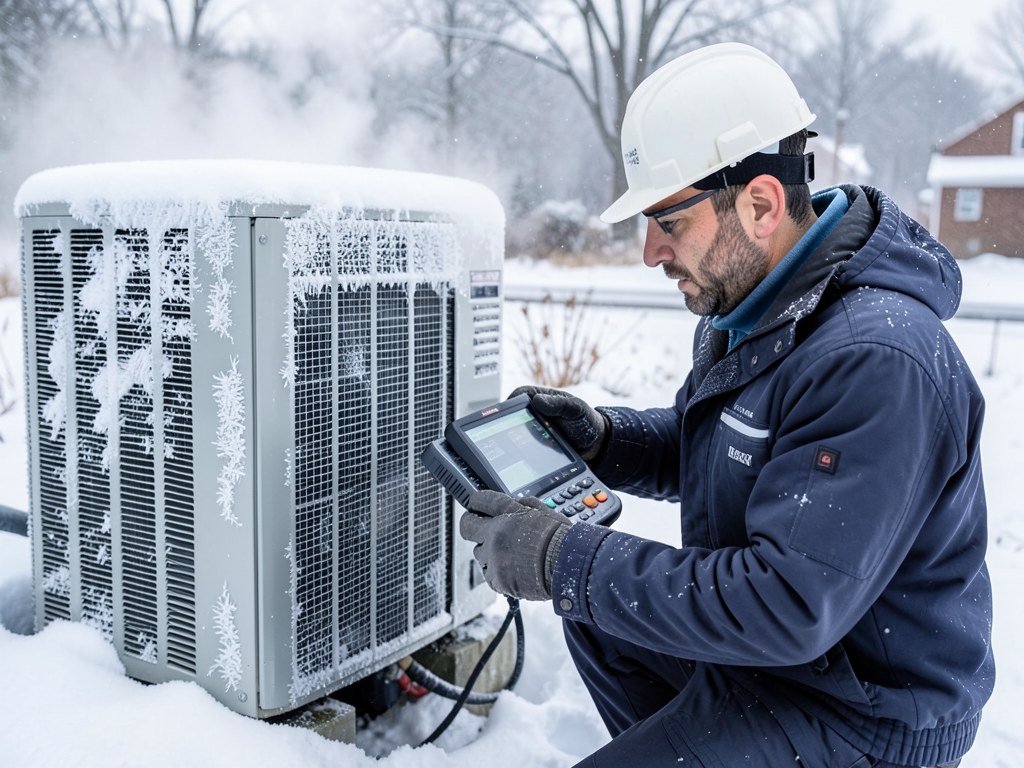
A frozen evaporator coil also causes water leaks. When the coil ices over and then thaws, the excess water overwhelms the drain pan. This happens when airflow is restricted, refrigerant levels are low, or your system runs too long on mild days trying to keep up with improper thermostat settings.

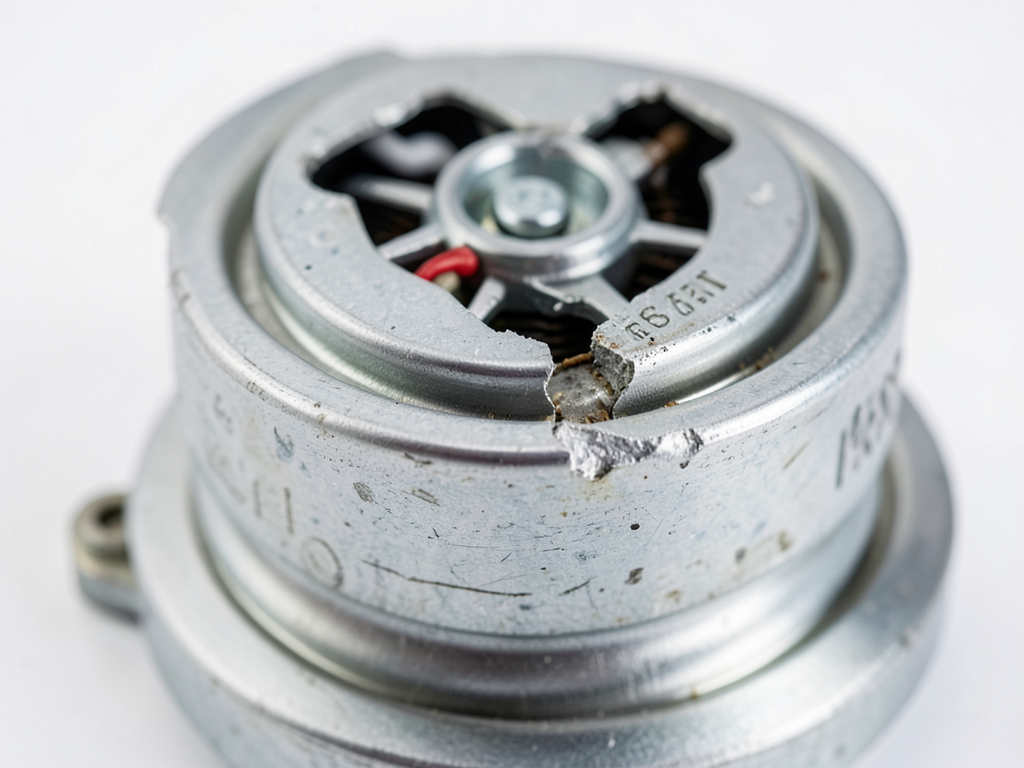
Sometimes the drain pan itself rusts through. Older systems in Cincinnati homes often have metal pans that corrode over time. A cracked pan or disconnected drain line means water spills directly into your home instead of flowing outside.

An air conditioning system leaking water is not just messy. It damages drywall, floors, and insulation. Moisture creates mold growth within 24 to 48 hours. The longer you wait, the more expensive the repairs become. What starts as a small AC water leak can turn into a full remediation project.

If you see your air conditioner dripping water, the problem is already costing you money in wasted energy and potential property damage.

Why Your Air Conditioner Is Dripping Water
How We Fix Your AC System Leaking Water

How We Fix Your AC System Leaking Water

We do not guess. We diagnose the exact cause of your water dripping from AC unit before we touch a single component.

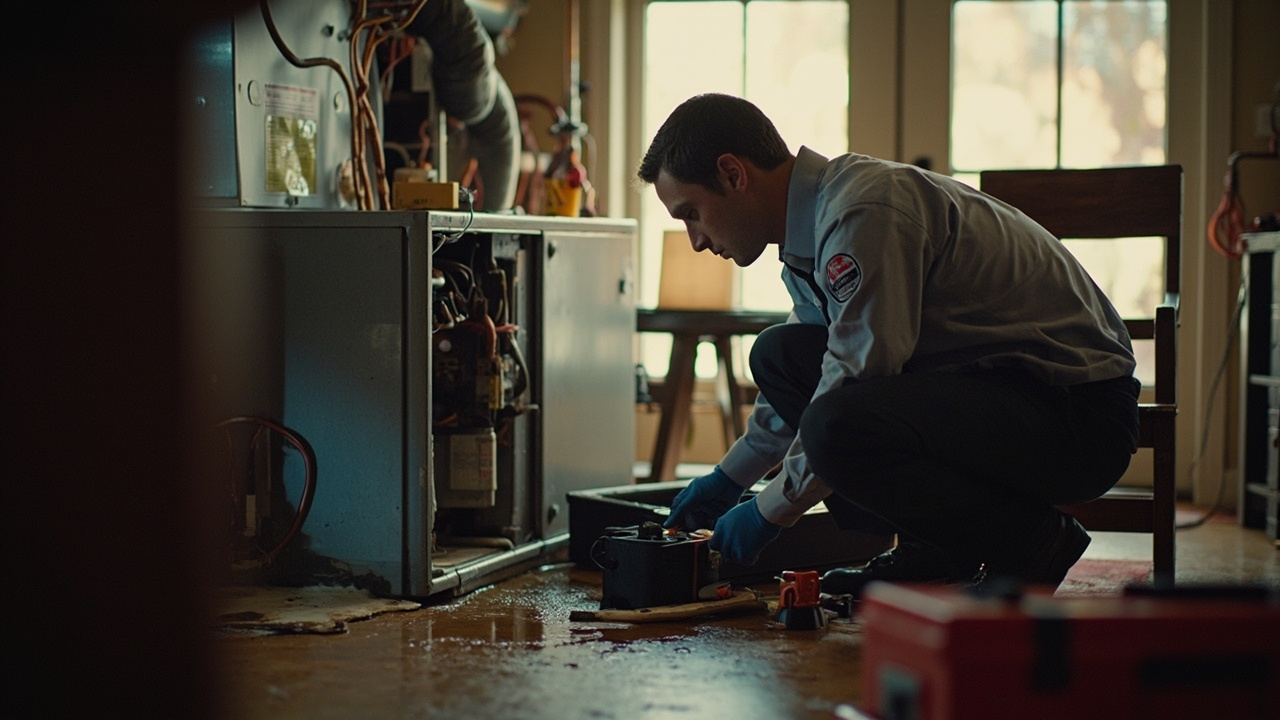
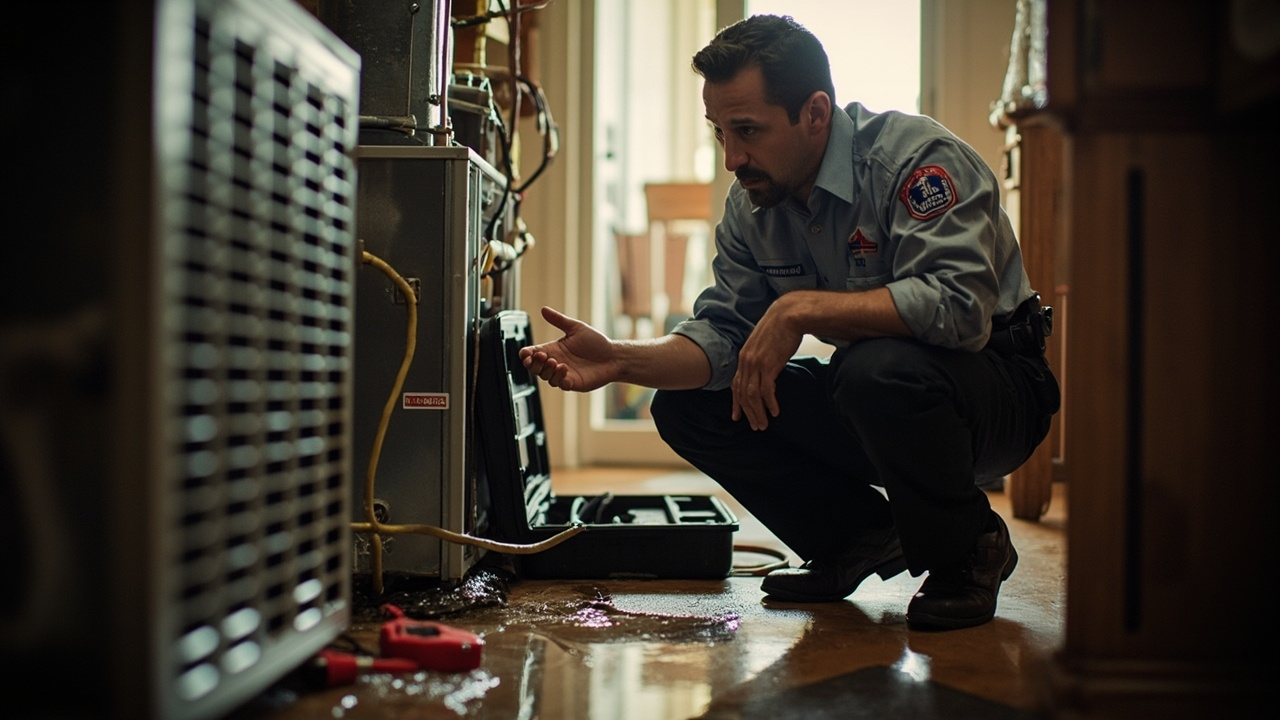
First, we inspect the condensate drain line from the air handler to the exterior discharge point. We look for blockages, disconnections, and improper slope. Cincinnati homes built before 2000 often have drain lines that run too flat or have too many turns. Water sits in these low spots and backs up.

We use a wet-dry vacuum or compressed air to clear clogs. For severe algae buildup, we flush the line with a cleaning solution that kills organic growth and prevents it from returning. If the line is damaged or poorly routed, we replace or reroute it to ensure proper drainage.

Next, we check the evaporator coil and airflow. A frozen coil means something is restricting airflow or refrigerant is low. We inspect your air filter, return air pathways, and blower motor. A dirty filter is the easiest fix. A failing blower motor or ductwork issues require more attention.

We measure refrigerant levels with manifold gauges. If the charge is low, we find the leak, repair it, and recharge the system to manufacturer specifications. Running an AC system with low refrigerant destroys the compressor and creates repeated freeze-thaw cycles that flood your drain pan.

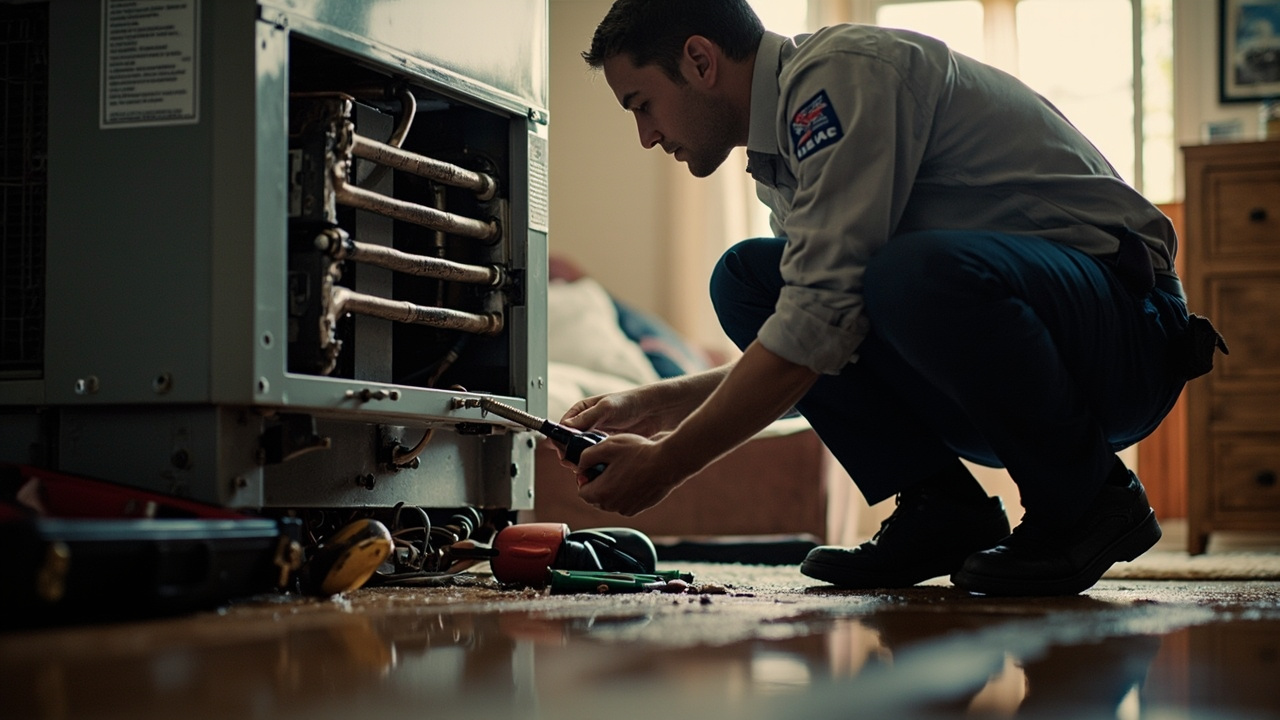
We inspect the drain pan for cracks, rust, or misalignment. Metal pans get replaced with durable composite pans. We seal any gaps around the air handler cabinet to prevent condensation from forming on cold surfaces outside the unit.

Finally, we test the float switch if your system has one. This safety device shuts off the air conditioner when water rises too high in the drain pan. A failed switch means you get no warning before water overflows.

What Happens When You Call About Your AC Water Leak

AC Unit Leaking Water in Cincinnati – Fast Diagnosis and Permanent Repairs
01

Same-Day Inspection Appointment

You call. We send a technician to your home within hours. We do not make you wait days while water damages your property. The technician arrives with diagnostic tools, drain cleaning equipment, and common replacement parts. We assess the extent of the leak, identify where the water is coming from, and explain what we find in plain language. You get a clear explanation of the problem and the fix.
02

Targeted Repair Work

Once you approve the repair, we get to work immediately. We clear drain lines, replace damaged pans, repair refrigerant leaks, or restore proper airflow depending on what caused your air conditioner dripping water. We do not upsell unnecessary services. If your drain line just needs cleaning, that is what we do. If your evaporator coil is iced over due to a failed blower motor, we replace the motor and verify airflow before we leave.
03

Verification and Prevention

After the repair, we run your system through a full cooling cycle. We verify that condensate drains properly, the evaporator coil maintains correct temperature, and no water leaks from any connection point. We show you where the problem was and what we did to fix it. Before we leave, we explain what maintenance steps prevent the same issue from happening again, like changing your filter monthly during summer.

Why Cincinnati Homeowners Trust Five Star HVAC Cincinnati

Cincinnati's weather swings from hot, humid summers to freezing winters. Your air conditioning system works harder here than it would in a dry climate. That extra workload means more condensate, more stress on drain lines, and more opportunities for leaks.

We have repaired thousands of AC water leaks in Cincinnati homes. We know the common issues with older homes in neighborhoods like Hyde Park and Mt. Lookout, where drain lines were installed with minimal slope. We know that homes in West Chester and Mason often have air handlers in unconditioned attic spaces, where temperature swings cause condensation problems outside the drain pan itself.

Local building codes require specific drain pan materials and secondary drain provisions for attic installations. We follow those codes because they prevent exactly the kind of water damage you are trying to avoid right now.

When you call a national chain or a technician from out of town, you get generic advice. They treat every AC system leaking water the same way. That approach wastes your money and misses the real problem.

We carry parts that fit the HVAC systems common in Cincinnati. Lennox, Carrier, Trane, Rheem, and York dominate this market. We stock drain pans, condensate pumps, and float switches that fit these brands. You do not wait three days for a part to ship from a warehouse in another state.

You also get honest pricing. We do not charge triple rates because it is summer and you are desperate. We charge fair rates for quality work. Our technicians are trained to explain what they find and give you options. You make the decision. We do the work.

We also understand that an air conditioner dripping water often signals a maintenance problem. We can set up a plan that prevents future clogs and catches small issues before they become expensive failures.

What You Can Expect From Start to Finish

Fast Response Time

We understand that water dripping from your AC unit creates immediate damage. We prioritize leak calls and schedule same-day or next-day appointments. During peak summer months, when humidity is highest and AC systems work the hardest, we extend our hours to handle emergency calls. You will not sit in a customer service queue while water ruins your ceiling. Call us in the morning, and we are there by afternoon. You get a specific arrival window, not a vague four-hour range.

Thorough Diagnostic Process

Our technicians do not just look at the obvious drip point. We trace the entire condensate drainage system from the evaporator coil to the exterior discharge. We check the drain pan, the primary drain line, and the secondary overflow provision if your system has one. We measure airflow across the coil, inspect the air filter and blower assembly, and test refrigerant pressures. This complete assessment identifies the root cause, not just the symptom. You get a written explanation of what we found and what needs to be done.

Repairs That Last

We fix problems correctly. If your drain line is clogged, we do not just blow it out and leave. We treat the line to kill algae and mold, then inspect the entire run for damage or poor installation. If your drain pan is cracked, we replace it with a pan rated for your system size and installation environment. If your evaporator coil froze due to low refrigerant, we find the leak, repair it, evacuate the system, and recharge it to exact specifications. You do not get a temporary patch that fails in two weeks.

Ongoing Support and Maintenance

After we repair your AC water leak, we offer maintenance plans that prevent future problems. Regular maintenance includes cleaning your drain line, inspecting your drain pan, checking refrigerant levels, and ensuring proper airflow. Cincinnati's humid climate makes annual maintenance critical. Algae and mold grow faster here than in dry climates. A maintenance plan catches small issues before they cause water damage. You also get priority scheduling and discounted service rates. We keep your system running efficiently and keep water where it belongs.

Frequently Asked Questions

You Have Questions,
We Have Answers

How do I stop my AC unit from leaking water? +

First, turn off your AC to prevent water damage. Check the condensate drain line for clogs. You can flush it with distilled vinegar or use a wet/dry vac to clear blockages. Inspect the drain pan for cracks or rust. Replace your air filter if it looks dirty, as restricted airflow causes coil freezing and dripping. In Cincinnati's humid summers, condensate lines clog fast due to algae buildup. If basic cleaning does not fix the leak, you need a professional to check refrigerant levels, the evaporator coil, or the condensate pump. Do not ignore water pooling around your unit.

Can I still use my AC if it's leaking water? +

No. Running your AC while it leaks water risks serious damage. Water leaking means something is wrong: a clogged drain, frozen coil, or cracked pan. Continued operation can flood your basement, damage drywall and flooring, or cause electrical shorts. Cincinnati homes with finished basements face costly water damage from ignored leaks. The leak also signals your system is working harder, spiking your electric bill. Turn the unit off immediately and troubleshoot. If you cannot identify the problem quickly, call an HVAC technician. Running the system makes the problem worse and more expensive to repair.

Is a leaking AC unit an emergency? +

It depends. A small drip is not urgent but needs attention within 24 hours. Heavy leaking, water pooling near electrical components, or water spreading across floors is an emergency. Cincinnati's high humidity accelerates mold growth, which starts within 48 hours of water exposure. If the leak occurs during a heatwave and you have young children, elderly family, or health concerns, treat it as urgent. Turn off the AC, contain the water with towels, and call an HVAC pro immediately. Water and electricity do not mix. Do not wait if the leak is near your electrical panel.

Why is my AC leaking water from the bottom? +

The most common cause is a clogged condensate drain line. Your AC removes humidity from indoor air, and that moisture drains through a PVC pipe. In Cincinnati, algae and mold grow fast in drain lines due to heat and humidity. When the line clogs, water backs up and overflows from the drain pan under your indoor unit. Other causes include a cracked or rusted drain pan, a frozen evaporator coil from dirty filters or low refrigerant, or a broken condensate pump. Check the drain line first. If it is clear, call a technician to diagnose the issue.

Is AC leaking water expensive to fix? +

It depends on the cause. Cleaning a clogged drain line costs little if you do it yourself or under $150 with a service call. Replacing a cracked drain pan runs higher. Fixing a refrigerant leak or replacing a condensate pump costs more. Most AC water leaks in Cincinnati stem from clogged drains, which are inexpensive fixes if caught early. Ignoring the leak leads to water damage, mold remediation, and compressor failure, which skyrockets costs. The longer you wait, the more you pay. Address leaks immediately to keep repair bills low. Preventive maintenance stops most leaks before they start.

What is the 3 minute rule for AC? +

The three-minute rule protects your AC compressor. After turning off your system, wait at least three minutes before restarting it. This delay lets refrigerant pressures equalize inside the compressor. Restarting too quickly forces the compressor to fight high pressure, which damages internal components and shortens its lifespan. In Cincinnati's hot, humid summers, homeowners frequently cycle their AC on and off to save energy. This habit harms the compressor. Use a programmable thermostat instead. If your AC short-cycles or trips the breaker repeatedly, you have a bigger problem. Call an HVAC technician to diagnose electrical or mechanical issues.

How do I unclog my AC condensate drain line? +

Locate the condensate drain line. It is usually a white PVC pipe near your outdoor unit or coming out of your basement wall. Pour one cup of distilled white vinegar into the drain access point near the indoor unit. Let it sit for 30 minutes to dissolve algae buildup. Flush the line with water. For stubborn clogs, use a wet/dry vacuum on the outdoor drain exit to suck out debris. Cincinnati's humidity fuels algae growth, so flush your drain monthly during cooling season. If the line stays clogged, a professional can use compressed air or specialized tools to clear it completely.

Can I fix a leaking AC myself? +

You can handle basic fixes. Cleaning the condensate drain line, replacing a dirty air filter, and inspecting the drain pan for visible cracks are safe DIY tasks. However, refrigerant leaks, frozen evaporator coils, electrical issues, and condensate pump failures require a licensed HVAC technician. Working with refrigerant without certification is illegal and dangerous. Cincinnati homeowners risk voiding warranties by attempting complex repairs themselves. If you clear the drain and replace the filter but the leak continues, stop. Call a professional. Misdiagnosing the problem wastes time and money. Know your limits and prioritize safety over saving a service call fee.

What happens if I ignore an AC leak? +

Ignoring an AC leak invites disaster. Water damages flooring, drywall, insulation, and wood framing. In Cincinnati's humid climate, mold grows within 48 hours, threatening your family's health and requiring expensive remediation. Continuous leaking also signals deeper AC problems like refrigerant loss or a failing compressor. Running the system while it leaks forces it to work harder, spiking your energy bills and accelerating wear. Electrical components near standing water create shock and fire hazards. A small, ignored leak becomes a full system replacement. Address leaks immediately to protect your home, health, and wallet. Procrastination costs more than prevention.

What is the $5000 rule for AC? +

The $5,000 rule is a replacement guideline. Multiply the repair cost by your AC system's age in years. If the total exceeds $5,000, replace the unit instead of repairing it. For example, a $400 repair on a 10-year-old system equals $4,000, so repair it. A $700 repair on an 8-year-old unit equals $5,600, so replace it. This rule helps you avoid pouring money into an aging, inefficient system. Cincinnati homeowners should also consider energy savings from newer, high-efficiency models. Older systems cost more to run. Consult an HVAC pro to compare repair versus replacement costs and long-term value.

How Cincinnati's Humidity Makes AC Drain Line Maintenance Critical

Cincinnati averages 75 to 80 percent humidity during summer months. Your air conditioning system removes that moisture from your indoor air, creating gallons of condensate every day. That water flows through a drain line that is dark, damp, and warm. Algae and mold thrive in these conditions. A drain line that stays clear for years in Phoenix will clog in one season here. The Ohio River Valley climate creates constant moisture challenges. Homes near the river or in low-lying areas face even higher humidity levels. Your AC system works harder and produces more condensate than systems in drier regions.

Cincinnati building codes require specific provisions for condensate drainage, especially for attic installations. Many older homes do not meet current standards because they were built before these codes existed. Upgrading your drain system to include a secondary drain pan and an overflow shutoff switch protects your home and keeps you compliant if you ever sell. Local HVAC contractors understand these requirements. We know how inspectors in Hamilton County and surrounding areas evaluate drainage systems. Choosing a local company means you get repairs that meet local standards and protect your property value.
HVAC Services in The Cincinnati Area

Five Star HVAC proudly serves all homes and businesses in the greater Cincinnati area. Our skilled team is ready to respond to your service requests, whether you're in the city center or the surrounding suburbs. Use the map to explore our service area and see how close we are to you. We're committed to providing prompt and dependable service, no matter where you are within our coverage zone.

Address:
Five Star HVAC Cincinnati, 4024 Hamilton Ave, Cincinnati, OH, 45223

Additional Services We Offer

Our news updates

Latest Articles & News from The Blogs

How Close Can You Plant Flowers and Shrubs to Your AC Unit in Batavia? Planting too close to your outdoor…

How Close Can You Plant Flowers and Shrubs to Your AC Unit in Batavia?

How Close Can You Plant Flowers and Shrubs to Your AC Unit in Batavia? Planting too close to your outdoor…

Where to Place Your Thermostat in a Mt. Washington House for the Most Accurate Readings

Where to Place Your Thermostat in a Mt. Washington House for the Most Accurate Readings Your thermostat location affects your…

Why Your Furnace Keeps Turning On and Off Every Few Minutes in Westwood

Why Your Furnace Keeps Turning On and Off Every Few Minutes in Westwood If your furnace is turning on and…

Contact Us

Water damage spreads fast. Call Five Star HVAC Cincinnati now at (513) 717-5155. We will diagnose your air conditioner dripping water and fix it right the first time. Same-day appointments available.