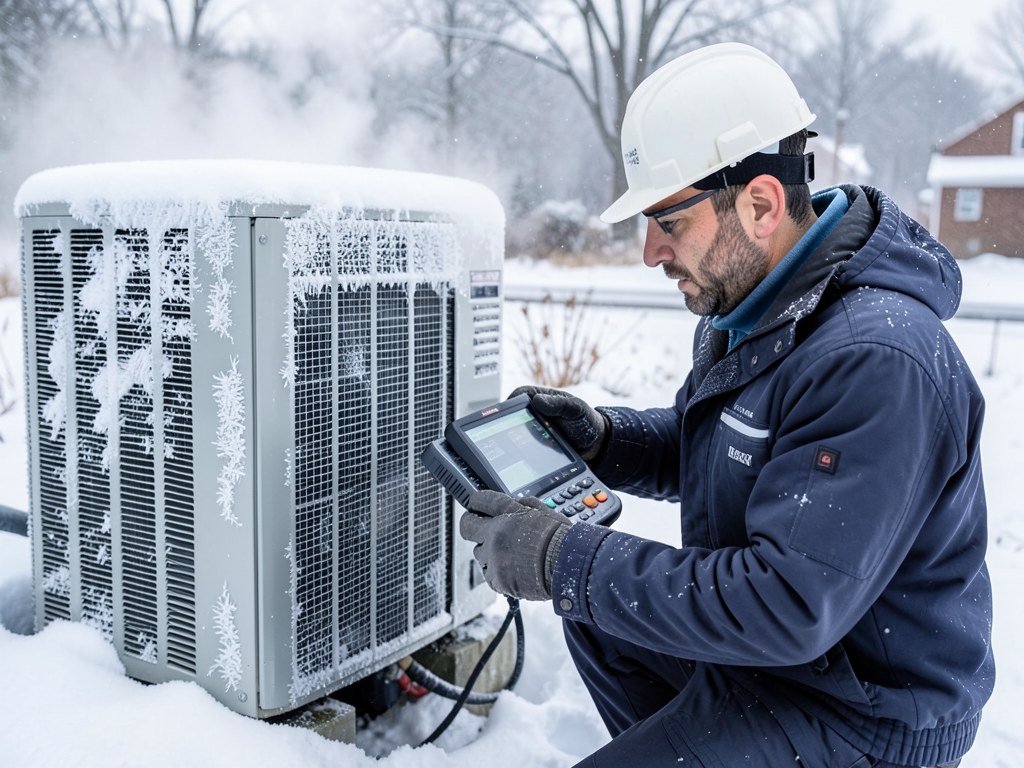
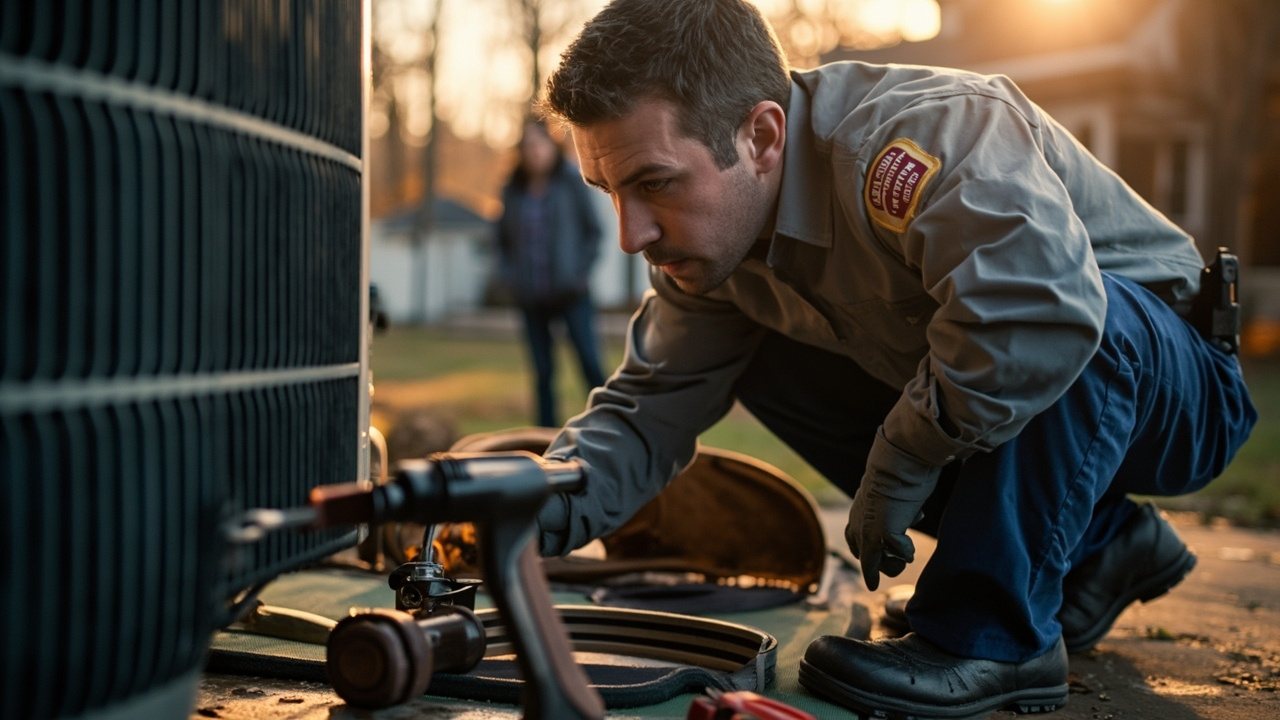

Cincinnati sits in the Ohio River Valley where humidity regularly exceeds 70 percent during summer months and temperature swings between winter and summer span 100 degrees. Heat pumps operate year-round in heating and cooling modes, unlike furnaces that sit idle half the year. Winter temperatures frequently drop into the teens, pushing heat pumps below their efficient operating range and forcing auxiliary heat to run constantly. Spring brings freeze-thaw cycles that expand and contract refrigerant lines, creating stress points where leaks develop. The high humidity corrodes electrical connections, grows mold in ductwork, and clogs condensate drain lines. These conditions accelerate wear on reversing valves, compressors, and defrost controls. Emergency heat pump repair calls spike during the first cold snap in November and the first heatwave in June when systems switch modes and reveal problems that developed during the off-season.
Cincinnati heat pump service requires familiarity with the mix of housing stock and installation challenges across Hamilton County and Warren County. Historic homes in Mount Adams and Clifton have limited electrical service that struggles with heat pump amperage draw. Split-level homes in Fairfield and Forest Park have ductwork sizing problems that reduce heat pump efficiency. Newer construction in Liberty Township and West Chester uses higher-efficiency systems with variable-speed components that require specialized diagnostic equipment. Local HVAC technicians understand that condensate pumps fail regularly in basement installations common throughout the region. They know which supply houses stock parts at 3 AM and which brands dominate local installations. This local knowledge speeds emergency repairs because the technician arrives prepared for the specific challenges of Cincinnati heat pump systems.