
The best ways to heat and cool a finished basement in your Sayler Park home
Finishing your Sayler Park basement creates valuable living space but presents unique HVAC challenges. The Ohio River Valley’s high humidity and significant seasonal temperature swings make basement climate control more complex than standard home heating and cooling. This guide explores proven solutions specifically for Sayler Park homes, where many properties feature post-World War II construction with varying foundation depths and existing ductwork configurations. Cooling Tower Services.
Understanding Sayler Park basement HVAC challenges
Sayler Park’s location along the Ohio River means basements face persistent moisture issues and temperature stratification. The area’s clay soil composition contributes to hydrostatic pressure against foundation walls, while older homes often have undersized or poorly sealed ductwork. These factors create cold floors in winter, damp conditions in summer, and inefficient heating and cooling distribution throughout the year.. Read more about Energy efficient HVAC designs for modern ADUs and tiny homes in Northside.
Local building codes in Hamilton County require proper combustion air supply for basement furnaces and specific ventilation standards for finished spaces. The Cincinnati Department of Buildings and Inspections mandates permits for any HVAC modifications that affect load calculations or introduce new zones to existing systems. EPA indoor air quality guidelines.
Ductless mini-split systems: The gold standard for basement comfort
Ductless mini-split systems offer the most efficient solution for finished basements in Sayler Park. These systems eliminate the energy losses associated with extending existing ductwork through unconditioned spaces. Modern mini-splits achieve SEER2 ratings up to 22, providing both heating and cooling from a single outdoor unit.
Installation involves mounting an indoor air handler on an exterior wall, connecting it to the outdoor condenser via refrigerant lines through a small three-inch hole. The system’s inverter-driven compressor adjusts capacity based on demand, maintaining consistent temperatures without the temperature swings common in traditional systems.
Sayler Park homeowners benefit from mini-splits’ superior dehumidification capabilities. The Ohio River Valley’s summer humidity often exceeds 70%, and mini-splits remove moisture more effectively than standard air conditioners, preventing the musty odors common in basement environments.
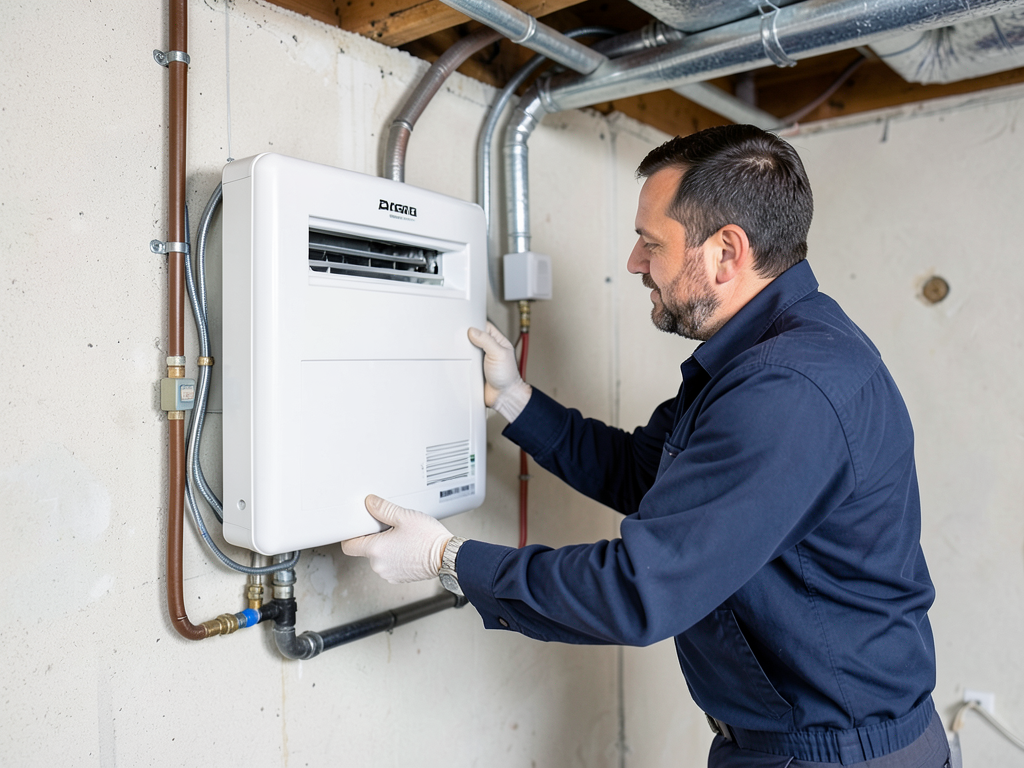
Image description: Technician installing a ductless mini-split air handler on a basement wall, showing refrigerant line connections and condensate drain installation.
Extending existing HVAC: When it works and when it fails
Extending your home’s existing ductwork to serve a finished basement can be cost-effective but requires careful evaluation. The success depends on your current system’s capacity, duct sizing, and static pressure limitations. A Manual J load calculation determines whether your furnace or air handler can handle the additional square footage. Emergency furnace repair services for Indian Hill homeowners available right now.
Many Sayler Park homes built between 1950 and 1980 have 3-4 ton systems that operate near capacity. Adding basement ductwork without proper assessment can cause inadequate airflow, frozen coils, or system failure. The static pressure increase from additional runs often exceeds manufacturer specifications, reducing efficiency and equipment lifespan.
If your system has excess capacity and properly sized ducts, extending to the basement may cost $2,000-$4,000 compared to $3,500-$6,000 for a mini-split. However, the energy savings and comfort improvements of a dedicated basement system often justify the higher initial investment.
Supplemental heating options for Sayler Park winters
Even with proper cooling, basement floors remain cold due to the ground’s constant temperature of approximately 55°F. Supplemental heating becomes essential for year-round comfort. Electric baseboard heaters provide inexpensive point heating but operate at only 100% efficiency and can significantly increase utility costs.
High-efficiency heat pumps offer an alternative, extracting heat from outdoor air even in sub-freezing temperatures. Modern cold-climate heat pumps maintain 70% capacity at 5°F, making them viable for Sayler Park’s winter conditions. These systems qualify for Duke Energy rebates and federal tax credits, reducing installation costs by up to 30%.. Read more about Professional climate control options for private wine cellars in Indian Hill.
Radiant floor heating provides the ultimate comfort solution but requires significant upfront investment. Electric mats or hydronic systems installed beneath finished flooring eliminate cold floor syndrome while operating at lower temperatures than forced air systems.
Managing humidity: The critical basement factor
Humidity control determines whether your finished basement remains comfortable or develops mold and mildew issues. The Ohio River Valley’s climate creates ideal conditions for moisture problems, with summer dew points often exceeding 70°F. Standard HVAC systems remove humidity as a byproduct of cooling but may not maintain optimal 45-55% relative humidity levels.
Whole-house dehumidifiers integrated with your HVAC system provide continuous moisture removal independent of cooling demand. These units can remove 70-100 pints of water daily, maintaining consistent humidity levels year-round. Portable dehumidifiers offer a lower-cost alternative but require manual emptying and provide less consistent performance.
Proper drainage becomes critical when installing basement HVAC equipment. Hamilton County building codes require condensate drains to tie into existing plumbing or discharge outdoors with proper air gaps. Improper drainage can cause water damage and create health hazards from standing water.
Cost comparison: What Sayler Park homeowners should expect
| System Type | Installation Cost | Annual Operating Cost | Expected Lifespan |
|---|---|---|---|
| Ductless Mini-Split | $3,500 – $6,000 | $350 – $500 | 15-20 years |
| Ductwork Extension | $2,000 – $4,000 | $400 – $600 | 10-15 years |
| Electric Baseboard | $500 – $1,500 | $600 – $1,000 | 20+ years |
| Heat Pump System | $4,000 – $7,000 | $300 – $450 | 15-20 years |
Local building considerations and permits
Hamilton County requires mechanical permits for all basement HVAC installations that involve new equipment or modifications to existing systems. The permitting process ensures compliance with mechanical codes regarding combustion air, ventilation rates, and energy efficiency standards. Permit fees typically range from $75-$200 depending on project scope.
Sayler Park’s older housing stock often requires additional considerations. Many homes built before 1980 have asbestos-containing materials in ductwork or insulation. Professional testing becomes necessary before any demolition or modification work. Lead paint regulations also apply to homes constructed before 1978.
Local zoning ordinances in Cincinnati may restrict outdoor unit placement based on setback requirements and noise regulations. Mini-split condensers must maintain minimum distances from property lines and cannot create excessive noise levels as measured at adjacent properties.
Energy efficiency and utility rebates
Duke Energy offers rebates for high-efficiency HVAC equipment installed in Hamilton County homes. Mini-splits with SEER2 ratings above 18 and heat pumps with HSPF ratings above 9.5 qualify for $300-$500 rebates. These incentives, combined with federal tax credits, can reduce installation costs by 25-30%.
Energy efficiency in basement HVAC systems extends beyond equipment selection. Proper insulation of basement walls to R-13 minimum, sealing all air leaks, and installing insulated ductwork in unconditioned spaces significantly reduces operating costs. The return on investment for efficiency improvements typically ranges from 3-7 years.
Smart thermostats optimize basement HVAC operation by learning occupancy patterns and adjusting temperatures automatically. These devices can reduce energy consumption by 10-15% while maintaining comfort levels during actual use periods.
Maintenance requirements for basement HVAC systems
Basement HVAC systems require specific maintenance due to their unique environment. The damp conditions accelerate corrosion on metal components and promote biological growth in condensate drains. Annual professional maintenance should include coil cleaning, drain line inspection, and refrigerant charge verification. Furnace Maintenance Checklist.
Air filters in basement systems often clog more quickly due to dust from concrete surfaces and higher humidity levels. Monthly filter checks and replacements prevent reduced airflow and system strain. The return air grille location significantly impacts system performance; basement returns should be positioned away from moisture sources.
Heat pump systems require additional winter maintenance, including clearing snow and ice from outdoor units and ensuring proper defrost cycle operation. Electric baseboard heaters need periodic cleaning to remove dust accumulation that can cause burning odors when first activated each season.
Making the right choice for your Sayler Park home
The optimal basement HVAC solution depends on your specific circumstances. Consider these factors when making your decision: existing system capacity, basement square footage, insulation levels, intended use of the space, and long-term energy costs.
Homes with limited existing capacity or older ductwork typically benefit most from mini-split systems. The installation disruption is minimal, and the system provides independent temperature control from the main floor. For homes with adequate existing capacity, extending ductwork may offer the best value, provided proper load calculations confirm system capability.
Regardless of the system chosen, proper humidity control and insulation remain critical for basement comfort. The investment in these components often provides greater comfort improvement than equipment selection alone.
Frequently Asked Questions
What size HVAC system do I need for my finished basement?
Basement HVAC sizing depends on square footage, insulation levels, and local climate conditions. A typical 1,000 square foot basement in Sayler Park requires 18,000-24,000 BTU for cooling and 24,000-30,000 BTU for heating. Professional Manual J calculations provide accurate sizing based on your specific conditions.
Can I install basement HVAC myself to save money?
DIY basement HVAC installation is not recommended due to complex code requirements, proper refrigerant handling, and electrical safety concerns. Improper installation can void equipment warranties, create safety hazards, and result in costly repairs. Professional installation ensures code compliance and optimal system performance. 24/7 AC repair for restaurants and small businesses in Downtown Cincinnati.
How long does basement HVAC installation take?
Installation time varies by system type. Mini-split installations typically require 1-2 days, while ductwork extensions may take 3-5 days depending on complexity. Heat pump installations generally require 2-3 days. Professional installers can provide specific timelines after evaluating your basement configuration. Top-rated heat pump installers serving the Montgomery and Blue Ash area.
Will a basement HVAC system increase my home’s value?
Yes, properly installed basement HVAC systems increase home value by making finished basements more usable and comfortable. Real estate professionals estimate that climate-controlled finished basements add 50-75% of their cost to home value, with higher returns in areas like Sayler Park where basement finishing is common.
Ready to transform your basement comfort?
Don’t let another Cincinnati summer make your finished basement unusable or another winter leave you with cold floors. The right HVAC solution can transform your Sayler Park basement into comfortable, year-round living space while reducing energy costs and preventing moisture problems.
Our NATE-certified technicians understand the unique challenges of Ohio River Valley basements and can recommend the optimal system for your specific home. We handle all permitting requirements, provide detailed load calculations, and stand behind our work with comprehensive warranties.
Call (513) 717-5155 today to schedule your free basement HVAC consultation. We’ll evaluate your current system, assess your basement’s specific needs, and provide a detailed proposal with multiple options to fit your budget and comfort requirements.
Pick up the phone and call (513) 717-5155 before the next heat wave hits. Your finished basement deserves the same comfort as the rest of your home, and we can make that happen. For more information, visit U.S. Department of Energy heat pump guide.
{
“@context”: “https://schema.org”,
“@type”: “BlogPosting”,
“headline”: “The best ways to heat and cool a finished basement in your Sayler Park home”,
“description”: “Discover the best HVAC solutions for Sayler Park basements. Learn about mini-splits, ductwork extensions, and humidity control in Cincinnati’s Ohio River Valley climate.”,
“wordCount”: 1766,
“datePublished”: “2026-04-08T15:55:00.000Z”,
“dateModified”: “2026-04-08T15:55:00.000Z”,
“inLanguage”: “en-US”,
“mainEntityOfPage”: {
“@type”: “WebPage”,
“@id”: “https://fivestarhvaccincinnati.com”
},
“publisher”: {
“@type”: “LocalBusiness”,
“name”: “Five Star HVAC Cincinnati”,
“url”: “https://fivestarhvaccincinnati.com”
},
“author”: {
“@type”: “Organization”,
“name”: “Five Star HVAC Cincinnati”,
“url”: “https://fivestarhvaccincinnati.com”
},
“image”: {
“@type”: “ImageObject”,
“url”: “https://fivestarhvaccincinnati.com/wp-content/uploads/2026/03/the-best-ways-to-heat-and-cool-a-finished-basement-1.png”
}
}
{
“@context”: “https://schema.org”,
“@type”: “HVACBusiness”,
“name”: “Five Star HVAC Cincinnati”,
“url”: “https://fivestarhvaccincinnati.com”,
“address”: {
“@type”: “PostalAddress”,
“addressLocality”: “Cincinnati”
},
“areaServed”: {
“@type”: “City”,
“name”: “Cincinnati”
}
}
{
“@context”: “https://schema.org”,
“@type”: “FAQPage”,
“mainEntity”: [
{
“@type”: “Question”,
“name”: “What size HVAC system do I need for my finished basement?”,
“acceptedAnswer”: {
“@type”: “Answer”,
“text”: “Basement HVAC sizing depends on square footage, insulation levels, and local climate conditions. A typical 1,000 square foot basement in Sayler Park requires 18,000-24,000 BTU for cooling and 24,000-30,000 BTU for heating. Professional Manual J calculations provide accurate sizing based on your specific conditions.”
}
},
{
“@type”: “Question”,
“name”: “Can I install basement HVAC myself to save money?”,
“acceptedAnswer”: {
“@type”: “Answer”,
“text”: “DIY basement HVAC installation is not recommended due to complex code requirements, proper refrigerant handling, and electrical safety concerns. Improper installation can void equipment warranties, create safety hazards, and result in costly repairs. Professional installation ensures code compliance and optimal system performance. 24/7 AC repair for restaurants and small businesses in Downtown Cincinnati.”
}
},
{
“@type”: “Question”,
“name”: “How long does basement HVAC installation take?”,
“acceptedAnswer”: {
“@type”: “Answer”,
“text”: “Installation time varies by system type. Mini-split installations typically require 1-2 days, while ductwork extensions may take 3-5 days depending on complexity. Heat pump installations generally require 2-3 days. Professional installers can provide specific timelines after evaluating your basement configuration. Top-rated heat pump installers serving the Montgomery and Blue Ash area.”
}
},
{
“@type”: “Question”,
“name”: “Will a basement HVAC system increase my home’s value?”,
“acceptedAnswer”: {
“@type”: “Answer”,
“text”: “Yes, properly installed basement HVAC systems increase home value by making finished basements more usable and comfortable. Real estate professionals estimate that climate-controlled finished basements add 50-75% of their cost to home value, with higher returns in areas like Sayler Park where basement finishing is common.”
}
},
{
“@type”: “Question”,
“name”: “Ready to transform your basement comfort?”,
“acceptedAnswer”: {
“@type”: “Answer”,
“text”: “Don’t let another Cincinnati summer make your finished basement unusable or another winter leave you with cold floors. The right HVAC solution can transform your Sayler Park basement into comfortable, year-round living space while reducing energy costs and preventing moisture problems.”
}
}
]
}
{
“@context”: “https://schema.org”,
“@type”: “BreadcrumbList”,
“itemListElement”: [
{
“@type”: “ListItem”,
“position”: 1,
“name”: “Home”,
“item”: “https://fivestarhvaccincinnati.com”
},
{
“@type”: “ListItem”,
“position”: 2,
“name”: “Blog”,
“item”: “https://fivestarhvaccincinnati.com/blog”
},
{
“@type”: “ListItem”,
“position”: 3,
“name”: “The best ways to heat and cool a finished basement in your Sayler Park home”
}
]
}
{
“@context”: “https://schema.org”,
“@type”: “Service”,
“serviceType”: “HVAC”,
“provider”: {
“@type”: “LocalBusiness”,
“name”: “Five Star HVAC Cincinnati”,
“url”: “https://fivestarhvaccincinnati.com”
},
“areaServed”: {
“@type”: “City”,
“name”: “Cincinnati”
},
“description”: “Discover the best HVAC solutions for Sayler Park basements. Learn about mini-splits, ductwork extensions, and humidity control in Cincinnati’s Ohio River Valley climate.”
}