
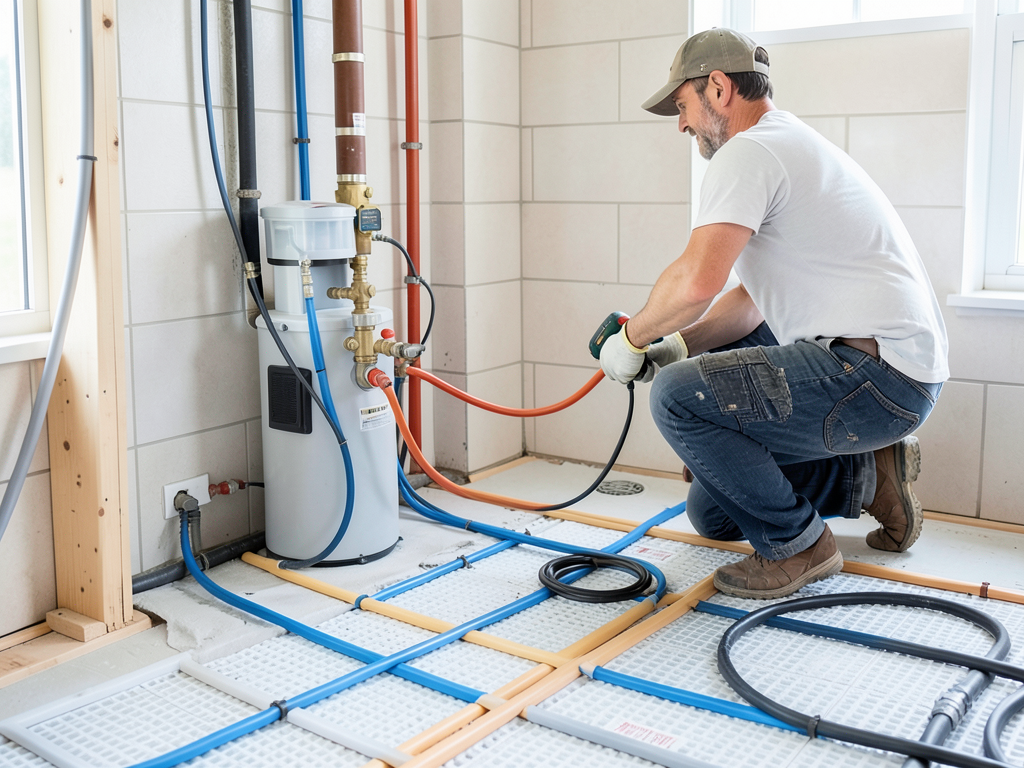
Adding radiant floor heating to your Hamilton bathroom or kitchen remodel
Radiant floor heating transforms cold bathroom tiles and chilly kitchen floors into warm, comfortable spaces that make Hamilton winters more bearable. For homeowners in Butler County considering a bathroom or kitchen remodel, radiant heat offers consistent warmth without the noise and dust of forced-air systems. The technology works by circulating warm water through PEX tubing beneath your flooring or using electric mats to generate heat directly through the floor surface. Butler County Building Department permit requirements.
Installing radiant floor heating during a remodel makes perfect sense because the subfloor is already exposed and accessible. Whether you’re updating a historic Lindenwald home or modernizing a newer Fairfield Township property, the timing couldn’t be better to add this luxury feature. Hamilton’s clay soil and older homes often experience drafts and cold spots that radiant heat eliminates completely.
The investment typically ranges from $10 to $20 per square foot for hydronic systems and $8 to $15 for electric options in the Hamilton area. While the upfront cost exceeds traditional heating methods, the energy savings and increased home value often offset the initial expense within five to seven years. Local utility rebates through Duke Energy and federal tax credits for high-efficiency systems can reduce your total investment significantly. Energy Star radiant floor heating information.
Why Hamilton homeowners choose radiant floor heating
Hamilton’s climate creates specific challenges that radiant floor heating addresses perfectly. The Ohio River Valley’s high humidity combined with freezing winter temperatures means traditional forced-air systems often struggle to maintain consistent comfort levels. Radiant heat eliminates cold spots and drafts that plague older homes in neighborhoods like German Village and the historic downtown district.
The technology provides silent operation and improved indoor air quality by not circulating dust and allergens through ductwork. This matters in Hamilton where seasonal pollen counts can spike dramatically during spring months. Homeowners report better sleep quality and reduced allergy symptoms after switching to radiant floor systems.
Energy efficiency represents another compelling reason for Hamilton residents. Radiant systems typically operate at 85-90% efficiency compared to 60-70% for older forced-air furnaces. The even heat distribution means you can set thermostats 2-3 degrees lower while maintaining the same comfort level, directly reducing your monthly utility bills. Emergency furnace repair services for Indian Hill homeowners available right now.
Property values increase measurably with radiant floor heating installation. Real estate agents in Butler County report that homes with radiant heat sell 10-15% faster than comparable properties without it. The feature particularly appeals to buyers in the 45011 and 45013 zip codes where winter temperatures regularly dip below freezing.
Hydronic vs electric radiant floor systems for Ohio homes
Hydronic radiant floor heating uses a boiler to heat water that circulates through PEX tubing installed beneath your flooring. This system excels in whole-house applications and larger spaces like Hamilton’s open-concept kitchens. The initial installation costs more but operates at about half the cost of electric systems over time.
Electric radiant systems use thin heating mats or cables installed directly under flooring materials. These work best for small areas like bathrooms or kitchen additions where whole-house heating isn’t necessary. Installation is simpler and less expensive upfront, making it ideal for Hamilton bathroom remodels where you want warm floors without replacing your entire heating system.
System selection depends on your specific needs and home configuration. Hydronic systems require space for a boiler and manifold, typically in a utility room or basement. Hamilton homes with existing forced-air furnaces might need electrical upgrades to support the additional load. Electric systems need only a thermostat and floor sensor, making them simpler for retrofits. Furnace Maintenance Checklist.
Climate considerations matter significantly in Southwest Ohio. Hydronic systems handle Hamilton’s extreme temperature swings better because water retains heat longer than electric elements. During polar vortex events when temperatures plummet below zero, hydronic systems maintain consistent floor temperatures without the cycling on and off that electric systems experience.
Installation process for radiant floor heating
The installation begins with careful planning of tubing or mat layout based on your room dimensions and heat loss calculations. Technicians use thermal imaging cameras to identify areas of highest heat loss, typically near exterior walls and windows. This diagnostic step ensures optimal tubing placement for maximum efficiency.
Floor preparation involves installing insulation boards to direct heat upward rather than down into the basement or crawl space. In Hamilton’s older homes, this step often reveals hidden moisture issues or structural concerns that need addressing before proceeding. The insulation layer typically adds about 1/2 inch to floor height.
For hydronic systems, PEX tubing gets secured to the insulation using specialized clips or staples. The tubing spacing varies from 6 to 12 inches depending on the heat load requirements. Technicians pressure-test the entire system before covering it with self-leveling compound or mortar bed to ensure no leaks exist.
Electric systems install differently. Heating mats roll out like carpet and connect to a dedicated thermostat. The process takes less time but requires careful electrical planning. Hamilton building codes require GFCI protection for all bathroom floor heating circuits, and permits must be pulled through the Butler County Building Department before installation begins.
The final step involves connecting the system to its control mechanism. Smart thermostats with floor sensors provide precise temperature control and energy monitoring. Many Hamilton homeowners integrate their radiant systems with whole-home automation platforms for optimal efficiency and comfort management.
Cost considerations and local incentives in Hamilton
Radiant floor heating costs vary significantly based on system type, square footage, and installation complexity. In Hamilton, OH, homeowners typically invest $8,000 to $15,000 for bathroom installations and $12,000 to $25,000 for kitchen projects. These figures include demolition, installation, and new flooring materials compatible with radiant heat.
Hydronic systems cost more upfront but save money long-term. A typical hydronic bathroom installation runs $15 to $20 per square foot, while electric systems cost $10 to $15 per square foot. The price difference narrows when considering energy costs over a 10-year period, with hydronic systems often paying for themselves through utility savings.
Butler County residents qualify for several incentives that reduce installation costs. Duke Energy offers rebates up to $500 for high-efficiency heating equipment installations. Federal tax credits provide 30% of installation costs for qualifying systems, potentially saving thousands on your annual tax return. Local utility providers sometimes offer additional incentives during peak energy demand seasons. Why Mason residents trust us for their annual HVAC maintenance and tune-ups.
Maintenance costs remain minimal for radiant systems. Annual boiler inspections for hydronic systems cost $150 to $300, while electric systems need only occasional thermostat checks. The lack of moving parts means fewer repairs compared to traditional furnaces, though water quality in Hamilton’s municipal system can affect system longevity. 24/7 AC repair for restaurants and small businesses in Downtown Cincinnati.
Financing options make radiant floor heating accessible to more homeowners. Many local HVAC contractors offer 12-month same-as-cash plans or longer-term financing with competitive rates. Some Hamilton-area banks provide home improvement loans specifically for energy-efficient upgrades with terms up to 15 years.
Floor material compatibility and design considerations
Not all flooring materials work effectively with radiant heat. Tile and stone conduct heat best, making them ideal choices for Hamilton bathrooms and kitchens. Porcelain and ceramic tiles transfer heat efficiently while withstanding the temperature fluctuations that occur during system cycling. Natural stone like slate or marble provides excellent heat conduction but costs significantly more.
Engineered hardwood performs surprisingly well with radiant heating when properly selected. Unlike solid hardwood, engineered products resist warping and expansion caused by temperature changes. Hamilton homeowners should choose products specifically rated for radiant heat installation, typically those with HDF or plywood cores rather than solid wood construction.
Laminate flooring offers another viable option for radiant systems. Modern laminates withstand radiant heat temperatures without delamination or warping. The material costs less than hardwood while providing similar aesthetic appeal. However, installation requires careful attention to expansion gaps to prevent buckling during temperature fluctuations.
Carpet presents challenges for radiant floor heating effectiveness. Thick pile carpets and dense padding insulate against heat transfer, reducing system efficiency significantly. If carpet is necessary, choose low-pile commercial-grade products with minimal padding. Area rugs work better than wall-to-wall carpet since they can be removed during winter months.
Floor height changes require planning during remodel design. Adding radiant heating typically increases floor height by 1/2 to 1 inch, affecting door clearances and transitions to other rooms. Hamilton’s historic homes often have specific height requirements for accessibility that must be considered during the design phase.
Energy efficiency and BTU requirements for Ohio winters
Calculating proper BTU output ensures your radiant floor system maintains comfortable temperatures during Hamilton’s coldest months. The formula considers room dimensions, insulation levels, window area, and local climate data. Ohio’s climate zone requires approximately 20-30 BTU per square foot for adequate heating in most residential applications.
Floor covering affects heat output significantly. Tile floors require less energy to achieve target temperatures than carpeted surfaces. A 100-square-foot bathroom with tile flooring might need only 2,000 BTU, while the same space with carpet could require 3,000 BTU to maintain equivalent comfort levels.
Insulation quality dramatically impacts system efficiency. Hamilton homes built before 1980 often lack adequate floor insulation, forcing radiant systems to work harder and consume more energy. Adding proper insulation beneath the tubing can reduce energy consumption by 20-30% while improving comfort levels throughout the heating season.
Water temperature requirements vary by system design. Most residential radiant systems operate with supply water temperatures between 100 and 130 degrees Fahrenheit. High-efficiency condensing boilers can operate at lower temperatures while maintaining output, further reducing energy consumption and extending equipment life.
Zoning capabilities allow different temperature settings for various areas of your home. Hamilton kitchens might need higher temperatures than bedrooms since cooking generates additional heat. Smart zoning controls can reduce energy consumption by 15-25% by heating only occupied spaces at any given time.
Maintenance and troubleshooting for radiant floor systems
Hydronic radiant systems require annual maintenance to ensure optimal performance. Technicians check boiler operation, test water chemistry, and inspect manifold components for leaks or corrosion. Hamilton’s hard water can cause mineral buildup in pipes over time, potentially reducing system efficiency if not addressed through proper water treatment.
Air elimination represents a critical maintenance task for hydronic systems. Trapped air reduces heat transfer efficiency and creates noise in pipes. Automatic air vents installed at high points in the system remove air automatically, but manual bleeding may be necessary during the first heating season as pipes settle.
Electric systems need less maintenance but require different attention. Thermostat calibration ensures accurate temperature control and prevents energy waste. Floor sensors should be tested annually to verify proper operation. Hamilton’s humid summers can affect electrical connections, making periodic inspection important even for low-maintenance systems.
Common issues include uneven heating, cold spots, and system noise. Uneven heating often results from air pockets in hydronic systems or incorrect tubing spacing during installation. Cold spots might indicate thermostat problems or failed heating elements in electric systems. System noise typically stems from water flow issues or loose components.
Water quality testing helps prevent long-term system damage. Hamilton’s municipal water contains minerals that can cause scaling in boilers and pipes. Installing water treatment systems or using propylene glycol mixtures in closed-loop systems extends equipment life and maintains efficiency over decades of operation.
Frequently Asked Questions
How long does radiant floor heating take to warm up?
Most systems reach target temperature within 30 to 60 minutes. Hydronic systems may take slightly longer than electric due to the thermal mass of water in pipes. Programmable thermostats can preheat floors before you wake up or return home, eliminating wait times.
Can I install radiant floor heating myself?
DIY installation is possible for electric systems but not recommended for hydronic setups. Hydronic installation requires plumbing expertise, boiler knowledge, and understanding of hydronic principles. Local building codes in Hamilton require licensed professionals for boiler installation and gas line work, making DIY hydronic projects illegal without proper permits.
Will radiant floor heating increase my home’s value?
Yes, radiant floor heating typically increases home value by 3-5% in the Hamilton market. The feature appeals particularly to buyers in the 45011 and 45013 zip codes where winter temperatures are coldest. Energy-efficient upgrades like radiant heating often provide better returns than cosmetic improvements.
What flooring materials work best with radiant heat?
Tile, stone, and engineered hardwood work best for radiant floor heating. These materials conduct heat efficiently while withstanding temperature fluctuations. Avoid solid hardwood, thick carpet, and cork flooring as these insulate against heat transfer and reduce system efficiency significantly.
How much does radiant floor heating cost to operate monthly?
Operating costs depend on system size, insulation quality, and local utility rates. A typical bathroom installation costs $15 to $30 per month during peak winter months. Hydronic systems generally cost 30-50% less to operate than electric systems over the long term.
Ready to warm up your Hamilton home?
Adding radiant floor heating to your bathroom or kitchen remodel represents one of the smartest investments you can make in your Hamilton home. The combination of comfort, energy efficiency, and increased property value makes this upgrade particularly attractive for homeowners in Butler County’s varying climate conditions.
Local building codes, utility rebates, and tax incentives make 2026 an ideal time to install radiant floor heating. Our team understands Hamilton’s specific requirements for permits, inspections, and system sizing to ensure your installation meets all local regulations while maximizing efficiency and comfort.
Don’t wait until winter’s chill makes your cold floors unbearable. Call (513) 717-5155 today to schedule your free consultation and discover how radiant floor heating can transform your home. Our experienced technicians will evaluate your space, explain your options, and provide a detailed quote with no obligation.
Pick up the phone and call (513) 717-5155 before the next cold snap hits. Your feet will thank you, and your energy bills will show the difference. We serve all of Hamilton and surrounding Butler County communities with professional installation and ongoing support for your radiant floor heating system.
{
“@context”: “https://schema.org”,
“@type”: “BlogPosting”,
“headline”: “Adding radiant floor heating to your Hamilton bathroom or kitchen remodel”,
“description”: “Expert radiant floor heating installation in Hamilton OH. Learn about hydronic systems, energy savings, and local incentives for your bathroom or kitchen remodel.”,
“wordCount”: 2343,
“datePublished”: “2026-03-08T12:38:00.000Z”,
“dateModified”: “2026-03-08T12:38:00.000Z”,
“inLanguage”: “en-US”,
“mainEntityOfPage”: {
“@type”: “WebPage”,
“@id”: “https://fivestarhvaccincinnati.com”
},
“publisher”: {
“@type”: “LocalBusiness”,
“name”: “Five Star HVAC Cincinnati”,
“url”: “https://fivestarhvaccincinnati.com”
},
“author”: {
“@type”: “Organization”,
“name”: “Five Star HVAC Cincinnati”,
“url”: “https://fivestarhvaccincinnati.com”
},
“image”: {
“@type”: “ImageObject”,
“url”: “https://fivestarhvaccincinnati.com/wp-content/uploads/2026/03/adding-radiant-floor-heating-to-your-hamilton-bath-1.png”
}
}
{
“@context”: “https://schema.org”,
“@type”: “HVACBusiness”,
“name”: “Five Star HVAC Cincinnati”,
“url”: “https://fivestarhvaccincinnati.com”,
“address”: {
“@type”: “PostalAddress”,
“addressLocality”: “Cincinnati”
},
“areaServed”: {
“@type”: “City”,
“name”: “Cincinnati”
}
}
{
“@context”: “https://schema.org”,
“@type”: “FAQPage”,
“mainEntity”: [
{
“@type”: “Question”,
“name”: “How long does radiant floor heating take to warm up?”,
“acceptedAnswer”: {
“@type”: “Answer”,
“text”: “Most systems reach target temperature within 30 to 60 minutes. Hydronic systems may take slightly longer than electric due to the thermal mass of water in pipes. Programmable thermostats can preheat floors before you wake up or return home, eliminating wait times.”
}
},
{
“@type”: “Question”,
“name”: “Can I install radiant floor heating myself?”,
“acceptedAnswer”: {
“@type”: “Answer”,
“text”: “DIY installation is possible for electric systems but not recommended for hydronic setups. Hydronic installation requires plumbing expertise, boiler knowledge, and understanding of hydronic principles. Local building codes in Hamilton require licensed professionals for boiler installation and gas line work, making DIY hydronic projects illegal without proper permits.”
}
},
{
“@type”: “Question”,
“name”: “Will radiant floor heating increase my home’s value?”,
“acceptedAnswer”: {
“@type”: “Answer”,
“text”: “Yes, radiant floor heating typically increases home value by 3-5% in the Hamilton market. The feature appeals particularly to buyers in the 45011 and 45013 zip codes where winter temperatures are coldest. Energy-efficient upgrades like radiant heating often provide better returns than cosmetic improvements.”
}
},
{
“@type”: “Question”,
“name”: “What flooring materials work best with radiant heat?”,
“acceptedAnswer”: {
“@type”: “Answer”,
“text”: “Tile, stone, and engineered hardwood work best for radiant floor heating. These materials conduct heat efficiently while withstanding temperature fluctuations. Avoid solid hardwood, thick carpet, and cork flooring as these insulate against heat transfer and reduce system efficiency significantly.”
}
},
{
“@type”: “Question”,
“name”: “How much does radiant floor heating cost to operate monthly?”,
“acceptedAnswer”: {
“@type”: “Answer”,
“text”: “Operating costs depend on system size, insulation quality, and local utility rates. A typical bathroom installation costs $15 to $30 per month during peak winter months. Hydronic systems generally cost 30-50% less to operate than electric systems over the long term.”
}
},
{
“@type”: “Question”,
“name”: “Ready to warm up your Hamilton home?”,
“acceptedAnswer”: {
“@type”: “Answer”,
“text”: “Adding radiant floor heating to your bathroom or kitchen remodel represents one of the smartest investments you can make in your Hamilton home. The combination of comfort, energy efficiency, and increased property value makes this upgrade particularly attractive for homeowners in Butler County’s varying climate conditions.”
}
}
]
}
{
“@context”: “https://schema.org”,
“@type”: “BreadcrumbList”,
“itemListElement”: [
{
“@type”: “ListItem”,
“position”: 1,
“name”: “Home”,
“item”: “https://fivestarhvaccincinnati.com”
},
{
“@type”: “ListItem”,
“position”: 2,
“name”: “Blog”,
“item”: “https://fivestarhvaccincinnati.com/blog”
},
{
“@type”: “ListItem”,
“position”: 3,
“name”: “Adding radiant floor heating to your Hamilton bathroom or kitchen remodel”
}
]
}
{
“@context”: “https://schema.org”,
“@type”: “Service”,
“serviceType”: “HVAC”,
“provider”: {
“@type”: “LocalBusiness”,
“name”: “Five Star HVAC Cincinnati”,
“url”: “https://fivestarhvaccincinnati.com”
},
“areaServed”: {
“@type”: “City”,
“name”: “Cincinnati”
},
“description”: “Expert radiant floor heating installation in Hamilton OH. Learn about hydronic systems, energy savings, and local incentives for your bathroom or kitchen remodel.”
}