
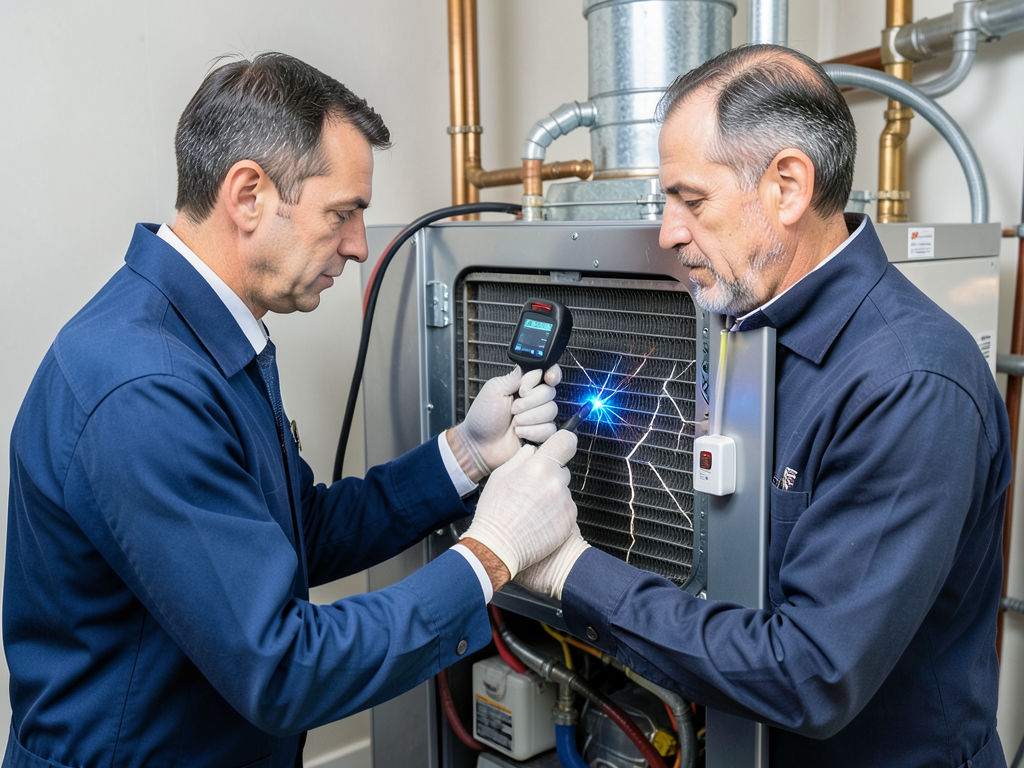
How to spot a cracked heat exchanger before it becomes a danger to your Forest Park family
A cracked heat exchanger is one of the most dangerous problems your furnace can develop. In Forest Park homes where winter temperatures regularly drop below freezing, a compromised heat exchanger can silently release carbon monoxide into your living space. This colorless, odorless gas can cause serious illness or death before you even realize there’s a problem. The good news is that with the right knowledge you can identify warning signs early and protect your family. Emergency furnace repair services for Indian Hill homeowners available right now.
Immediate Warning Signs You Can See and Smell
Your furnace should operate quietly with a steady blue flame. When something goes wrong with the heat exchanger the changes become visible and sometimes smellable. Here’s what to watch for: Furnace Maintenance Checklist.
Visible soot buildup inside the furnace
Carbon soot accumulation on internal furnace components indicates incomplete combustion. When the heat exchanger cracks, the flame pattern changes and produces more soot than a healthy system. Look for black, powdery residue around burner ports or on the walls of the combustion chamber.. Read more about Preparing your Sharonville HVAC system for a sudden Ohio Valley flash freeze.
The ‘Deadly’ Flame Color: Yellow or flickering vs. steady blue
A healthy gas furnace flame burns bright blue with a small yellow tip. When the heat exchanger develops cracks, the flame becomes yellow, orange, or starts flickering irregularly. This happens because the combustion process is disrupted by air entering through the cracks. Watch for flames that dance around or appear to roll out of the burner ports.. Read more about Ways to keep an older furnace running efficiently in Lincoln Heights without breaking the bank.
Formaldehyde-like chemical odors
A cracked heat exchanger can produce a distinct chemical smell similar to formaldehyde or strong cleaning products. This odor occurs when combustion byproducts mix with household air through the cracks. If you notice this smell when your furnace runs, shut it off immediately and call for service.
Excessive corrosion or visible cracks on the external components
While you can’t always see inside the heat exchanger, external signs of deterioration often indicate internal problems. Look for rust spots, corrosion, or hairline cracks on the metal housing around the combustion chamber. These external defects usually mean the internal components are in worse condition.
Auditory and Health Symptoms
Sometimes the warning signs of a cracked heat exchanger are sounds you hear or symptoms you feel. Pay attention to these red flags:
Banging or whistling noises during the start-up cycle
When the furnace first turns on you might hear popping, banging, or whistling sounds. These noises occur because the cracked metal expands and contracts differently than intact metal. The sound is often more pronounced during cold starts when temperature differentials are greatest.
Unexplained flu-like symptoms among family members
Carbon monoxide exposure causes symptoms that mimic the flu: headaches, dizziness, nausea, fatigue, and confusion. The key difference is that these symptoms improve when you leave the house and return when you come back. If multiple family members experience these symptoms only when the furnace runs, you may have a CO leak.
Frequent Carbon Monoxide detector alarms
Every Forest Park home with gas appliances should have working CO detectors on every level. If your detectors sound repeatedly, especially during furnace operation, treat it as an emergency. Even if the alarm stops, the underlying problem needs immediate professional attention.
Why Heat Exchangers Crack in Cincinnati Homes
Understanding why heat exchangers fail helps you prevent problems. In Forest Park and surrounding Cincinnati neighborhoods several factors contribute to premature cracking:
The freeze-thaw cycles common in Cincinnati create thermal stress on metal components. When temperatures swing from below freezing to above freezing repeatedly the heat exchanger metal expands and contracts. Over years this movement causes metal fatigue and eventually cracks form. Homes in Forest Park built before 2000 are particularly vulnerable because they often have standard-efficiency furnaces with thinner metal heat exchangers.
Humidity from the Ohio River Valley accelerates corrosion. When moisture combines with combustion byproducts it creates acidic compounds that eat away at the metal. Forest Park homes near Winton Woods or the West Fork Mill Creek may experience slightly higher humidity levels that speed up this process.
Improper furnace sizing is another common issue in Forest Park. Many homes built during the 1980s and 1990s boom have furnaces that are too large for their space. Oversized furnaces cycle on and off frequently, preventing the heat exchanger from reaching optimal operating temperature. This short cycling creates more thermal stress than steady operation would.
Next Steps: The ‘Turn Off’ Protocol
If you suspect your heat exchanger is cracked, follow these steps immediately:
- Shut off the furnace
Locate your furnace’s power switch or circuit breaker and turn it off. If you smell gas or suspect a leak, also shut off the gas supply valve near the furnace.
- Evacuate if necessary
If anyone is experiencing severe symptoms or if CO detectors are sounding continuously, leave the house immediately. Call 911 from outside.
- Ventilate the space
Open windows and doors to dilute any accumulated gases. This is especially important if you cannot leave the house immediately.
- Document symptoms
Write down when symptoms occur, what you observe about the furnace operation, and any error codes displayed. This information helps technicians diagnose the problem faster.
- Call for emergency service
Only qualified HVAC technicians should inspect or repair heat exchangers. Do not attempt to seal cracks or continue using a suspected damaged unit. EPA Carbon Monoxide Safety Guidelines.
Attempting DIY repairs on a heat exchanger is extremely dangerous. The metal components operate at temperatures exceeding 1600°F and contain pressurized combustion gases. Professional technicians use specialized equipment to test for cracks and measure CO levels safely. 24/7 AC repair for restaurants and small businesses in Downtown Cincinnati.
Professional Inspection and Replacement in Cincinnati
Professional HVAC technicians use several methods to confirm heat exchanger cracks:
Combustion analysis measures the efficiency and safety of your furnace operation. Technicians use handheld analyzers to check oxygen levels, carbon monoxide production, and stack temperature. Abnormal readings often indicate heat exchanger problems even when cracks aren’t visible.
Infrared cameras can detect temperature variations that reveal cracks. A healthy heat exchanger shows uniform heat distribution, while a cracked one displays cold spots where air is leaking through the damage. This non-invasive testing method is particularly useful for inspecting hard-to-reach areas.
Pressure testing involves sealing the heat exchanger and using specialized equipment to detect air leaks. This method can identify cracks too small to see visually but large enough to allow dangerous gas leakage.
When replacement is necessary, technicians must follow Hamilton County Mechanical Code Section 1301.2.1, which requires proper venting and combustion air provisions for all gas-fired appliances. This code ensures that replacement installations meet current safety standards.
Prevention and Maintenance Strategies
Regular maintenance significantly extends heat exchanger life and prevents dangerous failures. Schedule professional inspection annually before heating season begins. During these visits technicians clean burners, check gas pressure, inspect the heat exchanger, and test safety controls.
Replace your furnace air filter every 1-3 months depending on your home’s dust levels and whether you have pets. A dirty filter restricts airflow, causing the heat exchanger to overheat and crack prematurely. Use filters with MERV ratings between 8 and 11 for optimal balance of filtration and airflow.
Install CO detectors on every level of your home and near sleeping areas. Test them monthly and replace batteries annually. Detectors should be replaced every 5-7 years as their sensors degrade over time.
Consider upgrading if your furnace is over 15 years old. Modern high-efficiency furnaces have secondary heat exchangers that capture additional heat while producing less condensation. These units often pay for themselves through energy savings while providing better safety features.
Cost Considerations for Forest Park Homeowners
Heat exchanger replacement costs vary based on furnace make, model, and accessibility. In Forest Park expect to pay between $800 and $2,500 for replacement of the heat exchanger alone. However, if your furnace is over 12 years old, replacement often makes more financial sense than repair. How to find a reliable AC repair company in Hyde Park without overpaying.
Full furnace replacement typically costs $3,500 to $7,500 depending on efficiency rating and installation complexity. High-efficiency models with 90%+ AFUE ratings cost more upfront but save 15-20% on heating bills annually. For Forest Park homes with older ductwork, you might also need duct modifications to accommodate new equipment.
Many Forest Park homeowners find that replacing a 15+ year old furnace with a new high-efficiency model pays for itself in 5-7 years through energy savings, repair avoidance, and improved comfort. Newer units also include advanced safety features like automatic shutoff if CO levels rise.
Frequently Asked Questions
How long does a heat exchanger typically last?
Under normal conditions, a heat exchanger should last 15-20 years. However, factors like poor maintenance, improper sizing, and Cincinnati’s climate can reduce this lifespan significantly. Regular professional maintenance is the best way to maximize heat exchanger longevity.
Can I continue using my furnace if I suspect a crack?
No. Operating a furnace with a cracked heat exchanger is extremely dangerous. Even small cracks can release carbon monoxide into your home. Shut off the system immediately and call for professional inspection if you suspect any damage.
What causes that formaldehyde smell from my furnace?
A formaldehyde-like odor typically indicates a cracked heat exchanger allowing combustion byproducts to mix with household air. This smell should never be ignored as it signals potential carbon monoxide production. Turn off your furnace and call for emergency service if you notice this odor.
Are heat exchanger warranties worth it?
Many furnace manufacturers offer lifetime heat exchanger warranties on higher-end models. While these warranties don’t cover labor costs, they can significantly reduce replacement expenses if the heat exchanger fails. For Forest Park homeowners, investing in a quality furnace with a strong warranty often provides better long-term value. HVAC Warranty Guide.
Remember that your family’s safety is the top priority when dealing with potential heat exchanger problems. If you notice any warning signs, don’t wait to take action. The cost of professional inspection is minimal compared to the risk of carbon monoxide exposure.
Call (513) 717-5155 today to schedule your comprehensive furnace safety inspection. Our experienced technicians serve Forest Park and all surrounding Cincinnati communities with 24/7 emergency service available when you need it most.
Don’t let a cracked heat exchanger put your family at risk. Pick up the phone and call (513) 717-5155 before the next cold snap hits. Your family’s safety is worth the call. For more information, visit CDC Carbon Monoxide Poisoning Information.
You may also find this helpful. What to look for in an HVAC financing plan when you are on a budget in Colerain.
You may also find this helpful. How to ventilate an attached garage in Mason to keep exhaust fumes out of your living room.
You may also find this helpful. How to choose an HVAC company that offers true transparent pricing in Hamilton.
{
“@context”: “https://schema.org”,
“@type”: “BlogPosting”,
“headline”: “How to spot a cracked heat exchanger before it becomes a danger to your Forest Park family”,
“description”: “Learn the warning signs of a cracked heat exchanger and protect your Forest Park family from carbon monoxide. Call (513) 717-5155 for emergency inspection.”,
“wordCount”: 1752,
“datePublished”: “2026-05-14T06:09:00.000Z”,
“dateModified”: “2026-05-14T06:09:00.000Z”,
“inLanguage”: “en-US”,
“mainEntityOfPage”: {
“@type”: “WebPage”,
“@id”: “https://fivestarhvaccincinnati.com”
},
“publisher”: {
“@type”: “LocalBusiness”,
“name”: “Five Star HVAC Cincinnati”,
“url”: “https://fivestarhvaccincinnati.com”
},
“author”: {
“@type”: “Organization”,
“name”: “Five Star HVAC Cincinnati”,
“url”: “https://fivestarhvaccincinnati.com”
},
“image”: {
“@type”: “ImageObject”,
“url”: “https://fivestarhvaccincinnati.com/wp-content/uploads/2026/03/how-to-spot-a-cracked-heat-exchanger-before-it-bec-1.png”
}
}
{
“@context”: “https://schema.org”,
“@type”: “HVACBusiness”,
“name”: “Five Star HVAC Cincinnati”,
“url”: “https://fivestarhvaccincinnati.com”,
“address”: {
“@type”: “PostalAddress”,
“addressLocality”: “Cincinnati”
},
“areaServed”: {
“@type”: “City”,
“name”: “Cincinnati”
}
}
{
“@context”: “https://schema.org”,
“@type”: “FAQPage”,
“mainEntity”: [
{
“@type”: “Question”,
“name”: “How long does a heat exchanger typically last?”,
“acceptedAnswer”: {
“@type”: “Answer”,
“text”: “Under normal conditions, a heat exchanger should last 15-20 years. However, factors like poor maintenance, improper sizing, and Cincinnati’s climate can reduce this lifespan significantly. Regular professional maintenance is the best way to maximize heat exchanger longevity.”
}
},
{
“@type”: “Question”,
“name”: “Can I continue using my furnace if I suspect a crack?”,
“acceptedAnswer”: {
“@type”: “Answer”,
“text”: “No. Operating a furnace with a cracked heat exchanger is extremely dangerous. Even small cracks can release carbon monoxide into your home. Shut off the system immediately and call for professional inspection if you suspect any damage.”
}
},
{
“@type”: “Question”,
“name”: “What causes that formaldehyde smell from my furnace?”,
“acceptedAnswer”: {
“@type”: “Answer”,
“text”: “A formaldehyde-like odor typically indicates a cracked heat exchanger allowing combustion byproducts to mix with household air. This smell should never be ignored as it signals potential carbon monoxide production. Turn off your furnace and call for emergency service if you notice this odor.”
}
},
{
“@type”: “Question”,
“name”: “Are heat exchanger warranties worth it?”,
“acceptedAnswer”: {
“@type”: “Answer”,
“text”: “Many furnace manufacturers offer lifetime heat exchanger warranties on higher-end models. While these warranties don’t cover labor costs, they can significantly reduce replacement expenses if the heat exchanger fails. For Forest Park homeowners, investing in a quality furnace with a strong warranty often provides better long-term value. HVAC Warranty Guide.”
}
}
]
}
{
“@context”: “https://schema.org”,
“@type”: “HowTo”,
“name”: “Emergency Heat Exchanger Safety Protocol”,
“step”: [
{
“@type”: “HowToStep”,
“position”: 1,
“name”: “Shut off the furnace”,
“text”: “Locate your furnace’s power switch or circuit breaker and turn it off. If you smell gas or suspect a leak, also shut off the gas supply valve near the furnace.”
},
{
“@type”: “HowToStep”,
“position”: 2,
“name”: “Evacuate if necessary”,
“text”: “If anyone is experiencing severe symptoms or if CO detectors are sounding continuously, leave the house immediately. Call 911 from outside.”
},
{
“@type”: “HowToStep”,
“position”: 3,
“name”: “Ventilate the space”,
“text”: “Open windows and doors to dilute any accumulated gases. This is especially important if you cannot leave the house immediately.”
},
{
“@type”: “HowToStep”,
“position”: 4,
“name”: “Document symptoms”,
“text”: “Write down when symptoms occur, what you observe about the furnace operation, and any error codes displayed. This information helps technicians diagnose the problem faster.”
},
{
“@type”: “HowToStep”,
“position”: 5,
“name”: “Call for emergency service”,
“text”: “Only qualified HVAC technicians should inspect or repair heat exchangers. Do not attempt to seal cracks or continue using a suspected damaged unit. EPA Carbon Monoxide Safety Guidelines.”
}
],
“image”: “https://fivestarhvaccincinnati.com/wp-content/uploads/2026/03/how-to-spot-a-cracked-heat-exchanger-before-it-bec-1.png”
}
{
“@context”: “https://schema.org”,
“@type”: “BreadcrumbList”,
“itemListElement”: [
{
“@type”: “ListItem”,
“position”: 1,
“name”: “Home”,
“item”: “https://fivestarhvaccincinnati.com”
},
{
“@type”: “ListItem”,
“position”: 2,
“name”: “Blog”,
“item”: “https://fivestarhvaccincinnati.com/blog”
},
{
“@type”: “ListItem”,
“position”: 3,
“name”: “How to spot a cracked heat exchanger before it becomes a danger to your Forest Park family”
}
]
}
{
“@context”: “https://schema.org”,
“@type”: “Service”,
“serviceType”: “HVAC”,
“provider”: {
“@type”: “LocalBusiness”,
“name”: “Five Star HVAC Cincinnati”,
“url”: “https://fivestarhvaccincinnati.com”
},
“areaServed”: {
“@type”: “City”,
“name”: “Cincinnati”
},
“description”: “Learn the warning signs of a cracked heat exchanger and protect your Forest Park family from carbon monoxide. Call (513) 717-5155 for emergency inspection.”
}