

Menu

Humidity Issues Indoors in Cincinnati – Expert Diagnosis and Permanent Solutions for High Indoor Moisture

Our team identifies the root cause of humidity issues indoors through precision testing and implements targeted dehumidification strategies to protect your Cincinnati property from mold growth, structural damage, and poor air quality.

Slider Image 1
Slider Image 2
Slider Image 3
Slider Image 4
Slider Image 5
Slider Image 7
Slider Image 8
Slider Image 9
Slider Image 10
Slider Image 11

Why Cincinnati Homes Battle Constant Indoor Moisture Problems

Cincinnati sits in the Ohio River Valley, where humid subtropical weather creates a perfect storm for excess indoor moisture. Summer humidity regularly exceeds 70 percent, while winter temperature swings cause condensation on windows, walls, and ductwork. This creates high indoor humidity levels that penetrate every corner of your home.

Your basement smells musty because moisture migrates through foundation walls common in older Cincinnati neighborhoods like Clifton and Mount Adams. The clay soil beneath your foundation holds water like a sponge, pushing moisture vapor upward through concrete. When outdoor humidity climbs, your air conditioner struggles to remove moisture fast enough, leaving you with sticky air and poor humidity control.

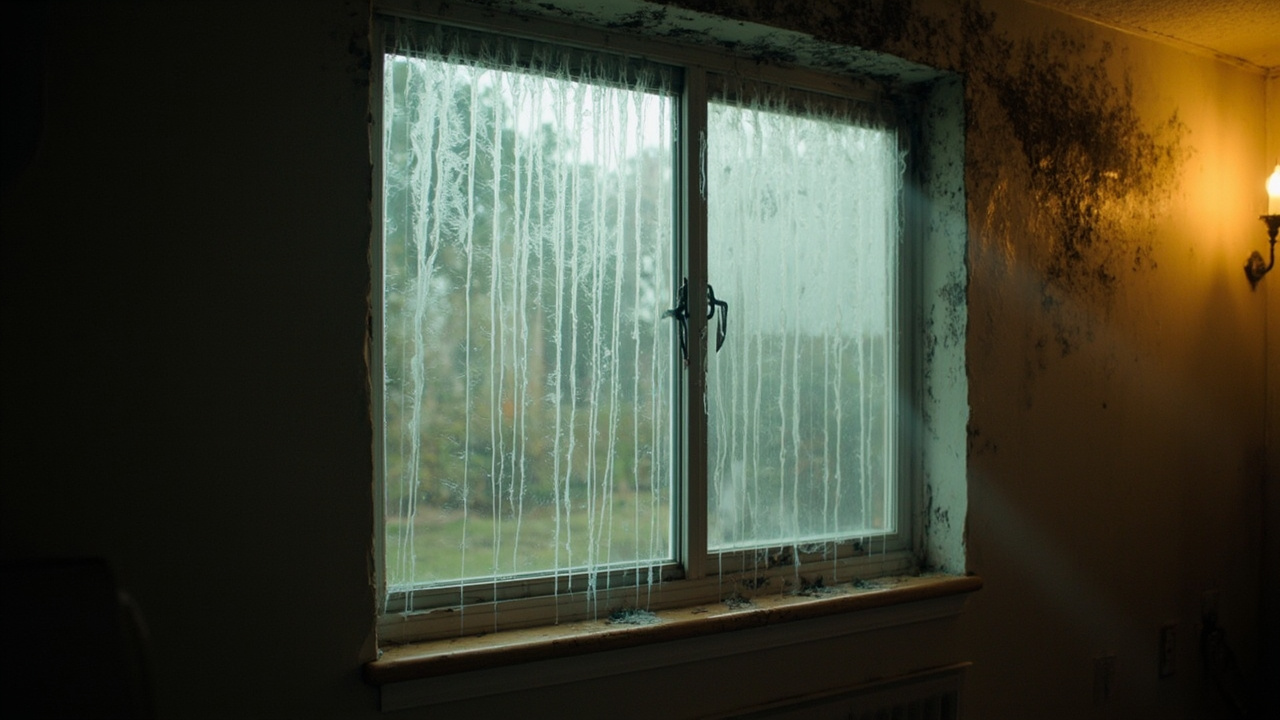
High humidity in house creates visible problems. You see condensation on windows during summer mornings. Walls feel damp to the touch. Hardwood floors buckle. Paint peels. Black spots appear on ceiling corners. Your basement develops that unmistakable damp smell.

These symptoms point to indoor moisture problems that affect more than comfort. Excess indoor moisture feeds mold spores, dust mites, and bacteria. Respiratory issues worsen. Allergies flare. Wood framing absorbs water and weakens. Metal corrodes. Insulation loses effectiveness.

Cincinnati's architecture compounds the problem. Many homes built before 1980 lack proper vapor barriers. Crawl spaces stay unencapsulated. Attic ventilation falls short of current standards. These structural realities make professional moisture control necessary, not optional.

You cannot fix high indoor humidity levels with a store-bought dehumidifier alone. The problem runs deeper than surface moisture. You need a systematic approach that addresses air exchange rates, duct leakage, equipment sizing, and moisture sources.

Why Cincinnati Homes Battle Constant Indoor Moisture Problems
How We Solve Indoor Moisture Problems Through Targeted HVAC Solutions

How We Solve Indoor Moisture Problems Through Targeted HVAC Solutions

We start with comprehensive humidity mapping using calibrated hygrometers and thermal imaging cameras. This shows us exactly where moisture concentrates and why. We measure relative humidity in each room, test airflow at supply registers, and calculate your home's air changes per hour. This data reveals whether your problem stems from undersized equipment, duct leakage, inadequate ventilation, or external moisture intrusion.

Most Cincinnati homes suffer from oversized air conditioning systems. A contractor installed a four-ton unit when you needed three tons. The system short cycles, running in brief bursts that cool air quickly but remove minimal moisture. We calculate cooling load using Manual J protocols specific to your square footage, insulation values, window orientation, and occupancy. Right-sized equipment runs longer cycles that pull moisture from air before shutting down.

We inspect ductwork for leakage that introduces humid attic air or pulls moisture from crawl spaces. A 15 percent duct leakage rate is common in older Cincinnati homes. We seal ducts with mastic compound and insulate supply lines running through unconditioned spaces. This prevents condensation formation and improves moisture removal efficiency.

Your HVAC system needs proper drainage. We verify condensate lines slope correctly, P-traps hold water, and drain pans show no standing water. A clogged condensate line forces moisture back into your air handler, where it re-evaporates into supply air.

We evaluate your ventilation strategy. Modern homes seal tightly for energy efficiency but trap moisture inside. We install energy recovery ventilators that exhaust stale humid air while bringing in fresh outdoor air pre-conditioned to match indoor temperature. This maintains healthy air exchange without energy penalties.

Whole-home dehumidification integrates with your existing HVAC system. These units remove up to 100 pints daily while your air conditioner handles temperature control. The dehumidifier operates independently when cooling is unnecessary but humidity remains high, giving you year-round moisture control.

What Happens During Your Indoor Humidity Assessment

Humidity Issues Indoors in Cincinnati – Expert Diagnosis and Permanent Solutions for High Indoor Moisture
01

Moisture Level Documentation

We measure relative humidity in every room using calibrated instruments, checking basements, crawl spaces, and attics separately. You receive a detailed moisture map showing problem zones and severity levels. We document dew point temperatures to determine condensation risk on surfaces. This baseline data guides our solution design and provides measurable targets for improvement after installation.
02

System Performance Analysis

We test your air conditioner's moisture removal capacity by measuring supply and return air temperature and humidity differentials. Duct leakage testing uses calibrated fans to quantify air loss. We inspect drain pans, condensate pumps, and discharge lines for proper operation. Airflow measurements at each register reveal distribution problems. Refrigerant charge verification ensures your system operates at design specifications for maximum dehumidification.
03

Solution Implementation and Verification

We install recommended equipment, seal identified duct leaks, and calibrate controls for optimal moisture removal. After installation, we retest humidity levels throughout your home to verify improvement. You receive operating instructions, maintenance schedules, and target humidity ranges for each season. We program smart thermostats with dehumidification settings that maintain comfort automatically. Follow-up measurements confirm your system maintains 40 to 50 percent relative humidity year-round.

Why Cincinnati Property Owners Trust Our Humidity Control Expertise

We understand how Cincinnati's unique climate and housing stock create moisture challenges other cities do not face. The Ohio River Valley's geography traps humid air masses during summer while winter temperature swings create condensation problems. We account for these regional factors when designing humidity control solutions.

Our experience with Cincinnati's older housing stock matters. Homes in neighborhoods like Hyde Park, Oakley, and Northside were built before modern moisture barriers and ventilation standards existed. We know which foundation types leak, where thermal bridges form, and how original duct systems fail. This knowledge prevents misdiagnosis and wasted spending on solutions that do not address root causes.

We size equipment correctly using Manual J load calculations specific to Cincinnati's climate zone. National averages do not apply here. Our calculations account for local temperature extremes, humidity levels, and seasonal variations. This prevents the oversized equipment problem that plagues most Cincinnati homes and causes poor humidity control.

Our whole-home dehumidification systems integrate seamlessly with existing HVAC equipment. You do not need a complete system replacement to gain moisture control. We match dehumidifier capacity to your home's moisture load, not arbitrary rules of thumb. A 2,000 square foot home with a damp basement requires different capacity than the same size home on a dry lot.

We install energy recovery ventilators sized for your occupancy and square footage. These units meet ASHRAE ventilation standards while minimizing energy costs. Fresh air enters pre-conditioned, preventing the outdoor humidity spikes that occur when you open windows or run exhaust fans without makeup air.

Our duct sealing work follows ACCA standards and includes post-installation testing. We do not guess about improvement. Blower door testing and duct leakage measurements provide proof your system operates as designed. You receive documentation showing before and after performance metrics.

Five Star HVAC Cincinnati maintains ongoing relationships with customers through seasonal maintenance programs that monitor humidity levels and system performance. Annual testing catches problems before they create moisture damage or health issues.

What You Can Expect From Professional Humidity Control Service

Response Time and Scheduling

We schedule humidity assessments within 48 hours of your call. Most evaluations take two to three hours depending on home size and complexity. You receive a written report with test results, identified problems, and recommended solutions within 24 hours. Equipment installation typically occurs within one week of approval. Simple solutions like duct sealing or dehumidifier installation complete in one day. Comprehensive systems involving ventilation upgrades and equipment replacement require two to three days. We work around your schedule and minimize disruption to daily routines.

Comprehensive Moisture Evaluation

Your assessment includes room-by-room humidity measurements, thermal imaging to identify moisture intrusion points, duct leakage testing, and HVAC system performance analysis. We inspect attics, basements, and crawl spaces for moisture sources and ventilation deficiencies. You receive detailed documentation showing current humidity levels, problem areas, and specific causes. Our report explains how each identified issue contributes to poor humidity control. We prioritize solutions by impact and cost, giving you options that fit your budget. The evaluation fee applies toward any work you authorize.

Performance and Comfort Improvement

Properly controlled humidity transforms your indoor environment. You notice the difference immediately. Air feels lighter and fresher. Musty odors disappear. Condensation stops forming on windows and walls. Allergy symptoms improve as mold spores and dust mite populations decline. Your air conditioner runs more efficiently because it no longer battles excessive moisture loads. Energy costs drop as equipment operates at design efficiency. Wood floors stabilize. Paint stops peeling. Metal fixtures do not corrode. Your home feels consistently comfortable rather than clammy in summer and dry in winter.

Ongoing Performance Monitoring

We provide detailed operating instructions for your new equipment, including optimal humidity settings for each season. Smart thermostat programming maintains target humidity levels automatically without constant adjustment. Our maintenance agreements include annual humidity testing to verify continued performance. We clean dehumidifier coils, replace filters, and calibrate sensors during seasonal tune-ups. You receive performance reports showing humidity trends and equipment efficiency. If readings drift outside target ranges, we diagnose and correct problems before moisture damage occurs. Maintenance customers receive priority scheduling and discounted repair rates.

Frequently Asked Questions

You Have Questions,
We Have Answers

How to fix a humidity problem in a house? +

Start by checking your HVAC system. A well-maintained air conditioner naturally removes moisture during cooling cycles. Replace air filters monthly and clean evaporator coils annually. Run exhaust fans in bathrooms and kitchens during and after use. Seal air leaks around windows and doors to prevent humid outdoor air from entering. Consider a whole-home dehumidifier integrated with your ductwork for consistent control. Cincinnati's humid summers along the Ohio River basin make mechanical dehumidification necessary for most homes. A qualified HVAC technician can assess your system's capacity and recommend proper sizing for your square footage.

What are the symptoms of too much humidity in your house? +

Condensation on windows signals excess indoor moisture. You might notice a musty smell in closets or basements. Walls and ceilings may feel damp to the touch. Water stains appear on walls without visible leaks. Allergy symptoms worsen indoors due to dust mite proliferation in humid conditions. Wood floors buckle or warp. Paint peels or wallpaper loosens. Mold spots develop in corners, bathroom grout, or around window frames. Cincinnati homes often show these symptoms in basements where groundwater and poor ventilation combine with humid air infiltration from outside.

Will 50% humidity cause mold? +

Fifty percent humidity sits at the upper limit of the ideal range. Mold growth requires humidity above 60% combined with organic material and warmth. At 50%, most spaces remain safe, but problem areas like basements, bathrooms, and poorly ventilated closets can still develop mold. Cincinnati's clay soil and high water table create naturally damp basements where localized humidity easily exceeds 60% even when main living areas measure 50%. Monitor specific rooms separately. Keep humidity between 30-50% year-round. Any persistent moisture above 50% in confined spaces creates mold risk within 24-48 hours.

What is unhealthy indoor humidity? +

Indoor humidity above 60% promotes mold growth, dust mites, and respiratory problems. Humidity below 30% dries out mucous membranes and skin, causing nosebleeds and increased susceptibility to infections. The ideal range sits between 30-50% for health and comfort. Cincinnati's summer humidity often pushes indoor levels above 60% without mechanical dehumidification, triggering asthma and allergy symptoms. Winter heating can drop indoor humidity below 30%, requiring humidification. Use a hygrometer to measure levels in multiple rooms. Basements and bathrooms typically read higher than main living spaces.

Is 70% humidity too high in a house? +

Yes. Seventy percent humidity creates an environment where mold thrives and dust mites multiply rapidly. You will feel uncomfortable, and the air feels heavy. Your HVAC system struggles to cool effectively because high moisture content reduces evaporative cooling from your skin. Structural damage accelerates as wood absorbs moisture and swells. Cincinnati's summer climate naturally pushes outdoor humidity above 70%, but indoor levels should stay below 60%. If your home consistently reads 70%, your air conditioner may be undersized, the ductwork may be leaking, or you need supplemental dehumidification.

Do dehumidifiers really work for humidity? +

Yes, when properly sized and maintained. Portable dehumidifiers work well for single rooms like basements or bedrooms. Whole-home dehumidifiers integrate with your HVAC system and control humidity throughout the entire house. They pull moisture from air before it circulates through ductwork. Units must match your home's square footage and Cincinnati's climate demands. Empty collection tanks daily on portable units, and clean filters monthly. Dehumidifiers reduce musty odors, prevent mold, and make your air conditioner more efficient by removing the moisture load before cooling begins.

How Cincinnati's River Valley Climate Makes Professional Humidity Control Essential

The Ohio River Valley creates a humid microclimate that affects Cincinnati differently than surrounding regions. Warm, moist air from the Gulf of Mexico settles in the valley and stagnates during summer months. Morning fog and evening dew point temperatures above 70 degrees are common from June through September. This sustained high outdoor humidity overwhelms residential HVAC systems designed for standard load calculations. Basements dug into clay soils absorb ground moisture year-round, creating constant vapor pressure against foundation walls. Without professional moisture barriers and mechanical dehumidification, Cincinnati homes cannot maintain healthy indoor humidity levels through ventilation alone.

Cincinnati's housing stock includes thousands of homes built before 1980, when building codes required minimal moisture protection. These properties need retrofitted solutions that account for existing construction limitations. We work extensively throughout Price Hill, Columbia-Tusculum, and East Walnut Hills, where older homes face the most severe moisture challenges. Our familiarity with local architecture, foundation types, and construction methods ensures we recommend solutions that work within your home's constraints. We understand Cincinnati's seasonal patterns and size equipment for peak summer humidity loads rather than average conditions that leave you uncomfortable during the worst months.

HVAC Services in The Cincinnati Area

Five Star HVAC proudly serves all homes and businesses in the greater Cincinnati area. Our skilled team is ready to respond to your service requests, whether you're in the city center or the surrounding suburbs. Use the map to explore our service area and see how close we are to you. We're committed to providing prompt and dependable service, no matter where you are within our coverage zone.

Address:
Five Star HVAC Cincinnati, 4024 Hamilton Ave, Cincinnati, OH, 45223

Additional Services We Offer

Our news updates

Latest Articles & News from The Blogs

How Close Can You Plant Flowers and Shrubs to Your AC Unit in Batavia? Planting too close to your outdoor…

How Close Can You Plant Flowers and Shrubs to Your AC Unit in Batavia?

How Close Can You Plant Flowers and Shrubs to Your AC Unit in Batavia? Planting too close to your outdoor…

Where to Place Your Thermostat in a Mt. Washington House for the Most Accurate Readings

Where to Place Your Thermostat in a Mt. Washington House for the Most Accurate Readings Your thermostat location affects your…

Why Your Furnace Keeps Turning On and Off Every Few Minutes in Westwood

Why Your Furnace Keeps Turning On and Off Every Few Minutes in Westwood If your furnace is turning on and…

Contact Us

Stop living with sticky air and musty smells. Call Five Star HVAC Cincinnati at (513) 717-5155 today. We will measure your humidity levels, identify moisture sources, and provide solutions that create lasting comfort. Your assessment includes detailed testing and written recommendations.