


Reading sits in southwestern Ohio's humid continental climate zone, where HVAC systems endure extreme temperature swings and relentless humidity. Summer dew points regularly hit 70 degrees, forcing air conditioners to work overtime removing moisture while cooling your home. This constant dehumidification stresses compressors and evaporator coils, leading to premature failure if systems aren't properly maintained.
Winter brings sub-zero temperatures that push furnaces to their limits. When outdoor temps drop below 20 degrees, heat pumps lose efficiency and backup heat strips kick in, spiking your electric bill. Gas furnaces cycle constantly, wearing out igniters and heat exchangers. The freeze-thaw cycles Reading experiences create condensation problems in ductwork and HVAC closets, promoting mold growth and reducing indoor air quality.
Reading's proximity to the Little Miami River increases humidity levels in low-lying neighborhoods like North Woodlawn and areas near the river corridor. Homes in these zones need properly sized dehumidification and careful attention to drainage around outdoor units. The clay-heavy soil common throughout Hamilton County holds water, causing condensate drainage problems and foundation moisture that affects basement HVAC equipment.
Five Star HVAC Cincinnati has served the greater Cincinnati metro for years, building our reputation on fast response times and repairs that actually last. We're not a franchise operation sending different technicians every visit. Our team knows Reading's housing stock, from the older homes in the historic districts with original ductwork to newer construction in the northern subdivisions with modern high-efficiency systems.
We arrive with fully-stocked trucks carrying parts for Carrier, Trane, Lennox, Rheem, Goodman, and York systems. That means we fix most problems on the first visit instead of ordering parts and scheduling return trips. When you call at 9 PM because your AC quit during a heatwave, we dispatch a technician immediately, not the next available business day.
Our pricing is straightforward. You get a firm quote before we start work, with no hidden diagnostic fees or surprise charges. We explain exactly what failed, why it failed, and what it takes to fix it right. If your system is beyond economical repair, we'll tell you honestly instead of selling you a temporary patch job.
We focus on solutions that match Reading's climate demands. That means right-sizing equipment for humidity control, not just installing the cheapest unit that fits your space. We test airflow, check refrigerant charge properly, and seal ductwork to stop the energy waste that drives up your utility bills. Our installations pass inspection the first time because we follow Ohio mechanical code requirements without shortcuts.

HVAC emergencies don't wait for business hours. We answer calls day and night, dispatching technicians immediately to Reading homes. Our trucks stay stocked with common parts for same-visit repairs. When your heat fails at midnight in January or your AC quits during a July weekend, we're already on the way.

You get a clear price before we touch your system. No bait-and-switch diagnostic fees or surprise charges after the work is done. We explain what's wrong, what it costs to fix, and what happens if you wait. You make informed decisions without pressure tactics or inflated emergency rates.
We carry extensive parts inventory for all major HVAC brands. That means fixing most problems during the first visit instead of ordering parts and rescheduling. Our technicians diagnose accurately and carry the components Reading systems commonly need. You get your comfort back today, not next week.
We understand how southwestern Ohio's humidity and temperature extremes affect HVAC performance. Our installations account for Reading's specific climate demands, sizing equipment for proper dehumidification and heating capacity. We know which systems hold up in this environment and which ones fail early.
Five Star HVAC Cincinnati handles every aspect of heating and cooling for Reading properties. From emergency breakdowns to planned replacements, we deliver the service that matches your situation. Our technicians diagnose problems accurately instead of guessing and replacing parts until something works.
We separate our services into three main categories based on urgency and scope. Emergency repairs get you back online fast when systems fail unexpectedly. Planned replacements and installations happen when you're ready to upgrade or your old system finally gives up. Maintenance and tune-ups prevent breakdowns and keep efficiency high. Each service category uses different approaches because your needs differ depending on whether you're dealing with an immediate crisis or planning ahead.
Our air conditioning repair work covers compressor failures, refrigerant leaks, frozen coils, failed capacitors, and broken contactors. Furnace repairs handle cracked heat exchangers, failed igniters, bad gas valves, and blower motor problems. We work on heat pumps, ductless mini-splits, and commercial rooftop units. If it heats or cools a Reading building, we fix it right.
When your system quits working, you need immediate help. We dispatch technicians to Reading homes and businesses around the clock, arriving with diagnostic tools and common repair parts. Our emergency service handles no-heat calls in winter, no-cool emergencies in summer, and system failures that threaten property damage. We diagnose the failure quickly, explain your options clearly, and execute repairs that restore comfort without unnecessary replacement recommendations. You get same-day service, not appointments scheduled days out.
Old systems eventually cost more to repair than replace. We install new furnaces, air conditioners, heat pumps, and ductless systems sized correctly for Reading's climate. Our installations include proper load calculations, ductwork inspection and sealing, refrigerant charge verification, and airflow testing. We pull permits, pass inspections, and register warranties properly. You get equipment that performs efficiently from day one, not undersized units that struggle or oversized systems that short-cycle and waste energy.
Regular maintenance prevents most emergency breakdowns and keeps efficiency high. Our tune-up service includes cleaning coils, checking refrigerant charge, testing capacitors, inspecting electrical connections, lubricating motors, and verifying proper combustion on gas equipment. We catch small problems before they become expensive failures. Spring AC tune-ups prepare your cooling system for summer heat. Fall furnace inspections ensure safe, efficient heating all winter. Maintenance customers get priority scheduling and discounted repair rates.
Reading's climate creates specific HVAC challenges that lead to predictable failure patterns. The combination of high summer humidity and cold winter temperatures forces systems to work harder than they would in milder climates. Understanding these common problems helps you recognize when service is needed before a minor issue becomes a major breakdown.
Humidity puts constant stress on air conditioning components. Evaporator coils ice over when airflow drops or refrigerant charge is low. Condensate drains clog with algae growth, causing water damage to ceilings and walls. Compressors fail early when systems run continuously trying to remove moisture from indoor air. Heat pumps lose efficiency when outdoor temperatures drop below 25 degrees, forcing expensive backup heat to run constantly. Gas furnaces develop cracked heat exchangers from repeated thermal cycling. These patterns repeat across Reading because the climate demands so much from residential HVAC equipment.
When evaporator coils freeze, your AC runs constantly but stops cooling. Ice buildup results from low refrigerant, restricted airflow from dirty filters, or failing blower motors. The system continues running while ice blocks heat transfer, wasting energy and risking compressor damage. We diagnose the root cause and fix it properly.
Modern furnaces use hot surface igniters that crack and fail after several seasons. When the igniter breaks, your furnace won't light even though the blower runs. This common failure leaves Reading homes without heat during the coldest nights. We carry replacement igniters for major brands and restore heat quickly.
High humidity means your AC removes gallons of water daily. Condensate drains clog with algae, causing backups that damage ceilings and floors. Many Reading homes have secondary drain pans that overflow when primary drains block. We clear clogs, install proper traps, and add algae prevention to stop recurring problems.
Heat pumps lose capacity when outdoor temps drop below freezing. Backup electric heat strips activate, causing shocking utility bills. Refrigerant leaks worsen this problem, forcing the system to run longer while producing less heat. We check charge levels, seal leaks, and determine if your heat pump still makes sense for Reading winters.
Calling for HVAC service shouldn't feel like a gamble. You need to know when help will arrive, what it will cost, and whether the repair will actually last. We've structured our service process to eliminate the uncertainty and frustration that come with most contractor experiences.
When you contact us, you talk to someone who understands HVAC problems, not a call center reading scripts. We ask specific questions about your symptoms to send the right technician with the right parts. Emergency calls get immediate dispatch. Scheduled service gets a firm appointment window, and we call when we're on the way. Our technicians arrive in marked vehicles with ID badges, ready to solve your problem efficiently.
You'll speak with knowledgeable staff who ask the right diagnostic questions. We explain realistic arrival times and don't leave you waiting all day for a vague service window. You get a call when your technician is 20 minutes away. During the visit, we explain what we find in plain language, show you the failed parts, and discuss your repair options without pressure tactics. You understand exactly what's wrong before we start work.
After diagnosing your system, we provide a firm price quote for the repair. You see the cost breakdown including parts and labor. We explain what happens if you approve the work and what happens if you decline. There are no surprise charges, no bait-and-switch diagnostic fees, and no pressure to buy services you don't need. You make informed decisions with complete price transparency.
We fix problems correctly instead of applying temporary patches. That means addressing root causes, not just swapping parts until something works. Our repairs include proper testing to verify the system operates efficiently. We check refrigerant charge, measure airflow, test safety controls, and ensure proper combustion on gas equipment. You get repairs backed by warranties and performed by technicians who take pride in lasting solutions.
We've eliminated the complexity and uncertainty from HVAC service. Our process gets you from problem to solution quickly, with clear communication at every step.
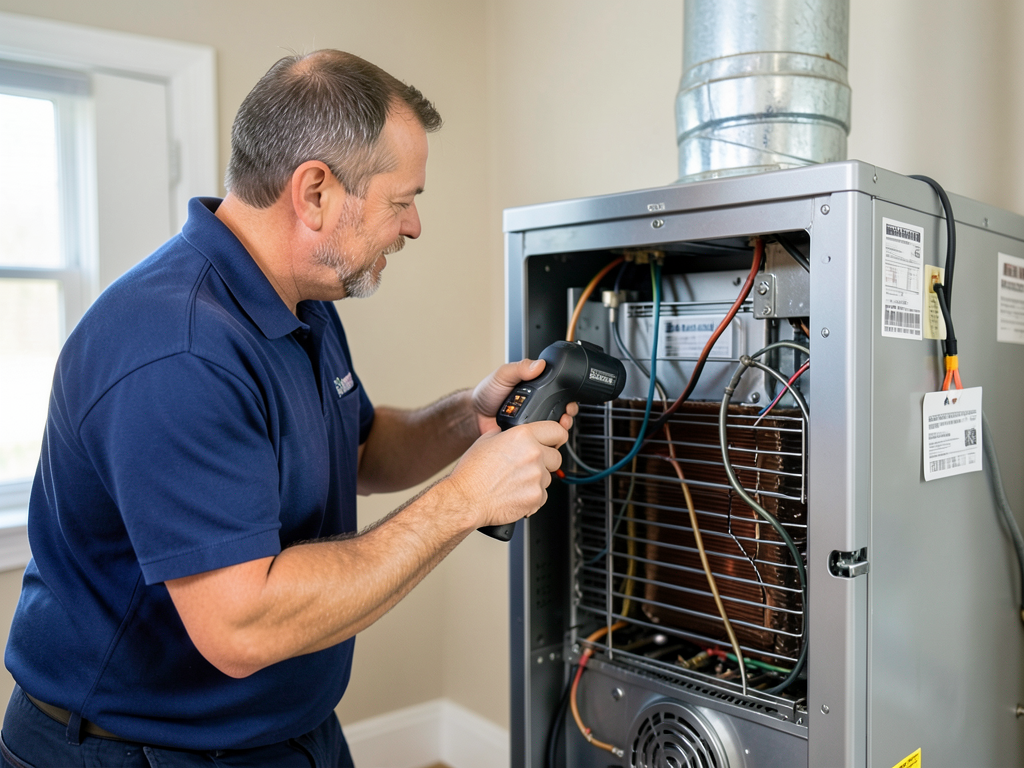
Our technician arrives with diagnostic tools and tests your system methodically. We check electrical connections, measure refrigerant pressures, test airflow, inspect heat exchangers, and verify proper operation of all components. This systematic approach identifies the actual problem instead of guessing. You get an accurate diagnosis explained clearly, with the failed component shown to you when possible. We answer your questions and explain how the failure happened.
Once we identify the problem, we explain your options with upfront pricing. You'll understand the repair cost, how long it takes, and what warranty covers the work. If your system is old or severely damaged, we discuss whether repair makes financial sense versus replacement. You get honest recommendations based on your system's condition and remaining lifespan, not sales pressure. You approve the work before we start.
After completing repairs, we test your system thoroughly to confirm proper operation. We verify temperature output, check refrigerant charge, measure airflow, and ensure all safety controls function correctly. You see the system running properly before we leave. We explain any maintenance needs and answer remaining questions. Your system is restored to reliable operation with repairs guaranteed by warranty.
Ohio mechanical code governs HVAC installation and repair throughout Reading and Hamilton County. These regulations exist to ensure system safety, efficiency, and proper operation. Many homeowners don't realize that unpermitted work or code violations can create liability issues and complicate home sales.
Chapter 4101:2 of the Ohio Administrative Code specifies requirements for mechanical systems including furnace installation, refrigerant handling, combustion air, and venting. Gas furnaces must have proper combustion air supply calculated based on the Ohio Fuel Gas Code. Insufficient combustion air causes incomplete burning, carbon monoxide production, and premature heat exchanger failure. We calculate combustion air requirements for every installation and ensure adequate supply through properly sized openings or mechanical ventilation.
Refrigerant handling follows EPA Section 608 regulations. Only certified technicians can purchase, handle, and charge HVAC systems with refrigerant. Proper charging requires measuring superheat or subcooling based on outdoor temperature and system type. Guessing or using rule-of-thumb methods leads to inefficiency, shortened compressor life, and high operating costs. We use digital manifold gauges and measure actual operating conditions to verify correct refrigerant charge.
Ductwork sizing follows Manual D calculations based on your home's actual load and the static pressure your equipment can handle. Undersized ducts create high static pressure that reduces airflow, freezes coils, and overheats heat exchangers. Oversized ducts allow temperature stratification and reduce system efficiency. We measure duct sizes, test static pressure, and modify ductwork when needed to achieve proper airflow. Hamilton County requires permits for HVAC replacements, which we obtain and ensure pass inspection.
Manual J load calculations determine the correct HVAC size for your home based on insulation, windows, orientation, and Reading's climate data. Oversized systems short-cycle, waste energy, and fail to dehumidify properly. Undersized systems run continuously and never reach comfortable temperatures. We calculate loads properly instead of guessing or matching old equipment size.
Equipment efficiency ratings, capacity requirements, installation complexity, and ductwork condition all impact HVAC project costs. Higher SEER ratings cost more upfront but reduce operating expenses. Two-stage or variable-speed systems cost more than single-stage but provide better comfort and efficiency. Ductwork modifications, electrical upgrades, and permit fees add to total investment.
Standard HVAC replacements take six to ten hours including equipment removal, installation, startup, and testing. Complex installations requiring ductwork modifications, electrical upgrades, or structural changes take longer. We don't rush installations to fit more jobs in one day. Proper installation includes careful attention to refrigerant charge, airflow verification, and combustion testing.
Manufacturer warranties require professional installation and proper startup procedures. Most equipment warranties are void if refrigerant charge is incorrect or airflow doesn't meet specifications. We register warranties properly and document installation details. Our technicians maintain EPA 608 certification for refrigerant handling and stay current on manufacturer training for new equipment technologies.
Five Star HVAC Cincinnati serves Reading and the greater Cincinnati metro area with fast response times and complete HVAC services. Reading sits in southwestern Hamilton County along the Little Miami River, with neighborhoods ranging from historic homes near downtown to newer subdivisions in the northern sections. We know this area well and understand how location affects your heating and cooling needs.
The North Woodlawn neighborhood features older homes built in the 1940s and 1950s, many with original ductwork that needs sealing or replacement. These houses often have undersized return air paths and minimal insulation, forcing HVAC systems to work harder. Homes near the Little Miami River corridor deal with higher humidity levels that stress air conditioning systems and promote mold growth in ductwork. We account for these factors when servicing equipment in riverside locations.
Reading's western sections include a mix of ranch homes and bi-levels from the 1960s and 1970s. Many have crawl spaces or partial basements housing HVAC equipment that suffers from poor drainage and moisture problems common to Hamilton County's clay soil. We check condensate drainage carefully in these installations and recommend solutions for chronic moisture issues that damage equipment.
The northern areas near Interstate 75 include newer construction with modern high-efficiency systems. These homes typically have better insulation and properly sized ductwork, but they're not immune to equipment failures. We service all major brands installed by builders and maintain the high-efficiency systems that Reading's newer homes require.
Our service area extends throughout Hamilton County including Lockland, Lincoln Heights, and Woodlawn to the south, as well as Sharonville and Blue Ash to the west. We maintain fast response times across this service territory by routing technicians efficiently and maintaining adequate staffing levels. Whether you're near Reading Road in the historic downtown area or in the subdivisions along Sycamore Street, we reach you quickly when your system fails.
Five Star HVAC proudly serves all homes and businesses in the greater Cincinnati area. Our skilled team is ready to respond to your service requests, whether you're in the city center or the surrounding suburbs. Use the map to explore our service area and see how close we are to you. We're committed to providing prompt and dependable service, no matter where you are within our coverage zone.
Address:
Reading, OH, 45215
Essential Carbon Monoxide Safety Tips for Families in Older Avondale Homes Carbon monoxide kills silently every year in Cincinnati homes. Older Avondale houses built before 1980 often have aging gas furnaces and outdated ventilation systems…

How Close Can You Plant Flowers and Shrubs to Your AC Unit in Batavia? Planting…

Where to Place Your Thermostat in a Mt. Washington House for the Most Accurate Readings…

Why Your Furnace Keeps Turning On and Off Every Few Minutes in Westwood If your…
Your comfort matters, and delays make problems worse. Call Five Star HVAC Cincinnati now at (513) 717-5155 for fast service in Reading. We answer calls 24/7 and dispatch technicians immediately for emergencies. Get your heat or air conditioning working again with repairs that last.