
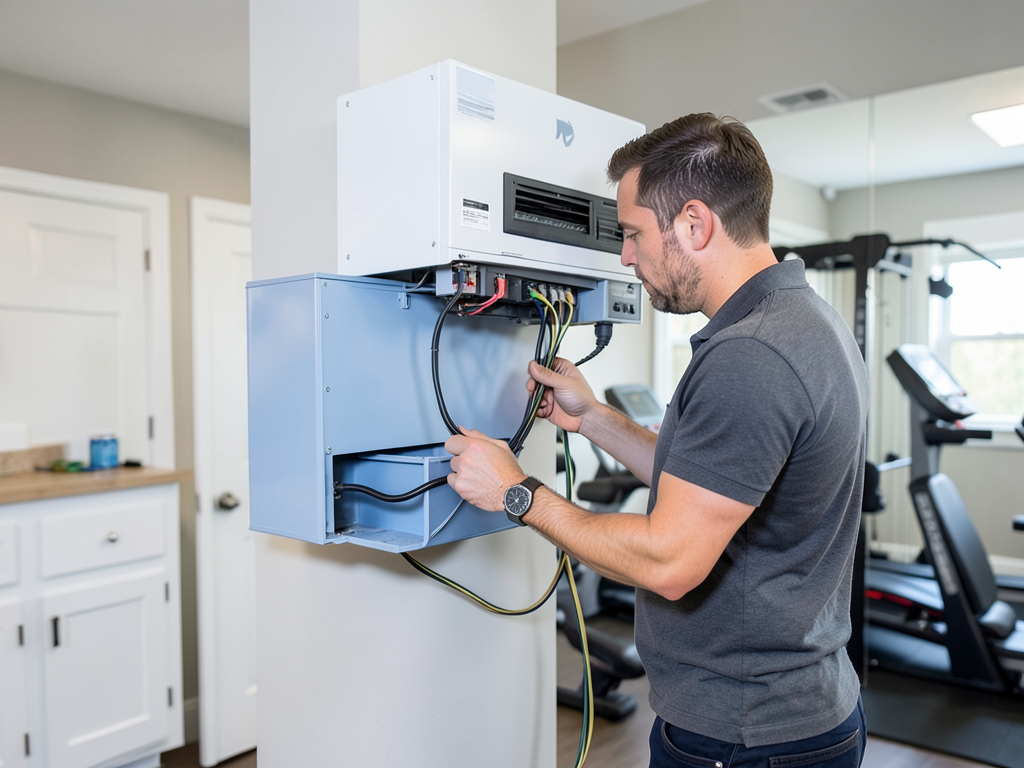
Proper Ventilation and Cooling for Home Gym Setups in Oakley or Hyde Park
Setting up a home gym in Oakley or Hyde Park requires more than just exercise equipment. The unique climate challenges of Cincinnati’s Ohio River Valley region create specific ventilation and cooling needs that standard home HVAC systems often cannot handle. High humidity levels during summer months combined with the heat and moisture generated during intense workouts can quickly turn your fitness space into an uncomfortable and potentially unhealthy environment. Cooling Tower Services.
Without proper ventilation, your home gym can develop mold growth, accumulate harmful VOCs from rubber flooring, and create poor indoor air quality that affects the rest of your home. The solution involves understanding your space’s specific requirements and implementing the right combination of cooling, dehumidification, and air exchange systems. This guide covers everything you need to know about creating a comfortable, safe, and efficient workout environment in your Oakley or Hyde Park home.
Understanding Cincinnati’s Climate Impact on Home Gyms
Cincinnati experiences significant seasonal temperature swings and high humidity levels that directly affect home gym performance. The Ohio River Valley creates a microclimate where summer dew points often exceed 70°F, making it feel much hotter than the actual temperature. This humidity combines with body heat and sweat during workouts to create condensation issues that standard HVAC systems struggle to manage.
Historic homes in Oakley and Hyde Park, many built before 1940, present additional challenges. These buildings often have plaster walls, single-pane windows, and limited insulation that allow moisture to penetrate more easily. The clay soil common in Hamilton County can also contribute to basement moisture problems that affect lower-level gym setups. Hamilton County Building Code.
According to Hamilton County Building Code Section 1305.1.4, any enclosed space used for physical activity must maintain proper ventilation rates to ensure occupant safety and comfort. This becomes particularly important in home gyms where CO2 levels can rise rapidly during intense exercise sessions.
Common Ventilation Problems in Home Gyms
Standard residential HVAC systems are designed for general comfort, not the specific demands of a home gym environment. When you convert a spare bedroom, basement, or garage into a workout space, you create conditions that can overwhelm your existing system.
High humidity from sweat and respiration creates condensation on windows, walls, and equipment. This moisture provides ideal conditions for mold and mildew growth, especially in corners and behind equipment where air circulation is poor. The problem intensifies in basement gyms where the surrounding soil maintains higher moisture levels year-round.
CO2 buildup becomes significant during intense workouts. As you exercise, you exhale more carbon dioxide, and without proper air exchange, levels can rise to uncomfortable or even unsafe concentrations. This leads to fatigue, headaches, and reduced workout performance.
Odor accumulation from rubber flooring, sweat, and equipment creates an unpleasant environment. Standard air filters cannot effectively remove these odors, and without proper ventilation, they linger and intensify over time.
Call (513) 717-5155 today to schedule your inspection.
Calculating Your Home Gym’s Ventilation Requirements
Determining the right ventilation system starts with calculating your space’s specific needs. The American Society of Heating, Refrigerating and Air-Conditioning Engineers (ASHRAE) Standard 62.2 provides guidelines for residential ventilation that apply to home gym setups. ASHRAE Standard 62.2.
To calculate your required air exchange rate, measure your gym’s square footage and ceiling height. For a typical 200 square foot basement gym with 8-foot ceilings, you need approximately 800 cubic feet of space. ASHRAE recommends 0.35 air changes per hour for residential spaces, but home gyms benefit from 1-2 air changes per hour due to increased activity levels.
This means your system should provide 800-1,600 cubic feet per hour, or 13-27 cubic feet per minute (CFM). However, this basic calculation doesn’t account for the additional heat and moisture generated during workouts.
For high-intensity training spaces, multiply your base CFM by 1.5 to 2.0 to ensure adequate ventilation during peak use. This adjustment accounts for the increased respiration rate, sweat production, and equipment heat generation that occur during exercise.
The table below shows recommended ventilation rates for different home gym sizes:
| Room Size (sq ft) | Base CFM (0.35 ACH) | Workout CFM (1.0 ACH) | High-Intensity CFM (2.0 ACH) |
|---|---|---|---|
| 100 | 5 | 14 | 28 |
| 200 | 10 | 28 | 56 |
| 300 | 15 | 42 | 84 |
| 400 | 20 | 56 | 112 |
Ventilation System Options for Home Gyms
Several ventilation approaches can effectively handle home gym requirements. The best solution depends on your space configuration, existing HVAC setup, and budget constraints.
Ductless mini-split systems offer the most flexibility for home gym installations. These units provide both cooling and dehumidification without requiring extensive ductwork modifications. A 12,000 BTU mini-split typically handles 400-500 square feet of gym space, while 18,000 BTU units manage up to 750 square feet.
Energy Recovery Ventilators (ERVs) excel at maintaining air quality while preserving energy efficiency. These systems exchange stale indoor air with fresh outdoor air while transferring heat and moisture between the air streams. This prevents your HVAC system from working overtime to condition fresh air during extreme weather.
Heat Recovery Ventilators (HRVs) work similarly to ERVs but focus on heat transfer rather than moisture management. These suit dry climate homes or situations where humidity control comes from other sources like dedicated dehumidifiers.
Extended ductwork from your existing HVAC system provides the most cost-effective solution when properly designed. However, most residential systems lack the capacity to handle the additional load of a home gym, especially in older Oakley and Hyde Park homes with undersized equipment.
IMAGE_PLACEHOLDER_1 – Technical diagram showing proper placement of supply and return vents in a home gym setup, with arrows indicating air flow patterns and equipment placement considerations.
Dehumidification Solutions for Cincinnati Home Gyms
Humidity control represents the biggest challenge for home gym ventilation in Cincinnati’s climate. Standard air conditioners remove some moisture, but they’re not designed for the continuous dehumidification that home gyms require.
Standalone dehumidifiers provide targeted moisture control for spaces up to 2,000 square feet. Look for units with automatic drainage connections to avoid emptying water buckets multiple times per day during summer months. Most home gyms require 30-50 pint capacity units, with larger spaces needing commercial-grade equipment.
Whole-house dehumidification systems integrate with your existing HVAC equipment to maintain optimal humidity levels throughout your home. These systems typically cost more upfront but provide better energy efficiency and more consistent performance than multiple standalone units.
Desiccant dehumidifiers use moisture-absorbing materials rather than refrigeration to remove humidity. These work well in cooler environments like basement gyms where standard refrigeration dehumidifiers become less efficient.
Maintaining relative humidity between 40-60% prevents mold growth while remaining comfortable for exercise. Higher humidity levels promote bacterial growth and make you feel hotter during workouts, while lower levels can cause static electricity and dry skin.
Air Filtration for Home Gym Environments
Standard HVAC filters cannot handle the unique air quality challenges of home gyms. Exercise equipment, rubber flooring, and chalk or powder-based supplements create airborne particles that require specialized filtration.
MERV 13 filters capture 90% of particles between 1.0 and 3.0 microns, including most bacteria, pollen, and mold spores. These filters work well in home gym applications but may restrict airflow in older HVAC systems not designed for high-efficiency filtration.
HEPA filtration provides the highest level of air cleaning, removing 99.97% of particles 0.3 microns or larger. While excellent for air quality, HEPA filters require significant static pressure that most residential systems cannot provide without modification.
Activated carbon filters excel at removing odors and VOCs from rubber flooring, cleaning products, and exercise equipment off-gassing. These work best as pre-filters or in combination with mechanical filtration rather than as standalone solutions.
UV germicidal irradiation systems installed in ductwork kill bacteria, viruses, and mold spores as air passes through. These provide additional protection against airborne pathogens without restricting airflow like high-MERV filters can.
Garage vs. Basement Gym Ventilation Considerations
The location of your home gym significantly impacts your ventilation strategy. Garage gyms face different challenges than basement setups, requiring distinct approaches to climate control.
Garage gyms in Oakley and Hyde Park experience extreme temperature swings due to minimal insulation and exposure to outdoor conditions. Summer temperatures can exceed 100°F inside an enclosed garage, while winter cold can freeze water bottles and damage equipment. These spaces require robust cooling systems with higher BTU ratings than similarly sized interior rooms.
Basement gyms benefit from natural insulation provided by surrounding soil, maintaining more stable temperatures year-round. However, they face persistent moisture challenges from groundwater and higher humidity levels. These spaces often need dedicated dehumidification even with proper ventilation.
Attic conversions present unique ventilation challenges due to heat rising through the home. These spaces require careful insulation and ventilation planning to prevent equipment damage and ensure comfortable workout conditions.
Attached garages may share HVAC ductwork with the main house, providing opportunities for system integration. However, this requires careful planning to prevent garage contaminants from entering living spaces.
Energy Efficiency and Cost Considerations
Proper home gym ventilation doesn’t have to dramatically increase your energy costs. Modern HVAC technologies offer energy-efficient solutions that maintain comfort while controlling operating expenses.
Inverter-driven mini-split systems adjust their output based on actual cooling demand rather than cycling on and off like traditional units. This technology can reduce energy consumption by 30-40% while providing more consistent temperature control.
Programmable thermostats allow you to schedule gym HVAC operation around your workout routine. Set higher temperatures when the space is unoccupied and lower temperatures just before your typical workout times to maximize efficiency.
Energy recovery ventilators reduce heating and cooling costs by transferring energy between incoming and outgoing air streams. These systems can recover 70-80% of the energy that would otherwise be lost through ventilation.
Proper insulation and air sealing in your gym space prevent conditioned air from escaping and unconditioned air from entering. This reduces the workload on your HVAC system and improves overall efficiency.
IMAGE_PLACEHOLDER_2 – Before and after comparison showing a typical Oakley basement gym transformation, with the before image displaying condensation issues and poor air quality, and the after image showing a properly ventilated space with clean air and comfortable temperatures.
Installation and Permitting Requirements
Installing new HVAC equipment or modifying existing systems in Oakley or Hyde Park may require permits from the Cincinnati Department of Buildings and Inspections. Understanding these requirements prevents costly mistakes and ensures your installation meets local codes.
Mechanical permits are required for new HVAC installations, including mini-split systems and ERV units. The permitting process involves submitting equipment specifications, installation plans, and paying applicable fees. Most residential permits cost between $50-$200 depending on the scope of work.
Electrical permits may be required for new circuit installations or modifications to support HVAC equipment. These ensure your electrical system can safely handle the additional load without creating fire hazards.
Historic district considerations apply to many Oakley and Hyde Park homes. If your property falls within a designated historic district, additional approvals may be required for exterior modifications like condenser unit placement or ductwork routing.
Working with licensed HVAC contractors familiar with local permitting processes ensures compliance and prevents delays. Professional installers understand code requirements and can navigate the permitting process efficiently. Top-rated heat pump installers serving the Montgomery and Blue Ash area.
Maintenance Requirements for Home Gym HVAC Systems
Home gym HVAC systems require more frequent maintenance than standard residential equipment due to higher usage intensity and moisture levels. Establishing a regular maintenance schedule prevents costly repairs and ensures optimal performance. 24/7 AC repair for restaurants and small businesses in Downtown Cincinnati.
Air filter replacement becomes critical in home gym environments. Check filters monthly and replace them every 30-60 days, or more frequently if you notice reduced airflow or visible dust accumulation. Gym environments with chalk or powder supplements may require weekly filter checks.
Condensate drain lines in dehumidifiers and air conditioning units can become clogged with algae and debris. Flush these lines quarterly with a vinegar solution to prevent water damage and maintain proper drainage.
Outdoor condenser units need regular cleaning to maintain efficiency. Remove debris, trim vegetation to maintain proper clearance, and ensure the unit sits level to prevent vibration and premature wear.
Refrigerant levels should be checked annually by a licensed technician. Home gym systems often run longer cycles than standard residential equipment, potentially leading to refrigerant leaks that reduce efficiency and cooling capacity.
Coil cleaning becomes more important in dusty gym environments. Dirty coils reduce heat transfer efficiency by up to 30%, increasing energy costs and reducing comfort levels.
Cost-Benefit Analysis of Home Gym HVAC Upgrades
Investing in proper home gym ventilation requires understanding the costs and benefits involved. While upfront expenses can seem significant, the long-term benefits often justify the investment.
Basic ventilation upgrades like high-efficiency fans and improved ductwork typically cost $500-$2,000. These improvements provide immediate comfort benefits but may not fully address humidity and air quality concerns in Cincinnati’s climate.
Dedicated mini-split systems range from $2,000-$5,000 installed, depending on capacity and features. These provide the best combination of cooling, dehumidification, and air filtration for most home gym applications.
Complete HVAC system upgrades for existing homes can cost $5,000-$15,000 but may be necessary for older Oakley and Hyde Park homes with undersized or inefficient equipment. These investments often improve comfort throughout the entire home, not just the gym space.
Energy savings from efficient systems typically offset 10-20% of operating costs annually. Over a 10-15 year equipment lifespan, these savings can equal several thousand dollars while providing improved comfort and air quality.
Health benefits from proper ventilation include reduced allergy symptoms, fewer respiratory infections, and improved workout performance. These benefits, while difficult to quantify financially, significantly impact quality of life.
IMAGE_PLACEHOLDER_3 – Close-up photo of a technician performing a diagnostic test on a home gym mini-split system, showing the use of a digital manifold gauge to check refrigerant levels and system performance.
Professional Installation vs. DIY Approaches
While some home gym ventilation improvements lend themselves to DIY approaches, others require professional expertise to ensure safety, efficiency, and code compliance.
DIY-friendly projects include installing ceiling fans, replacing air filters, and adding portable dehumidifiers. These improvements cost less and can be completed quickly, but they may not provide the comprehensive solution that dedicated HVAC systems offer.
Professional installation becomes necessary for electrical work, refrigerant handling, and any modifications to existing HVAC systems. Cincinnati’s building codes require licensed contractors for these tasks, and DIY attempts can void equipment warranties and create safety hazards.
Professional assessment provides valuable insights into your home’s specific needs. Experienced technicians can identify issues like inadequate electrical capacity, improper ductwork sizing, or moisture problems that DIY approaches might miss.
Warranty considerations often favor professional installation. Most HVAC manufacturers require professional installation to maintain full warranty coverage, potentially saving thousands in repair costs over the equipment’s lifespan. How to find a reliable AC repair company in Hyde Park without overpaying.
Time efficiency represents another advantage of professional installation. What might take a DIY enthusiast several weekends can often be completed by professionals in one to two days, minimizing disruption to your workout routine.
Local Climate Considerations for Oakley and Hyde Park
Oakley and Hyde Park experience unique climate characteristics that affect home gym ventilation strategies. The proximity to the Ohio River and the area’s topography create microclimates that differ from other Cincinnati neighborhoods.
Summer humidity in these neighborhoods often exceeds 80% during July and August, creating ideal conditions for condensation and mold growth in poorly ventilated spaces. Morning fog is common, especially in low-lying areas near the river, which can increase moisture infiltration into basement gyms.
Winter temperature inversions trap cold air in the valleys where Oakley and Hyde Park are located. This can create cold spots in homes that affect equipment performance and comfort levels in unheated gym spaces.
Spring pollen counts in these neighborhoods rank among the highest in Hamilton County, making air filtration particularly important for allergy sufferers who want to maintain year-round workout routines.
Historic home construction in these areas, with many buildings predating modern building codes, creates additional ventilation challenges. Original windows and doors often leak significantly, affecting both heating and cooling efficiency.
Future-Proofing Your Home Gym Ventilation
As home gym popularity continues to grow, planning for future needs helps avoid costly modifications later. Consider these factors when designing your ventilation system.
Scalability allows your system to grow with your fitness goals. Choose equipment with capacity headroom to handle potential expansions or increased usage intensity without requiring complete system replacement.
Smart technology integration provides remote monitoring and control capabilities. Modern HVAC systems offer smartphone apps that let you adjust settings, monitor air quality, and receive maintenance alerts from anywhere. Furnace Maintenance Checklist.
Energy efficiency improvements continue to advance, making newer equipment more attractive over time. Plan for equipment replacement every 10-15 years to take advantage of efficiency gains and performance improvements.
Health and wellness trends increasingly emphasize indoor air quality. Investing in superior filtration and ventilation systems now prepares your home for future health standards and personal fitness goals.
Resale value considerations affect many home improvement decisions. Professional-grade home gym ventilation systems can be attractive selling points for future buyers interested in fitness and wellness.
Frequently Asked Questions
How much does it cost to properly ventilate a home gym?
Basic ventilation improvements cost $500-$2,000, while comprehensive systems with dedicated HVAC equipment range from $2,000-$5,000. Complete system upgrades for older homes can cost $5,000-$15,000 but improve overall home comfort.
Do I need a permit to install a mini-split in my home gym?
Yes, mechanical permits are required for new HVAC installations in Cincinnati. The permitting process ensures your installation meets local building codes and safety standards. Professional installers typically handle permitting as part of their service.
What size mini-split do I need for a 200 square foot home gym?
A 12,000 BTU mini-split typically handles 400-500 square feet, so a 9,000 BTU unit would be sufficient for a 200 square foot space. However, consider your climate, ceiling height, and equipment heat generation when making your final selection.
How often should I replace filters in my home gym HVAC system?
Check filters monthly and replace every 30-60 days in typical home gym environments. Spaces with chalk, powder supplements, or high dust levels may require weekly checks and more frequent replacement.
Can I use my existing HVAC system for my home gym?
Standard residential systems often lack the capacity to handle home gym demands effectively. While you can extend existing ductwork, dedicated systems typically provide better performance, humidity control, and air quality for workout spaces.
What humidity level should I maintain in my home gym?
Maintain relative humidity between 40-60% for optimal comfort and equipment protection. This range prevents mold growth while avoiding the static electricity and dry skin issues that occur at lower humidity levels.
How do I know if my home gym has proper ventilation?
Signs of poor ventilation include condensation on windows or walls, persistent odors, stuffiness during workouts, and visible mold growth. Professional assessment can measure air quality parameters and identify specific ventilation deficiencies.
Is a dehumidifier necessary for a home gym?
In Cincinnati’s humid climate, dedicated dehumidification is often necessary even with proper ventilation. Standard air conditioners remove some moisture but cannot maintain optimal humidity levels during intense workouts or in basement spaces.
Conclusion
Creating the perfect home gym environment in Oakley or Hyde Park requires understanding the unique climate challenges of Cincinnati’s Ohio River Valley region. From high summer humidity to historic home construction quirks, your ventilation strategy must address specific local conditions to ensure comfort, safety, and equipment longevity.
Whether you’re converting a basement, garage, or spare bedroom, proper ventilation and cooling systems make the difference between a space you avoid and one that enhances your fitness journey. The investment in professional-grade HVAC equipment pays dividends through improved workout performance, better air quality, and increased home value.
Don’t let poor ventilation sabotage your fitness goals or create unhealthy conditions in your home. Call (513) 717-5155 today to schedule your inspection. Our experienced technicians understand the specific challenges of Oakley and Hyde Park homes and can design a ventilation system that keeps your home gym comfortable year-round.
Take control of your workout environment with professional HVAC solutions that handle Cincinnati’s unique climate challenges. Your fitness journey deserves a space that supports your goals rather than hindering them.
{
“@context”: “https://schema.org”,
“@type”: “BlogPosting”,
“headline”: “Proper ventilation and cooling for home gym setups in Oakley or Hyde Park”,
“description”: “Learn how to properly ventilate and cool your home gym in Oakley or Hyde Park with Cincinnati-specific solutions for humidity control and air quality.”,
“wordCount”: 3370,
“datePublished”: “2026-04-19T13:46:00.000Z”,
“dateModified”: “2026-04-19T13:46:00.000Z”,
“inLanguage”: “en-US”,
“mainEntityOfPage”: {
“@type”: “WebPage”,
“@id”: “https://fivestarhvaccincinnati.com”
},
“publisher”: {
“@type”: “LocalBusiness”,
“name”: “Five Star HVAC Cincinnati”,
“url”: “https://fivestarhvaccincinnati.com”
},
“author”: {
“@type”: “Organization”,
“name”: “Five Star HVAC Cincinnati”,
“url”: “https://fivestarhvaccincinnati.com”
},
“image”: {
“@type”: “ImageObject”,
“url”: “https://fivestarhvaccincinnati.com/wp-content/uploads/2026/03/proper-ventilation-and-cooling-for-home-gym-setups-1.png”
}
}
{
“@context”: “https://schema.org”,
“@type”: “HVACBusiness”,
“name”: “Five Star HVAC Cincinnati”,
“url”: “https://fivestarhvaccincinnati.com”,
“address”: {
“@type”: “PostalAddress”,
“addressLocality”: “Cincinnati”
},
“areaServed”: {
“@type”: “City”,
“name”: “Cincinnati”
}
}
{
“@context”: “https://schema.org”,
“@type”: “FAQPage”,
“mainEntity”: [
{
“@type”: “Question”,
“name”: “How much does it cost to properly ventilate a home gym?”,
“acceptedAnswer”: {
“@type”: “Answer”,
“text”: “Basic ventilation improvements cost $500-$2,000, while comprehensive systems with dedicated HVAC equipment range from $2,000-$5,000. Complete system upgrades for older homes can cost $5,000-$15,000 but improve overall home comfort.”
}
},
{
“@type”: “Question”,
“name”: “Do I need a permit to install a mini-split in my home gym?”,
“acceptedAnswer”: {
“@type”: “Answer”,
“text”: “Yes, mechanical permits are required for new HVAC installations in Cincinnati. The permitting process ensures your installation meets local building codes and safety standards. Professional installers typically handle permitting as part of their service.”
}
},
{
“@type”: “Question”,
“name”: “What size mini-split do I need for a 200 square foot home gym?”,
“acceptedAnswer”: {
“@type”: “Answer”,
“text”: “A 12,000 BTU mini-split typically handles 400-500 square feet, so a 9,000 BTU unit would be sufficient for a 200 square foot space. However, consider your climate, ceiling height, and equipment heat generation when making your final selection.”
}
},
{
“@type”: “Question”,
“name”: “How often should I replace filters in my home gym HVAC system?”,
“acceptedAnswer”: {
“@type”: “Answer”,
“text”: “Check filters monthly and replace every 30-60 days in typical home gym environments. Spaces with chalk, powder supplements, or high dust levels may require weekly checks and more frequent replacement.”
}
},
{
“@type”: “Question”,
“name”: “Can I use my existing HVAC system for my home gym?”,
“acceptedAnswer”: {
“@type”: “Answer”,
“text”: “Standard residential systems often lack the capacity to handle home gym demands effectively. While you can extend existing ductwork, dedicated systems typically provide better performance, humidity control, and air quality for workout spaces.”
}
},
{
“@type”: “Question”,
“name”: “What humidity level should I maintain in my home gym?”,
“acceptedAnswer”: {
“@type”: “Answer”,
“text”: “Maintain relative humidity between 40-60% for optimal comfort and equipment protection. This range prevents mold growth while avoiding the static electricity and dry skin issues that occur at lower humidity levels.”
}
},
{
“@type”: “Question”,
“name”: “How do I know if my home gym has proper ventilation?”,
“acceptedAnswer”: {
“@type”: “Answer”,
“text”: “Signs of poor ventilation include condensation on windows or walls, persistent odors, stuffiness during workouts, and visible mold growth. Professional assessment can measure air quality parameters and identify specific ventilation deficiencies.”
}
},
{
“@type”: “Question”,
“name”: “Is a dehumidifier necessary for a home gym?”,
“acceptedAnswer”: {
“@type”: “Answer”,
“text”: “In Cincinnati’s humid climate, dedicated dehumidification is often necessary even with proper ventilation. Standard air conditioners remove some moisture but cannot maintain optimal humidity levels during intense workouts or in basement spaces.”
}
}
]
}
{
“@context”: “https://schema.org”,
“@type”: “BreadcrumbList”,
“itemListElement”: [
{
“@type”: “ListItem”,
“position”: 1,
“name”: “Home”,
“item”: “https://fivestarhvaccincinnati.com”
},
{
“@type”: “ListItem”,
“position”: 2,
“name”: “Blog”,
“item”: “https://fivestarhvaccincinnati.com/blog”
},
{
“@type”: “ListItem”,
“position”: 3,
“name”: “Proper ventilation and cooling for home gym setups in Oakley or Hyde Park”
}
]
}
{
“@context”: “https://schema.org”,
“@type”: “Service”,
“serviceType”: “HVAC”,
“provider”: {
“@type”: “LocalBusiness”,
“name”: “Five Star HVAC Cincinnati”,
“url”: “https://fivestarhvaccincinnati.com”
},
“areaServed”: {
“@type”: “City”,
“name”: “Cincinnati”
},
“description”: “Learn how to properly ventilate and cool your home gym in Oakley or Hyde Park with Cincinnati-specific solutions for humidity control and air quality.”
}