
Why your furnace and water heater need to stay dry during a Cincinnati basement flood
Floodwaters in your Cincinnati basement can destroy your furnace and water heater in minutes. These appliances contain electrical components, gas valves, and insulation that water ruins permanently. The Ohio River Valley’s heavy spring rains and aging sewer systems make basement flooding a real threat for thousands of local homeowners. Emergency furnace repair services for Indian Hill homeowners available right now.
Taking action before water enters your basement can save you thousands in replacement costs. This guide covers Cincinnati-specific flood risks, prevention tactics, emergency procedures, and what to expect after a flood. You will learn how to protect your investment and keep your family safe when water threatens your mechanical systems.. Read more about How to spot a cracked heat exchanger before it becomes a danger to your Forest Park family.
Understanding flood risks in Greater Cincinnati
Cincinnati sits in a unique geographic position where the Ohio River, Mill Creek, and numerous tributaries create multiple flood pathways. The city’s aging combined sewer system handles both stormwater and wastewater, which can back up during heavy rains. Older neighborhoods like Northside and Price Hill often experience basement seepage through foundation walls.
The region receives an average of 42 inches of rain annually, with most falling between March and June. Heavy downpours can overwhelm local drainage systems in minutes. The clay soil common throughout Hamilton County drains slowly, causing water to pool around foundations and seep through basement walls.
Many Cincinnati homes built before 1970 have unfinished basements with exposed mechanical equipment. These units sit directly on concrete floors where water first accumulates. Even a few inches of standing water can damage gas valves, control boards, and electrical connections in your furnace and water heater.
Step-by-step prevention tactics
Preventing flood damage requires multiple layers of protection. Each layer adds security and reduces the risk of catastrophic equipment failure.
Professional furnace elevation
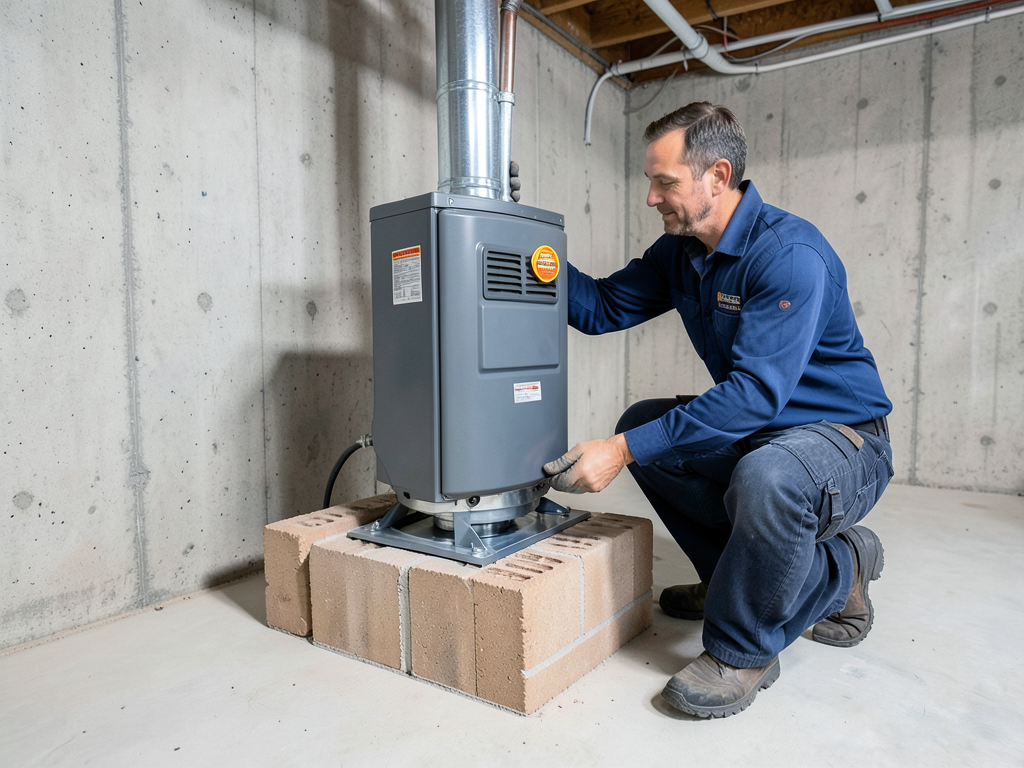
Raising your furnace above potential flood levels provides the most reliable protection. HVAC technicians can install your unit on specialized steel stands or masonry blocks. The National Fire Protection Association (NFPA) 54 code requires gas appliances to be elevated at least 18 inches above the floor in flood-prone areas. NFPA 54 gas appliance elevation requirements.
Steel stands offer superior stability compared to concrete blocks. They bolt directly to floor joists and can support up to 500 pounds of equipment. Masonry blocks work for lighter units but may shift during severe flooding. Both options allow technicians to access the unit for maintenance without moving it. Why Mason residents trust us for their annual HVAC maintenance and tune-ups.
Elevation also improves airflow and reduces dust accumulation around the unit. This extends equipment life and improves efficiency. Most Cincinnati HVAC contractors charge between $300 and $600 for professional elevation, depending on unit size and basement conditions.
Sump pump integration and battery backups
A primary sump pump removes water that accumulates in your basement. The pump sits in a pit below floor level and activates automatically when water rises. For Cincinnati homes, a 1/3 horsepower submersible pump handles most residential applications.
Battery backup systems keep your pump running during power outages. These systems include a deep-cycle marine battery and a secondary pump. When the primary pump fails or loses power, the backup activates automatically. This protection proves critical during storms when flooding risk peaks and power failures occur.
Smart sump pumps with Wi-Fi connectivity send alerts to your phone when water levels rise or the pump fails. Some models integrate with home automation systems to trigger lights or alarms. These systems cost $600 to $1,200 installed but provide peace of mind during heavy storms.
Smart water alarms and automatic shut-off valves
Water sensors placed near your furnace and water heater detect moisture before damage occurs. These battery-powered devices sound an alarm when water touches the sensor. More advanced models connect to your home Wi-Fi and send notifications to your smartphone.
Automatic gas shut-off valves provide additional protection for gas furnaces and water heaters. These devices detect water and immediately cut gas supply to prevent leaks and explosions. Some models integrate with water sensors to create a complete flood protection system.
Installation costs range from $150 for basic sensors to $800 for integrated systems with automatic shut-offs. The investment pales compared to replacing flooded equipment that can cost $3,000 to $7,000.
Emergency protocol: What to do when water enters the basement
Acting quickly during a flood can prevent equipment damage and protect your family. Follow these steps immediately when you discover water in your basement.
First, ensure your family’s safety. Never enter standing water in your basement without first shutting off power. Water conducts electricity and can cause fatal shocks. Locate your main electrical panel and switch off the breaker for the basement circuits.
Next, shut off the gas supply if you have gas appliances. Locate the main gas valve near your gas meter and turn it 90 degrees to the off position. This prevents gas leaks that could cause explosions or fires during flooding.
Document the damage with photos before attempting any cleanup. Take pictures of water levels, affected equipment, and any visible damage. This documentation helps with insurance claims and contractor assessments.
Remove valuable items and electronics from the basement if time permits. Elevate furniture on blocks or move it to higher floors. Every minute counts when protecting your belongings from water damage.
Call your insurance company immediately to report the flood. Many policies require notification within 24 hours of damage discovery. Ask about coverage for mechanical equipment and temporary housing if needed.
Finally, contact a licensed HVAC contractor for emergency service. Professional technicians can assess damage, make temporary repairs, and recommend replacement options. Quick action often saves equipment that would otherwise need replacement. 24/7 AC repair for restaurants and small businesses in Downtown Cincinnati.
Post-flood assessment: Can a submerged furnace be saved?
Determining whether flooded equipment can be repaired requires professional inspection. Water damage severity depends on exposure time, water depth, and contamination level. How to find a reliable AC repair company in Hyde Park without overpaying.
Category 1 water from clean sources like broken pipes causes less damage than Category 3 water from sewage backups or river flooding. Contaminated water destroys insulation, corrodes metal components, and creates health hazards that make repair unsafe.
Heat exchangers in furnaces face particular risk from flooding. These metal components transfer heat from combustion gases to your home’s air. Water exposure causes rust and corrosion that can lead to carbon monoxide leaks. Most manufacturers void warranties on flooded units due to safety concerns.
Control boards and electronic components rarely survive submersion. Even brief exposure to water can short-circuit delicate electronics. Corrosion continues after drying, causing intermittent failures that create safety hazards.
Gas valves and burners require complete replacement after flooding. Water can damage internal components and create gas leaks. Even if the valve appears to function, internal corrosion makes it unsafe for continued use.
Professional assessment costs $100 to $200 but provides valuable information for insurance claims and replacement decisions. Technicians use moisture meters and visual inspection to determine damage extent.
Most flooded furnaces and water heaters require replacement rather than repair. The cost of replacement parts plus labor often exceeds new equipment prices. Modern units also offer improved efficiency that reduces energy costs.
Annual maintenance for flood readiness
Regular maintenance keeps your flood protection systems working when you need them most. Schedule professional inspections before the rainy season begins in early spring.
Test your sump pump by pouring water into the pit until the float activates. The pump should turn on automatically and remove water quickly. If the pump fails to activate, check the power supply and float switch before calling for service.
Inspect your battery backup system twice yearly. Check battery voltage with a multimeter and replace batteries every 3-5 years. Clean battery terminals and ensure connections remain tight. Test the backup pump by unplugging the primary pump and verifying backup activation.
Examine water sensors and replace batteries annually. Test sensors by placing a damp cloth on the sensor surface. Verify that alarms sound and notifications send to your phone if you have smart sensors.
Check furnace and water heater elevation periodically. Verify that stands remain level and secure. Look for signs of rust or corrosion around base plates. Tighten any loose bolts or brackets.
Clean floor drains and ensure they remain clear of debris. Pour water into drains to verify they flow freely. Slow-draining floor drains indicate clogs that can cause basement flooding during heavy rains.
Inspect your home’s exterior drainage systems. Clean gutters and downspouts regularly. Ensure downspouts extend at least 6 feet from your foundation. Grade soil away from your foundation to prevent water pooling.
Consider professional duct cleaning after any basement flooding. Water can enter ductwork through floor vents and create mold growth. Professional cleaning removes contaminants and improves indoor air quality.
Insurance considerations for Cincinnati homeowners
Standard homeowners insurance typically excludes flood damage. You need separate flood insurance through the National Flood Insurance Program (NFIP) or private insurers. Cincinnati residents in high-risk areas often qualify for NFIP coverage with lower premiums.
Check your policy for mechanical equipment coverage. Some policies cover appliances damaged by sewer backups but exclude groundwater flooding. Understand your deductibles and coverage limits before disaster strikes.
Document your mechanical equipment with photos and receipts. Keep records of installation dates, model numbers, and maintenance history. This documentation speeds insurance claims and helps establish equipment value.
Ask your insurance agent about equipment breakdown coverage. This optional coverage pays for mechanical failures regardless of cause. It can cover furnace and water heater replacement without flood involvement.
Consider installing water leak detection systems that automatically shut off main water supply. Some insurance companies offer premium discounts for these devices. They prevent extensive damage from burst pipes or failed appliances.
Review your coverage annually as equipment ages. Replacement costs increase over time, and your coverage should keep pace. Don’t discover coverage gaps when filing a claim after flood damage.
Local building codes and permit requirements
Cincinnati building codes require specific protections for mechanical equipment in flood-prone areas. The Cincinnati Department of Buildings and Inspections enforces these requirements for new installations and major modifications.
NFPA 54 mandates that gas appliances in basements must be elevated at least 18 inches above the floor in flood hazard areas. This elevation protects gas valves and burners from water damage and prevents gas leaks during flooding.
Mechanical permits are required for furnace and water heater installations. The permit process ensures compliance with local codes and proper installation techniques. Unpermitted work can void insurance coverage and create safety hazards.
Electrical codes require GFCI protection for basement outlets and circuits. This protection prevents electrical shocks in damp environments. All basement wiring must meet National Electrical Code requirements for wet locations.
Plumbing permits are necessary for water heater replacements. The permit ensures proper venting, temperature and pressure relief valve installation, and gas line connections. Improper installation creates safety hazards and code violations.
Commercial properties face additional requirements. Cooling towers and industrial equipment must comply with Hamilton County mechanical codes. These codes address ventilation, emissions, and safety systems specific to commercial applications. Cooling Tower Services.
Historical buildings in Cincinnati’s older neighborhoods may have special requirements. Preservation guidelines can affect equipment placement and installation methods. Work with contractors experienced in historical building renovations.
Comparing flood protection options
Choosing the right flood protection depends on your basement configuration, budget, and flood risk level. Here’s how different options compare:
| Protection Method | Initial Cost | Effectiveness | Maintenance | Best For |
|---|---|---|---|---|
| Furnace Elevation | $300-$600 | Excellent | Minimal | High-risk basements |
| Sump Pump System | $800-$2,500 | Good | Annual | Active water intrusion |
| Water Sensors | $150-$800 | Fair | Annual | Early warning |
| Automatic Shut-off | $400-$1,000 | Excellent | Minimal | Gas appliances |
Frequently asked questions
How much does it cost to replace a flooded furnace?
Replacing a flooded furnace typically costs $3,000 to $7,000 depending on size, efficiency, and installation complexity. High-efficiency models with variable-speed blowers cost more but reduce energy bills. Water heaters cost $1,000 to $2,500 to replace.
Can I clean and reuse my flooded water heater?
Most flooded water heaters require replacement rather than cleaning. Water damages insulation, corrodes tanks, and creates bacterial growth. Even if the unit appears to function, internal damage creates safety hazards. Insurance companies often require replacement for flooded units.
How long does it take for water to damage HVAC equipment?
Water can damage HVAC equipment in minutes. Electrical components short out immediately. Gas valves and burners corrode within hours. Insulation absorbs water and becomes a mold breeding ground. The longer equipment remains submerged, the greater the damage extent.
Do I need a permit to elevate my furnace?
Most furnace elevation projects require mechanical permits from the Cincinnati Department of Buildings and Inspections. The permit ensures proper installation and code compliance. Your HVAC contractor typically handles permit acquisition as part of the project.
What should I do if my basement floods while I’m away?
Install smart water sensors that send alerts to your phone when water appears. Consider automatic gas shut-off valves that activate without human intervention. Ask a neighbor to check your home during extended absences, especially during rainy seasons.
Does homeowners insurance cover flooded HVAC equipment?
Standard homeowners insurance excludes flood damage. You need separate flood insurance through NFIP or private insurers. Some policies cover sewer backup damage but exclude groundwater flooding. Review your policy details with your insurance agent.
Call for emergency flood protection assessment
Don’t wait for the next storm to protect your furnace and water heater. A professional assessment can identify your flood risks and recommend cost-effective protection strategies. Our Cincinnati-based technicians understand local flood patterns and building requirements.
Call (513) 717-5155 today to schedule your flood protection assessment. We’ll evaluate your basement configuration, recommend appropriate protection systems, and provide upfront pricing. Our team works with all major insurance providers and can help document damage for claims.
Pick up the phone and call (513) 717-5155 before the next storm hits. Every day you wait increases your risk of costly equipment damage and family safety hazards. Protect your home’s mechanical systems with professional flood protection solutions designed for Cincinnati’s unique climate challenges.
Don’t let water destroy your comfort and safety. Call (513) 717-5155 now to speak with our flood protection specialists. We’re ready to help you sleep better during storm season knowing your furnace and water heater remain safe and dry. For more information, visit FEMA flood insurance information.
{
“@context”: “https://schema.org”,
“@type”: “BlogPosting”,
“headline”: “Why your furnace and water heater need to stay dry during a Cincinnati basement flood”,
“description”: “Protect your furnace and water heater from Cincinnati flood damage. Learn prevention tactics, emergency protocols, and post-flood assessment steps for Ohio Valley homes.”,
“wordCount”: 2391,
“datePublished”: “2026-05-10T07:30:00.000Z”,
“dateModified”: “2026-05-10T07:30:00.000Z”,
“inLanguage”: “en-US”,
“mainEntityOfPage”: {
“@type”: “WebPage”,
“@id”: “https://fivestarhvaccincinnati.com”
},
“publisher”: {
“@type”: “LocalBusiness”,
“name”: “Five Star HVAC Cincinnati”,
“url”: “https://fivestarhvaccincinnati.com”
},
“author”: {
“@type”: “Organization”,
“name”: “Five Star HVAC Cincinnati”,
“url”: “https://fivestarhvaccincinnati.com”
},
“image”: {
“@type”: “ImageObject”,
“url”: “https://fivestarhvaccincinnati.com/wp-content/uploads/2026/03/why-your-furnace-and-water-heater-need-to-stay-dry-1.png”
}
}
{
“@context”: “https://schema.org”,
“@type”: “HVACBusiness”,
“name”: “Five Star HVAC Cincinnati”,
“url”: “https://fivestarhvaccincinnati.com”,
“address”: {
“@type”: “PostalAddress”,
“addressLocality”: “Cincinnati”
},
“areaServed”: {
“@type”: “City”,
“name”: “Cincinnati”
}
}
{
“@context”: “https://schema.org”,
“@type”: “FAQPage”,
“mainEntity”: [
{
“@type”: “Question”,
“name”: “Post-flood assessment: Can a submerged furnace be saved?”,
“acceptedAnswer”: {
“@type”: “Answer”,
“text”: “Determining whether flooded equipment can be repaired requires professional inspection. Water damage severity depends on exposure time, water depth, and contamination level. How to find a reliable AC repair company in Hyde Park without overpaying.”
}
},
{
“@type”: “Question”,
“name”: “How much does it cost to replace a flooded furnace?”,
“acceptedAnswer”: {
“@type”: “Answer”,
“text”: “Replacing a flooded furnace typically costs $3,000 to $7,000 depending on size, efficiency, and installation complexity. High-efficiency models with variable-speed blowers cost more but reduce energy bills. Water heaters cost $1,000 to $2,500 to replace.”
}
},
{
“@type”: “Question”,
“name”: “Can I clean and reuse my flooded water heater?”,
“acceptedAnswer”: {
“@type”: “Answer”,
“text”: “Most flooded water heaters require replacement rather than cleaning. Water damages insulation, corrodes tanks, and creates bacterial growth. Even if the unit appears to function, internal damage creates safety hazards. Insurance companies often require replacement for flooded units.”
}
},
{
“@type”: “Question”,
“name”: “How long does it take for water to damage HVAC equipment?”,
“acceptedAnswer”: {
“@type”: “Answer”,
“text”: “Water can damage HVAC equipment in minutes. Electrical components short out immediately. Gas valves and burners corrode within hours. Insulation absorbs water and becomes a mold breeding ground. The longer equipment remains submerged, the greater the damage extent.”
}
},
{
“@type”: “Question”,
“name”: “Do I need a permit to elevate my furnace?”,
“acceptedAnswer”: {
“@type”: “Answer”,
“text”: “Most furnace elevation projects require mechanical permits from the Cincinnati Department of Buildings and Inspections. The permit ensures proper installation and code compliance. Your HVAC contractor typically handles permit acquisition as part of the project.”
}
},
{
“@type”: “Question”,
“name”: “What should I do if my basement floods while I’m away?”,
“acceptedAnswer”: {
“@type”: “Answer”,
“text”: “Install smart water sensors that send alerts to your phone when water appears. Consider automatic gas shut-off valves that activate without human intervention. Ask a neighbor to check your home during extended absences, especially during rainy seasons.”
}
},
{
“@type”: “Question”,
“name”: “Does homeowners insurance cover flooded HVAC equipment?”,
“acceptedAnswer”: {
“@type”: “Answer”,
“text”: “Standard homeowners insurance excludes flood damage. You need separate flood insurance through NFIP or private insurers. Some policies cover sewer backup damage but exclude groundwater flooding. Review your policy details with your insurance agent.”
}
}
]
}
{
“@context”: “https://schema.org”,
“@type”: “BreadcrumbList”,
“itemListElement”: [
{
“@type”: “ListItem”,
“position”: 1,
“name”: “Home”,
“item”: “https://fivestarhvaccincinnati.com”
},
{
“@type”: “ListItem”,
“position”: 2,
“name”: “Blog”,
“item”: “https://fivestarhvaccincinnati.com/blog”
},
{
“@type”: “ListItem”,
“position”: 3,
“name”: “Why your furnace and water heater need to stay dry during a Cincinnati basement flood”
}
]
}
{
“@context”: “https://schema.org”,
“@type”: “Service”,
“serviceType”: “HVAC”,
“provider”: {
“@type”: “LocalBusiness”,
“name”: “Five Star HVAC Cincinnati”,
“url”: “https://fivestarhvaccincinnati.com”
},
“areaServed”: {
“@type”: “City”,
“name”: “Cincinnati”
},
“description”: “Protect your furnace and water heater from Cincinnati flood damage. Learn prevention tactics, emergency protocols, and post-flood assessment steps for Ohio Valley homes.”
}