
Cincinnati summers demand more than just a cool breeze. With humidity that clings like a wet blanket and temperatures that regularly push past 90 degrees, your air conditioner needs to do two jobs: remove heat and remove moisture. That’s why choosing the right efficiency rating matters more here than in most places.. Read more about Choosing Between Electric and Gas Heating for Your New Construction in Springdale.
The sweet spot for Cincinnati homes falls between 15 and 18 SEER2. This range balances the higher upfront cost of premium equipment with the actual energy savings you’ll see on your Duke Energy bill. Units above 18 SEER2 often cost so much more that the energy savings never catch up, while anything below 14.3 SEER2 won’t meet current Department of Energy standards and will cost you more to operate. Duke Energy Ohio rebates.
Understanding SEER2 vs. SEER Ratings
Since January 1, 2023, all new air conditioners must meet SEER2 standards, which test equipment under more realistic conditions. The old SEER rating measured efficiency at 80 degrees with 50% humidity. SEER2 tests at 82 degrees with 75% humidity and accounts for static pressure in your ductwork.
This change matters in Cincinnati because our summers hit those exact conditions. A unit rated 16 SEER might perform like 14.5 SEER2 in our climate. That’s why you’ll see both numbers when shopping, but SEER2 is what actually matters for your utility bill.
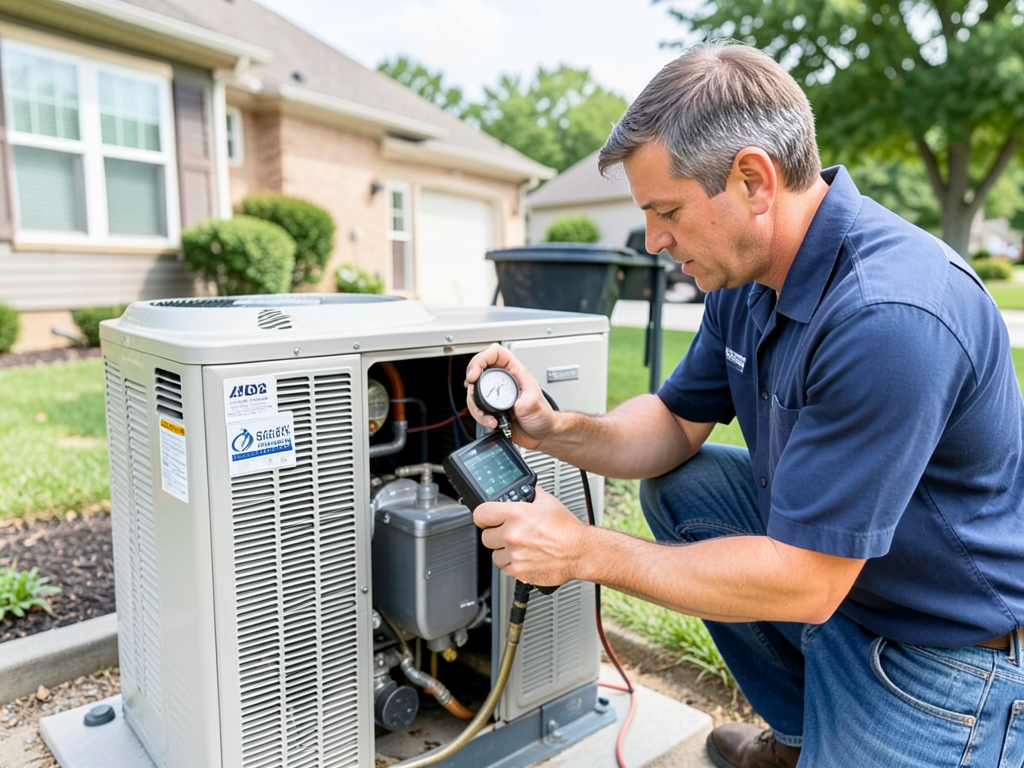
A technician uses a digital manifold gauge to measure superheat and subcooling on a 16 SEER2 unit during installation in a Mason home. Why Mason residents trust us for their annual HVAC maintenance and tune-ups.
Why Cincinnati’s Humidity Changes Everything
Most of the country worries about heat. Cincinnati worries about heat plus moisture. When humidity hits 70% or higher, which happens almost daily in July and August, your AC works twice as hard. The system must cool the air and then condense the water vapor out of it.
Variable-speed compressors handle this better than single-stage units. Instead of running at full blast then shutting off, they adjust their output to match the cooling load. This keeps humidity between 45-55%, where mold and mildew can’t grow, and maintains even temperatures throughout your home. Cooling Tower Services.
Single-stage units create a problem called short cycling. They cool the air quickly but don’t run long enough to remove moisture. You get cold, clammy air that feels like a refrigerator. Variable-speed units run longer at lower speeds, pulling more humidity out and using less electricity overall.
Cost vs. Savings: The Real Numbers for Cincinnati
Here’s what efficiency really costs in Cincinnati dollars. Based on Duke Energy’s current summer rates of about 14 cents per kilowatt-hour, a 14 SEER2 unit costs roughly $180 per month to cool a 2,000-square-foot home. A 16 SEER2 drops that to $157 per month. An 18 SEER2 brings it down to $145 per month.. Read more about Cutting energy costs with professional solar ready HVAC in Sharonville.
The price difference between these units ranges from $1,200 to $2,500. At $23 per month savings between 14 and 16 SEER2, you’d need about 52 months to break even. That’s just over four years. After that, the savings go straight to your pocket.
But here’s the Cincinnati catch: if you have an older home with leaky ductwork or poor insulation, even a 20 SEER2 unit won’t save you money. The conditioned air escapes before it can do its job. Fix the building envelope first, then upgrade the equipment.
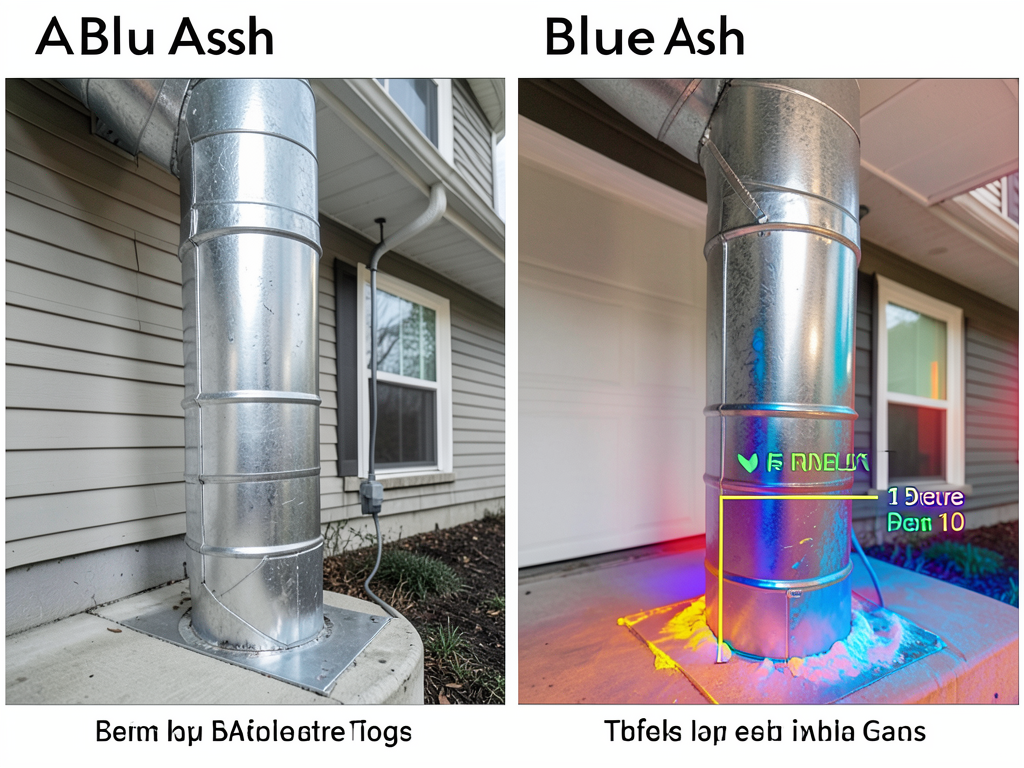
A before-and-after comparison shows ductwork sealing in a Blue Ash home, with infrared imaging revealing temperature differences of up to 15 degrees.
Duke Energy Rebates and Federal Tax Credits
Duke Energy Ohio offers rebates up to $600 for qualifying high-efficiency air conditioners. The rebate increases to $1,200 for heat pump systems. These rebates require installation by a participating contractor and units must meet minimum efficiency standards.. Read more about How a Professional Energy Audit Can Lower Utility Bills for Silverton Families.
The federal government provides additional incentives through the Inflation Reduction Act. Homeowners can claim a 30% tax credit up to $2,000 for qualifying HVAC equipment. Heat pumps qualify for even more generous credits. These credits apply to both the equipment and installation costs.
Local utilities sometimes offer additional programs. The Power Forward initiative provides free home energy assessments to identify where your home is losing efficiency. Some participants qualify for free insulation upgrades or duct sealing.
Matching Equipment to Your Home Type
Not every Cincinnati home needs the same efficiency rating. Historic homes in neighborhoods like Hyde Park or Mount Lookout often have plaster walls and original windows. These homes need higher efficiency ratings because they lose more energy. A 16-18 SEER2 unit makes sense here.. Read more about Creative Ways to Cool Down a Historic Mt. Adams Home Without Losing Its Charm.
Modern suburban homes in Mason or West Chester typically have better insulation and sealed ductwork. These homes might do fine with a 14-16 SEER2 unit. The energy savings from going higher rarely justify the cost increase.
Commercial buildings have different requirements. Office buildings and retail spaces run HVAC systems constantly. Here, 18+ SEER2 units pay for themselves faster through reduced operating costs. The energy savings accumulate 24/7 instead of just evenings and weekends.
Multi-family buildings present another challenge. Shared walls mean less heat loss, but common areas often need constant cooling. Variable refrigerant flow (VRF) systems with 20+ SEER2 ratings work best here, allowing individual temperature control in each unit.
A VRF system installation in a commercial building shows the compact outdoor units and individual indoor handlers for zone control.
Common Mistakes Cincinnati Homeowners Make
The biggest mistake is oversizing the unit. A 3-ton AC might seem better than a 2.5-ton, but it will short cycle and leave humidity in your home. Proper sizing requires a Manual J calculation that considers your home’s exact square footage, orientation, and insulation levels.
Another mistake is ignoring the indoor coil match. Your new outdoor unit must work with the existing indoor coil, or efficiency drops by 30%. Some homeowners replace only the outdoor unit to save money, but this actually costs more in higher utility bills.
People also forget about maintenance. A dirty filter can reduce efficiency by 15%. Annual professional cleaning keeps your system running at peak performance. During Cincinnati’s pollen season, filters might need changing every 30 days instead of every 90. Furnace Maintenance Checklist.
Making the Final Decision
Start with a home energy audit. This identifies air leaks, inadequate insulation, and ductwork problems. Fixing these issues often provides better return on investment than upgrading to a higher SEER2 rating.
Next, get multiple quotes from licensed contractors. Ask specifically about SEER2 ratings, not just SEER. Verify they pull permits and follow Hamilton County Mechanical Code requirements. The cheapest quote often means cutting corners that cost more later.
Consider your timeline. If you plan to move within three years, a basic 14.3 SEER2 unit makes sense. If you’ll stay longer, invest in 16 SEER2 or higher. The energy savings accumulate over time, and you’ll enjoy better humidity control.
Finally, check warranty terms. Premium units often include 10-year parts warranties and 2-year labor warranties. Some manufacturers require annual maintenance to keep warranties valid. Factor these costs into your decision. HVAC Warranty Guide.
Call (513) 717-5155 today to schedule your efficiency consultation. Our NATE-certified technicians will perform a complete load calculation and show you exactly which SEER2 rating makes sense for your Cincinnati home.
Frequently Asked Questions
What SEER2 rating is best for Cincinnati’s climate?
For most Cincinnati homes, a 15-18 SEER2 rating provides the best balance of upfront cost and energy savings. This range handles our humidity while keeping monthly utility bills manageable.. Read more about Keeping Your Attic From Overheating Your Second Floor in Maineville.
How much can I save with a higher efficiency AC?
A 16 SEER2 unit typically saves $20-25 per month compared to a 14 SEER2 in Cincinnati. Over a cooling season, that’s $180-225 in savings. The higher the SEER2 rating, the more you save, but the longer it takes to recoup the higher upfront cost.
Do I qualify for any rebates on high-efficiency AC units?
Yes. Duke Energy Ohio offers rebates up to $600 for qualifying air conditioners. The federal government provides a 30% tax credit up to $2,000 through the Inflation Reduction Act. Some local utilities offer additional incentives.
Should I repair my old AC or replace it?
If your unit is over 10 years old, needs frequent repairs, or uses R-22 refrigerant, replacement usually makes more sense. New units are more efficient and use environmentally friendly refrigerants. The energy savings often offset the replacement cost within a few years. For more information, visit Department of Energy AC efficiency guide.
You may also find this helpful. Making the Switch from Central Air to a High Efficiency Heat Pump in Deer Park.
{
“@context”: “https://schema.org”,
“@type”: “BlogPosting”,
“headline”: “How to Choose the Right Efficiency Rating for a Cincinnati Summer”,
“description”: “Discover the ideal SEER2 rating for Cincinnati’s humid climate. Learn how to balance upfront costs with energy savings and Duke Energy rebates.”,
“wordCount”: 1390,
“datePublished”: “2026-03-12T15:03:00.000Z”,
“dateModified”: “2026-03-12T15:03:00.000Z”,
“inLanguage”: “en-US”,
“mainEntityOfPage”: {
“@type”: “WebPage”,
“@id”: “https://fivestarhvaccincinnati.com”
},
“publisher”: {
“@type”: “LocalBusiness”,
“name”: “Five Star HVAC Cincinnati”,
“url”: “https://fivestarhvaccincinnati.com”
},
“author”: {
“@type”: “Organization”,
“name”: “Five Star HVAC Cincinnati”,
“url”: “https://fivestarhvaccincinnati.com”
},
“image”: {
“@type”: “ImageObject”,
“url”: “https://fivestarhvaccincinnati.com/wp-content/uploads/2026/03/how-to-choose-the-right-efficiency-rating-for-a-ci-1.png”
}
}
{
“@context”: “https://schema.org”,
“@type”: “HVACBusiness”,
“name”: “Five Star HVAC Cincinnati”,
“url”: “https://fivestarhvaccincinnati.com”,
“address”: {
“@type”: “PostalAddress”,
“addressLocality”: “Cincinnati”
},
“areaServed”: {
“@type”: “City”,
“name”: “Cincinnati”
}
}
{
“@context”: “https://schema.org”,
“@type”: “FAQPage”,
“mainEntity”: [
{
“@type”: “Question”,
“name”: “What SEER2 rating is best for Cincinnati’s climate?”,
“acceptedAnswer”: {
“@type”: “Answer”,
“text”: “For most Cincinnati homes, a 15-18 SEER2 rating provides the best balance of upfront cost and energy savings. This range handles our humidity while keeping monthly utility bills manageable.”
}
},
{
“@type”: “Question”,
“name”: “How much can I save with a higher efficiency AC?”,
“acceptedAnswer”: {
“@type”: “Answer”,
“text”: “A 16 SEER2 unit typically saves $20-25 per month compared to a 14 SEER2 in Cincinnati. Over a cooling season, that’s $180-225 in savings. The higher the SEER2 rating, the more you save, but the longer it takes to recoup the higher upfront cost.”
}
},
{
“@type”: “Question”,
“name”: “Do I qualify for any rebates on high-efficiency AC units?”,
“acceptedAnswer”: {
“@type”: “Answer”,
“text”: “Yes. Duke Energy Ohio offers rebates up to $600 for qualifying air conditioners. The federal government provides a 30% tax credit up to $2,000 through the Inflation Reduction Act. Some local utilities offer additional incentives.”
}
},
{
“@type”: “Question”,
“name”: “Should I repair my old AC or replace it?”,
“acceptedAnswer”: {
“@type”: “Answer”,
“text”: “If your unit is over 10 years old, needs frequent repairs, or uses R-22 refrigerant, replacement usually makes more sense. New units are more efficient and use environmentally friendly refrigerants. The energy savings often offset the replacement cost within a few years. For more information, visit Department of Energy AC efficiency guide.”
}
}
]
}
{
“@context”: “https://schema.org”,
“@type”: “BreadcrumbList”,
“itemListElement”: [
{
“@type”: “ListItem”,
“position”: 1,
“name”: “Home”,
“item”: “https://fivestarhvaccincinnati.com”
},
{
“@type”: “ListItem”,
“position”: 2,
“name”: “Blog”,
“item”: “https://fivestarhvaccincinnati.com/blog”
},
{
“@type”: “ListItem”,
“position”: 3,
“name”: “How to Choose the Right Efficiency Rating for a Cincinnati Summer”
}
]
}
{
“@context”: “https://schema.org”,
“@type”: “Service”,
“serviceType”: “HVAC”,
“provider”: {
“@type”: “LocalBusiness”,
“name”: “Five Star HVAC Cincinnati”,
“url”: “https://fivestarhvaccincinnati.com”
},
“areaServed”: {
“@type”: “City”,
“name”: “Cincinnati”
},
“description”: “Discover the ideal SEER2 rating for Cincinnati’s humid climate. Learn how to balance upfront costs with energy savings and Duke Energy rebates.”
}