
Making the Switch from Central Air to a High Efficiency Heat Pump in Deer Park
Deer Park homeowners are discovering that upgrading from a traditional central air system to a high-efficiency heat pump can cut energy costs by 30 to 50 percent while providing year-round comfort. The humid Ohio River Valley climate makes heat pumps an ideal solution since they both cool in summer and heat in winter without the need for separate systems. With Duke Energy Ohio rebates and federal tax credits available in 2026, now is the perfect time to explore this conversion. Duke Energy Ohio Smart Saver rebates.
Heat pumps work by transferring heat rather than generating it, which makes them far more efficient than gas furnaces or electric resistance heating. In Cincinnati’s climate zone 4, modern cold-climate heat pumps with hyper-heat technology can maintain full heating capacity even when outdoor temperatures drop below zero. The transition from central air to heat pump requires careful planning around electrical capacity, ductwork compatibility, and proper sizing for your home’s insulation levels. Emergency furnace repair services for Indian Hill homeowners available right now.
Why Deer Park Homeowners are Switching to Heat Pumps
Deer Park’s housing stock includes many mid-century homes with aging central air systems that were designed primarily for cooling. These systems often struggle during Cincinnati’s hot humid summers and provide no heating capability during winter. Rising natural gas prices and growing awareness of energy efficiency have pushed many homeowners to consider heat pump conversions as a way to modernize their HVAC systems. Cooling Tower Services.
The average Deer Park home built between 1950 and 1980 typically has R-11 to R-19 insulation in the walls and R-19 to R-30 in the attic. This level of insulation works well with modern heat pumps when properly sized and installed. Many homes in the area also have ductwork that was designed for cooling-only operation, which may need modifications to handle the increased airflow requirements of heat pump heating mode.. Read more about Can a modern heat pump handle a record-breaking Cincinnati cold snap?.
Local utility rates from Duke Energy Ohio show that electric heating with a high-efficiency heat pump costs significantly less than heating with propane or electric resistance. For a typical 2,000 square foot home, switching from an 80 percent efficient gas furnace to a heat pump can save $400 to $600 annually on heating costs alone. The savings are even greater when replacing older electric resistance heating systems. Furnace Maintenance Checklist.
The Conversion Process: Gas/Electric to Heat Pump
Converting from central air to a heat pump involves several technical steps that must be completed in sequence. The process begins with a comprehensive home energy assessment to determine the proper system size and identify any insulation or air sealing improvements needed. This assessment includes measuring existing ductwork, checking electrical panel capacity, and evaluating the home’s thermal envelope.
Most Deer Park homes built before 1990 have 100 to 150 amp electrical service panels. Heat pumps typically require a dedicated 240-volt circuit with 15 to 30 amp capacity depending on the unit size. If your electrical panel is full or uses fuses instead of breakers, an upgrade may be necessary before installation can proceed. The National Electrical Code Article 440 specifies the exact wiring and disconnect requirements for heat pump installations.
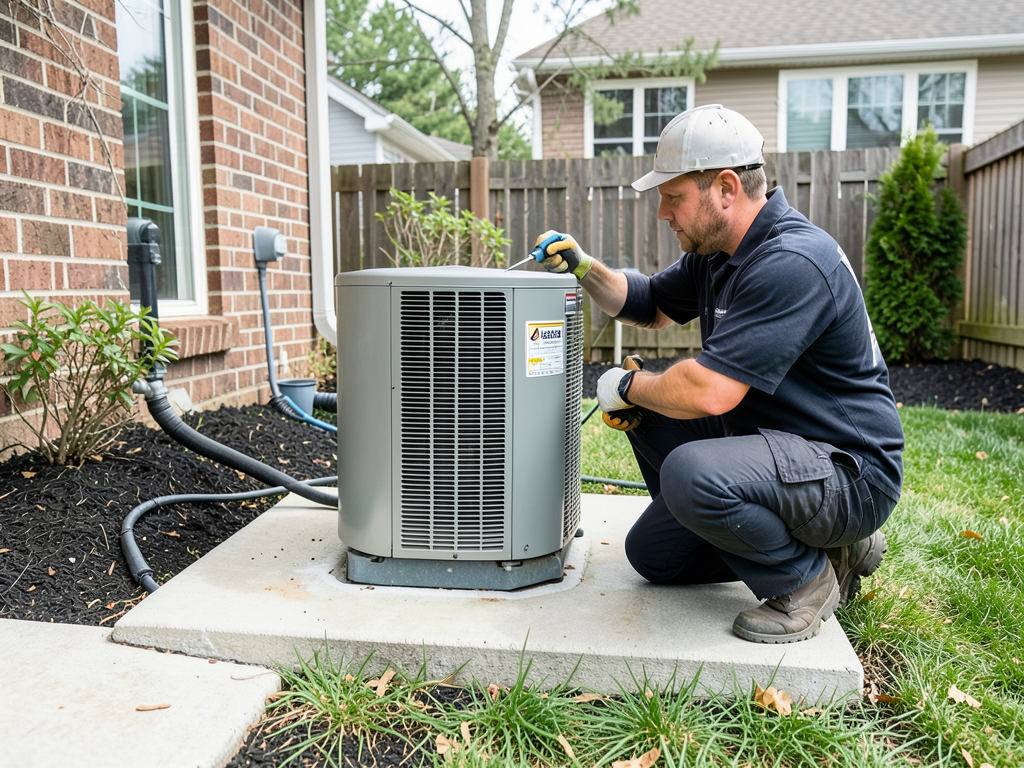
The outdoor unit placement requires careful consideration of local building codes and manufacturer clearances. Hamilton County building code requires at least five feet of clearance from property lines and proper setback from windows to minimize noise. The outdoor compressor must sit on a concrete pad or elevated mounting bracket to prevent vibration transfer and ensure proper drainage. In Deer Park’s clay soil conditions, proper drainage around the pad prevents settling and maintains system efficiency.. Read more about Why You Need a Local Expert for Heat Pump Repair in Independence Kentucky.
Indoor coil installation involves integrating the new heat pump coil with your existing furnace or air handler. The coil must be properly sized to match the outdoor unit’s capacity and installed in the same airstream as your existing blower. This integration allows the system to use your existing ductwork while providing both heating and cooling capabilities. The refrigerant lines connecting the indoor and outdoor units must be insulated and protected according to EPA regulations to prevent leaks and ensure safe operation.
Local Rebates and Financial Incentives (Duke Energy & IRA)
Duke Energy Ohio offers Smart Saver rebates for customers who install high-efficiency heat pumps with SEER2 ratings of 16 or higher and HSPF2 ratings of 9.0 or higher. The rebate amounts vary based on system efficiency, with premium models qualifying for up to $600 in instant rebates. These rebates are available through participating contractors and are applied at the time of purchase, reducing your upfront costs immediately.
The federal Inflation Reduction Act provides a 30 percent tax credit up to $2,000 for qualified heat pump installations completed in 2026. This credit applies to both the equipment and installation costs when the system meets Energy Star certification requirements. The credit is claimed on your federal tax return and can be carried forward if it exceeds your tax liability for the year of installation. Federal 30% tax credit for heat pumps.
Additional incentives may be available through local programs and utility partnerships. Hamilton County occasionally offers weatherization grants for low-income homeowners that can be combined with heat pump installations. Some manufacturers also provide seasonal promotions and extended warranty offers that can further reduce the total cost of conversion. HVAC Warranty Guide.
The total cost of converting from central air to heat pump typically ranges from $5,500 to $12,000 depending on system size, efficiency rating, and any necessary electrical or ductwork modifications. When factoring in available rebates and tax credits, the net cost often falls between $3,500 and $8,000. Most homeowners recover their investment through energy savings within three to five years of installation.
Cold-Climate Performance in Cincinnati
Modern heat pumps use inverter-driven compressors and variable-speed fans that maintain efficiency even in extreme cold. Hyper-heat technology allows these systems to extract heat from outdoor air when temperatures drop as low as -13 degrees Fahrenheit. In Cincinnati’s climate, where winter temperatures occasionally fall below zero during polar vortex events, this technology ensures reliable heating without supplemental systems. How to find a reliable AC repair company in Hyde Park without overpaying.
The Heating Seasonal Performance Factor 2 (HSPF2) rating measures heat pump efficiency in heating mode. A minimum HSPF2 of 8.2 is required for Energy Star certification, but premium models achieve ratings of 10.0 or higher. For Deer Park’s climate, an HSPF2 rating of 9.0 or higher provides optimal efficiency during the 4,000 to 5,000 heating degree days typical of the Cincinnati area.
Dual-fuel systems offer an alternative for homeowners who want maximum efficiency and reliability. These systems use a heat pump as the primary heating source and automatically switch to a gas furnace when outdoor temperatures drop below a set point, typically around 35 degrees. This configuration provides the efficiency of electric heating during mild weather while maintaining the reliability of gas heating during extreme cold snaps.
Noise levels have improved dramatically in modern heat pump designs. Premium units operate at 50 to 60 decibels, comparable to a normal conversation. The outdoor units feature sound-dampening technology and variable-speed operation that reduces noise during startup and shutdown. Proper installation with vibration isolation and strategic placement can make heat pumps virtually unnoticeable from inside the home.
Our Deer Park Service Area and Recent Projects
We serve all of Deer Park including the Blue Ash Road corridor, Plainfield Road area, and neighborhoods near Amity Park. Our technicians regularly work in the 45236 zip code and surrounding areas including parts of Amberley Village and Silverton. We understand the specific challenges of retrofitting older homes in this area, from the mature tree coverage that affects outdoor unit placement to the varying foundation types that influence ductwork routing.
Recent installations include a complete system conversion for a 1960s ranch on Blue Ash Road where we replaced a 15-year-old central air system with a 18 SEER2 heat pump. The project required electrical panel upgrades and minor ductwork modifications but resulted in a 45 percent reduction in summer cooling costs. Another project on Plainfield Road involved installing a dual-fuel system in a 1940s Tudor home, allowing the homeowner to maintain their existing gas furnace while adding heat pump efficiency.
Deer Park’s combination of older housing stock and mature tree canopy creates unique installation considerations. Large trees near homes can limit outdoor unit placement options and may require additional clearance for service access. The area’s clay soil conditions also affect foundation stability and may require additional support for outdoor units to prevent settling over time.
Permitting requirements in Deer Park follow Hamilton County regulations for mechanical installations. All heat pump conversions require permits from the Hamilton County Building Department, including electrical modifications and any structural changes. Our team handles all permitting requirements and ensures compliance with local codes throughout the installation process.
Comparing Heat Pump Options for Deer Park Homes
| System Type | Efficiency Rating | Best For | Estimated Cost Range |
|---|---|---|---|
| Single-Stage Heat Pump | SEER2 16-18, HSPF2 8.5-9.0 | Budget-conscious homeowners | $5,500 – $7,500 |
| Two-Stage Heat Pump | SEER2 18-20, HSPF2 9.0-10.0 | Balanced efficiency and cost | $7,000 – $9,500 |
| Inverter-Driven Heat Pump | SEER2 20+, HSPF2 10.0+ | Maximum efficiency, comfort | $9,000 – $12,000 |
| Dual-Fuel System | SEER2 18+, HSPF2 9.0+ | Extreme climate reliability | $8,000 – $14,000 |
Frequently Asked Questions
How long does a heat pump conversion take?
Most heat pump conversions in Deer Park can be completed in one to two days. The process includes system removal, electrical modifications, equipment installation, and final testing. Complex projects requiring electrical panel upgrades or extensive ductwork modifications may take three to four days.
Will a heat pump work with my existing ductwork?
In most cases yes. Heat pumps use the same ductwork as central air systems. However, the existing ducts may need modifications to handle the increased airflow required for heating mode. A professional assessment will determine if your current ductwork is adequate or needs adjustments.
What maintenance does a heat pump require?
Heat pumps require annual maintenance similar to central air systems. This includes cleaning coils, checking refrigerant levels, testing electrical components, and ensuring proper airflow. The outdoor unit should be kept clear of debris and vegetation, and the air filter should be changed every one to three months depending on usage.. Read more about Should you lease or buy your next HVAC system? (A guide for budget-conscious families).
Are heat pumps noisy?
Modern heat pumps are significantly quieter than older models. Premium units operate at 50 to 60 decibels, similar to a normal conversation. Proper installation with vibration isolation and strategic outdoor unit placement minimizes noise transmission to your living spaces.
How do I know if my home is ready for a heat pump?
A professional energy assessment will determine your home’s readiness for a heat pump. This assessment evaluates your insulation levels, air sealing, electrical capacity, and existing ductwork. Most Deer Park homes built after 1980 are good candidates for heat pump conversion with minimal modifications.
Take the Next Step Toward Energy Efficiency
Converting from central air to a high-efficiency heat pump is one of the smartest investments you can make for your Deer Park home. With available rebates, tax credits, and significant energy savings, the system pays for itself while providing year-round comfort. Our experienced technicians understand the unique requirements of Cincinnati’s climate and Deer Park’s housing stock.
Don’t wait until your current system fails during a summer heatwave or winter cold snap. Call (513) 717-5155 today to schedule your free home energy assessment and learn exactly how much you can save with a heat pump conversion. Our team will evaluate your specific situation, explain all available incentives, and provide a detailed proposal with no obligation.
Ready to upgrade your home’s comfort and efficiency? Pick up the phone and call (513) 717-5155 before the next season hits. We’re standing by to help Deer Park homeowners make the switch to cleaner, more efficient heating and cooling technology.
You may also find this helpful. The best ways to heat and cool a finished basement in your Sayler Park home.
{
“@context”: “https://schema.org”,
“@type”: “BlogPosting”,
“headline”: “Making the Switch from Central Air to a High Efficiency Heat Pump in Deer Park”,
“description”: “Upgrade your Deer Park home with a high-efficiency heat pump. Learn about conversion costs, local rebates, and cold-climate performance in Cincinnati’s humid zone.”,
“wordCount”: 1966,
“datePublished”: “2026-03-23T14:02:00.000Z”,
“dateModified”: “2026-03-23T14:02:00.000Z”,
“inLanguage”: “en-US”,
“mainEntityOfPage”: {
“@type”: “WebPage”,
“@id”: “https://fivestarhvaccincinnati.com”
},
“publisher”: {
“@type”: “LocalBusiness”,
“name”: “Five Star HVAC Cincinnati”,
“url”: “https://fivestarhvaccincinnati.com”
},
“author”: {
“@type”: “Organization”,
“name”: “Five Star HVAC Cincinnati”,
“url”: “https://fivestarhvaccincinnati.com”
},
“image”: {
“@type”: “ImageObject”,
“url”: “https://fivestarhvaccincinnati.com/wp-content/uploads/2026/03/making-the-switch-from-central-air-to-a-high-effic-1.png”
}
}
{
“@context”: “https://schema.org”,
“@type”: “HVACBusiness”,
“name”: “Five Star HVAC Cincinnati”,
“url”: “https://fivestarhvaccincinnati.com”,
“address”: {
“@type”: “PostalAddress”,
“addressLocality”: “Cincinnati”
},
“areaServed”: {
“@type”: “City”,
“name”: “Cincinnati”
}
}
{
“@context”: “https://schema.org”,
“@type”: “FAQPage”,
“mainEntity”: [
{
“@type”: “Question”,
“name”: “How long does a heat pump conversion take?”,
“acceptedAnswer”: {
“@type”: “Answer”,
“text”: “Most heat pump conversions in Deer Park can be completed in one to two days. The process includes system removal, electrical modifications, equipment installation, and final testing. Complex projects requiring electrical panel upgrades or extensive ductwork modifications may take three to four days.”
}
},
{
“@type”: “Question”,
“name”: “Will a heat pump work with my existing ductwork?”,
“acceptedAnswer”: {
“@type”: “Answer”,
“text”: “In most cases yes. Heat pumps use the same ductwork as central air systems. However, the existing ducts may need modifications to handle the increased airflow required for heating mode. A professional assessment will determine if your current ductwork is adequate or needs adjustments.”
}
},
{
“@type”: “Question”,
“name”: “What maintenance does a heat pump require?”,
“acceptedAnswer”: {
“@type”: “Answer”,
“text”: “Heat pumps require annual maintenance similar to central air systems. This includes cleaning coils, checking refrigerant levels, testing electrical components, and ensuring proper airflow. The outdoor unit should be kept clear of debris and vegetation, and the air filter should be changed every one to three months depending on usage.”
}
},
{
“@type”: “Question”,
“name”: “Are heat pumps noisy?”,
“acceptedAnswer”: {
“@type”: “Answer”,
“text”: “Modern heat pumps are significantly quieter than older models. Premium units operate at 50 to 60 decibels, similar to a normal conversation. Proper installation with vibration isolation and strategic outdoor unit placement minimizes noise transmission to your living spaces.”
}
}
]
}
{
“@context”: “https://schema.org”,
“@type”: “BreadcrumbList”,
“itemListElement”: [
{
“@type”: “ListItem”,
“position”: 1,
“name”: “Home”,
“item”: “https://fivestarhvaccincinnati.com”
},
{
“@type”: “ListItem”,
“position”: 2,
“name”: “Blog”,
“item”: “https://fivestarhvaccincinnati.com/blog”
},
{
“@type”: “ListItem”,
“position”: 3,
“name”: “Making the Switch from Central Air to a High Efficiency Heat Pump in Deer Park”
}
]
}
{
“@context”: “https://schema.org”,
“@type”: “Service”,
“serviceType”: “HVAC”,
“provider”: {
“@type”: “LocalBusiness”,
“name”: “Five Star HVAC Cincinnati”,
“url”: “https://fivestarhvaccincinnati.com”
},
“areaServed”: {
“@type”: “City”,
“name”: “Cincinnati”
},
“description”: “Upgrade your Deer Park home with a high-efficiency heat pump. Learn about conversion costs, local rebates, and cold-climate performance in Cincinnati’s humid zone.”
}